
TemperatureWise for food distributors
Temperature monitoring for food distributors and food brands
A food distributor keeps stock cold at the dock, in the freezer and cooler rooms, in parked reefers and on the trucks. A food brand may own stock it never sees, in a 3PL's or co-packer's freezer. TemperatureWise watches every room and parked reefer, records each one every 15 minutes, and calls until someone answers when one goes wrong.
Where it breaks
Four places a distributor's cold chain fails
The receiving dock
Every load is checked as it comes in. Once you have signed for a warm load, it is much harder to send back.
Food receiving temperature checksThe rooms
Freezers and coolers hold days or weeks of stock. One failure over a long weekend is how the brand on this page lost $125,000.
Temperature monitoring for cold storageThe parked reefers
Trailers in the yard add storage, and a reefer that does not restart warms all night. One did, twice, three weeks apart.
Temperature monitoring for reefer trailersThe trucks
In the US, the shipper sets the temperature in writing, including any pre-cooling. The carrier pre-cools as told, and shows the temperature was held if asked.
How a reefer unit worksA customer
One brand, three distribution centers, four saves
A direct-to-home frozen smoothie brand. After the Sacramento loss, it put TemperatureWise in all three of its distribution centers.
Philadelphia, April 2025
An evaporator fault, flagged about two days before it peaked, with about $150,000 of stock inside. No product was lost.
Read the case studyPhiladelphia, June to August 2025
Two failing systems, with 27 days of warning. The team moved $450,000 of stock to a temporary reefer before the final repair.
Read the case studyMississauga, December 2025 and January 2026
A parked reefer did not restart, twice, from the same weak battery. Both times the alert came while the stock could still be saved.
Read the saves logStock in someone else's freezer
If your stock sits in a 3PL's freezer, who pays when it thaws?
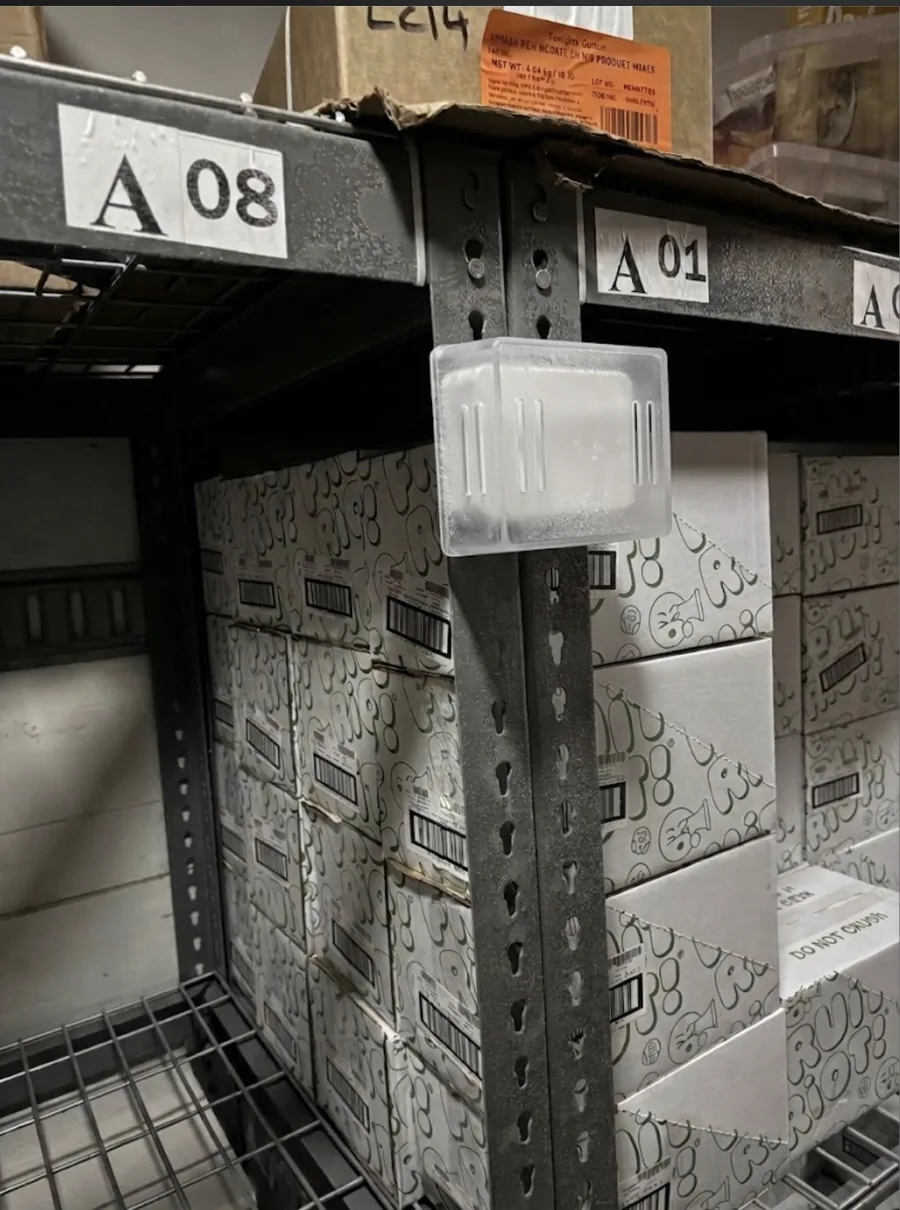
Many food brands never see their own stock. It sits in a public cold store, a 3PL's freezer or a co-packer's cooler. If that freezer fails, the food is yours, but the freezer is not.
Under the Uniform Commercial Code, a warehouse is liable for loss caused by its failure to take reasonable care. But the warehouse receipt or storage agreement can cap what it pays. Caps such as $0.50 a pound are common, unless you declare a higher value in writing and pay more to store it. In one case, a cold store's cap of $0.20 a pound held: it paid $1.6 million on a claim of $13 million.
Your own insurance may not fill the gap. A standard business property policy often covers your property at a site you do not own, lease or operate for only about $10,000, unless that site is added to the policy.
And if the only temperature record is the warehouse's, you rely on it to show what happened to your stock. Five things to do:
- Read the storage agreement for its liability cap, and for how to declare a higher value.
- Ask your broker whether the warehouse is a named location on your policy, and for how much.
- Ask the warehouse what it monitors, how often, who gets the alert at night, and whether you can see the readings.
- Put your own sensor in your stock, with the warehouse's agreement. With the cellular package, it reports without touching the warehouse's network.
- Keep your own record for at least the shelf life of the stock.
This is general information, not legal or insurance advice. Your contract, your state's law and your broker decide what applies to you.
What you get
Four things TemperatureWise does for a distributor or a brand
Every site on one screen
Every room and parked reefer, at every center, in one view, with alerts that name the site and the unit.
Calls until someone answers
Alerts go by email, then text, then a phone call, to up to three people per sensor. A night or a long weekend is covered.
Days of warning, not minutes
Most failures show as a change in the room's pattern first: up to 2 months on a refrigerant leak, 4 to 5 days on a failed defrost timer.
Your own record, anywhere
Every reading kept indefinitely and exported as a spreadsheet file. With cellular, it works in a building you do not run.
Pricing
Two examples, at posted prices
| Example | Once | Per year |
|---|---|---|
| A distribution center: 6 rooms and 2 parked reefers, 8 LoRa sensors at $200 | $1,600 | |
| Gateway for a larger site, which reaches the yard | $450 | |
| Monitoring, 8 sensors at $250 | $2,000 | |
| Distribution center total | $2,050 | $2,000 |
| Your stock at a 3PL: 2 LoRa sensors at $200 | $400 | |
| Gateway for a smaller site, plus the cellular package | $225 | $50 |
| Monitoring, 2 sensors at $250 | $500 | |
| 3PL total | $625 | $550 |
Price list of 1 September 2026. The distribution center runs on its own internet, so connectivity is free. All prices, and examples for many sites.
Common questions
With a sensor in every freezer, cooler and parked reefer, read around the clock, and alerts that reach someone at night and over weekends. Receiving checks at the dock cover what comes in. TemperatureWise records each room every 15 minutes and calls until someone answers.
It depends on your storage agreement and your insurance. A warehouse is generally liable when it fails to take reasonable care, but its receipt or agreement can cap what it pays, often by the pound, unless you declared a higher value. Your own property policy may cover stock at another site for only a small amount. This is general information, not legal advice: ask your lawyer and your broker.
Yes, with the warehouse's agreement. A TemperatureWise sensor sits in your stock, and with the cellular package it reports without joining the warehouse's network. You keep your own record.
Yes. Parked reefers used as storage are monitored like a room, as at a customer's Mississauga site, where a reefer that did not restart was caught twice.
$200 a sensor once and $250 a sensor a year, plus one gateway per site at $100 to $450. A center with 6 rooms and 2 parked reefers is $2,050 up front and $2,000 a year. The dashboard, alerts and setup cost nothing extra.
See what your rooms have been doing
Send us the export from any monitoring system or data logger at one of your centers, or from a logger in your stock at a 3PL. We will read it and tell you what we find, free.