 Illustrative data
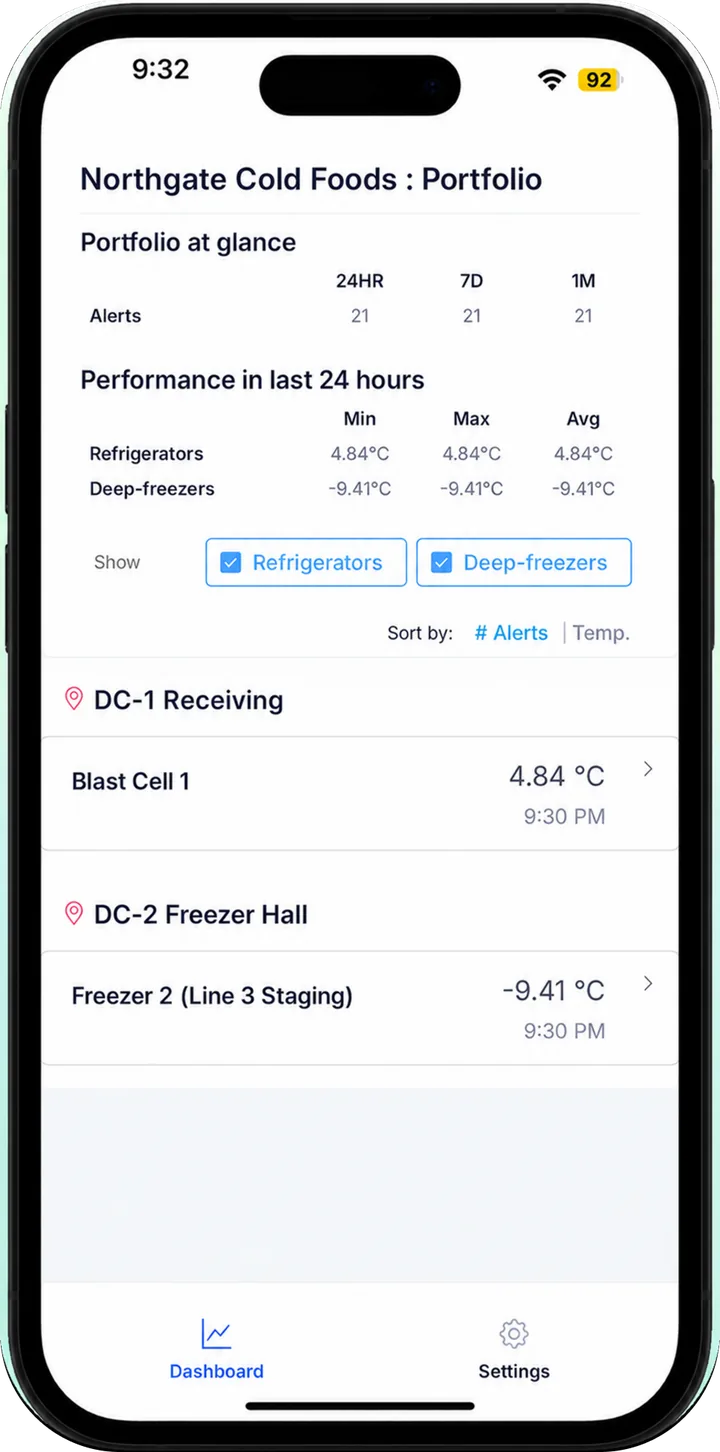
Your walk-in, on your phone
See every walk-in and reach-in from anywhere, with the latest reading and the trend. Each alert names the box.

TemperatureWise for restaurants and food service
Know your walk-in is failing before service, not during it. TemperatureWise records every walk-in and reach-in around the clock, from $175 up front and $750 a year for a small restaurant.
What you get
Illustrative dataSee every walk-in and reach-in from anywhere, with the latest reading and the trend. Each alert names the box.
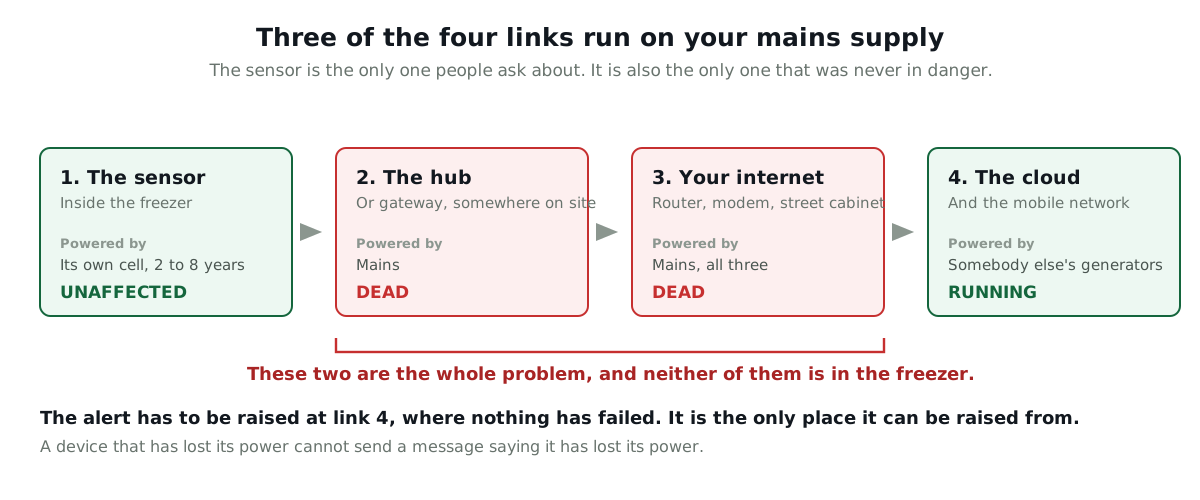
The sensors run on their own batteries. If a power cut takes down the gateway or your internet, the TemperatureWise cloud notices the silence and alerts you.
What happens when the power goes out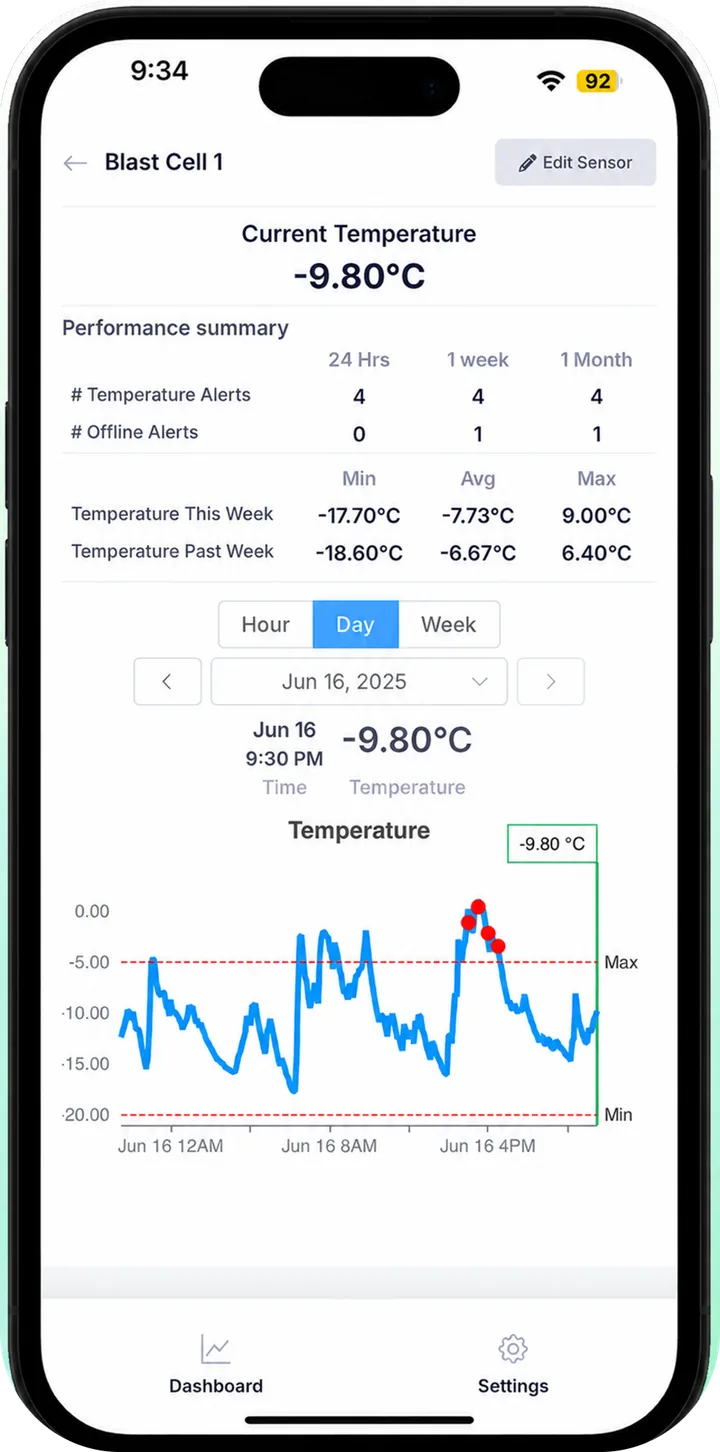 Illustrative data
Every reading is kept, so the record covers the nights and the days you were closed, not only the times somebody wrote a number down.
 Illustrative data
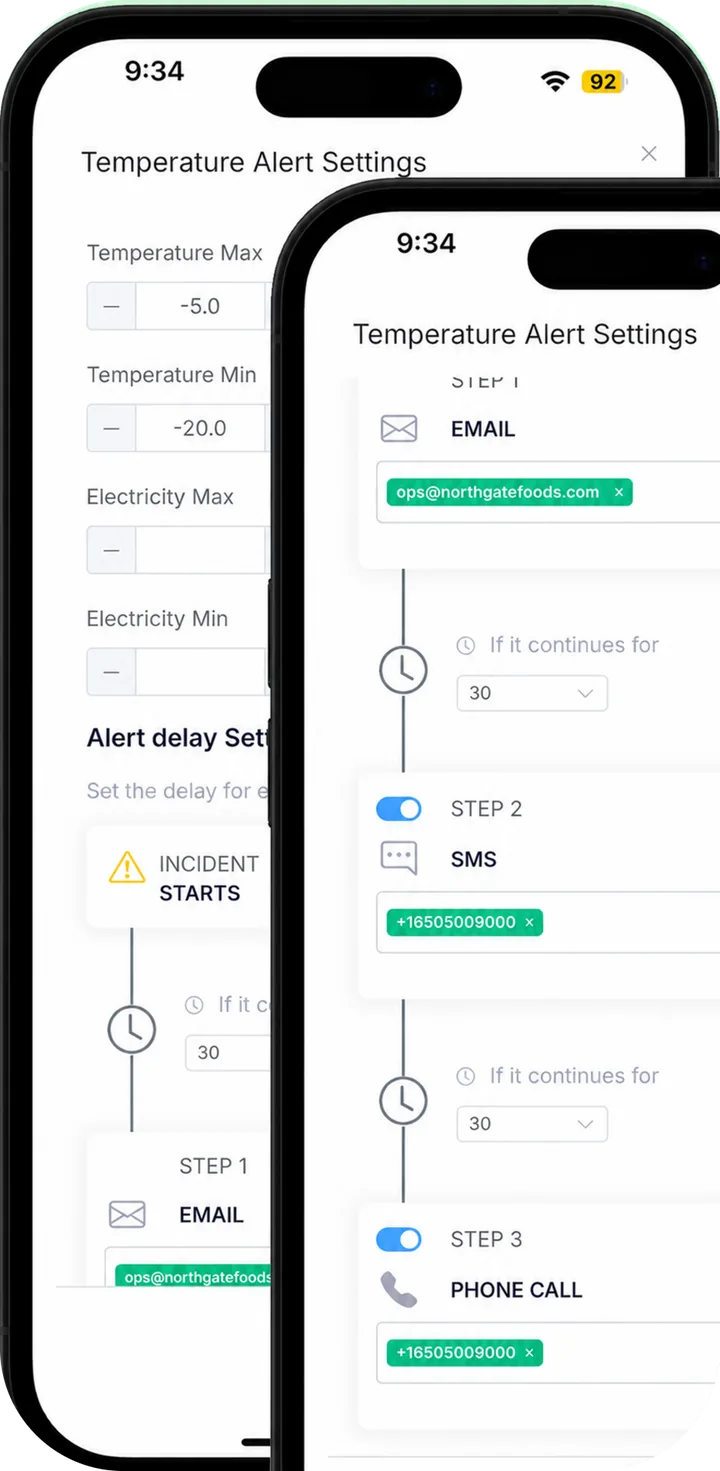
Email, then a text, then a call, to up to three people for each sensor. A Sunday fault reaches the chef, then the owner.
Where it goes wrong
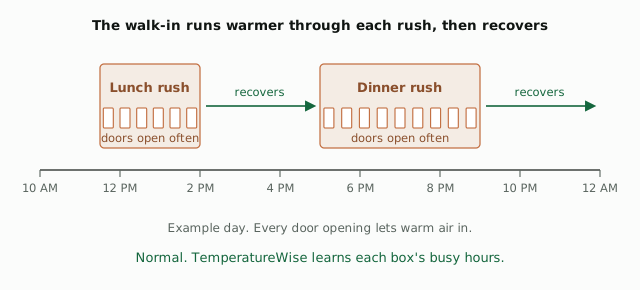
A restaurant kitchen moves its temperatures all day. The job is to tell a busy service from the start of a failure, and to wake someone only for the second.
"Walked in after a day closed and the freezer was at 50 degrees [50°F (10°C)]"
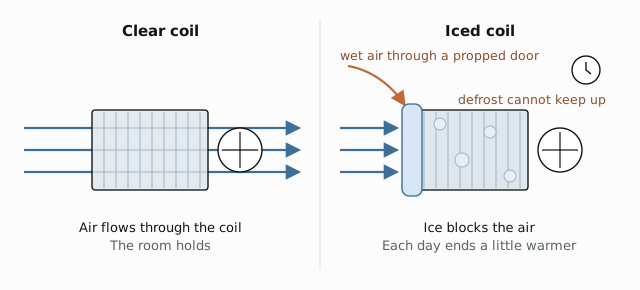
In that thread a manager had left the freezer open to grab a water bottle, and about $1,000 of stock was lost. A door that does not close lets in warm, wet air for hours. Over days it ices the coil, and each day ends warmer.
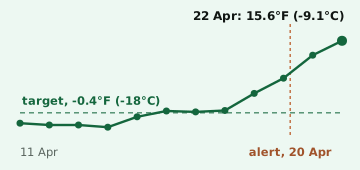
The same fault in a Philadelphia walk-in freezer, caught 53 hours before the peak, April 2025
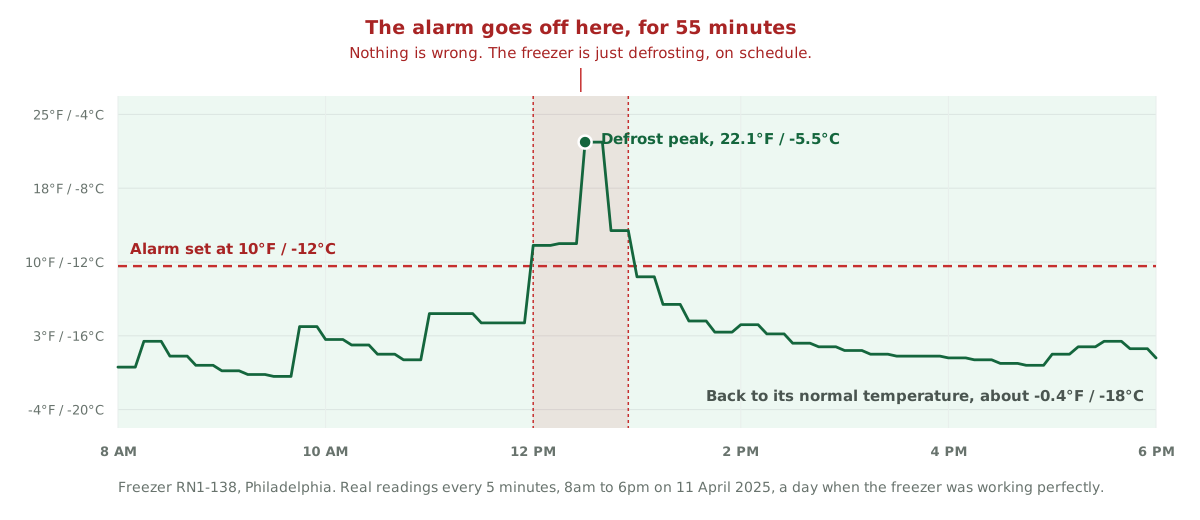
A walk-in freezer's timer runs a few short defrosts a day to melt the frost off the coil. When the timer fails, the frost stays and builds. Air stops moving through the coil, and each day ends a little warmer than the last.
"Compressors don't die, they get murdered"
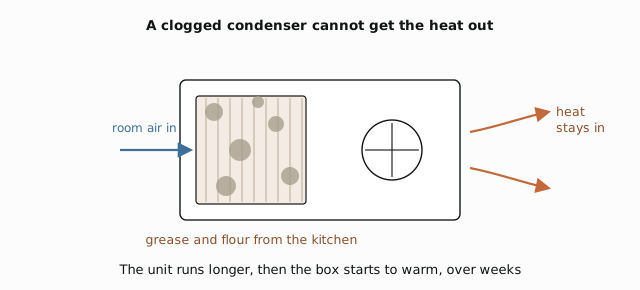
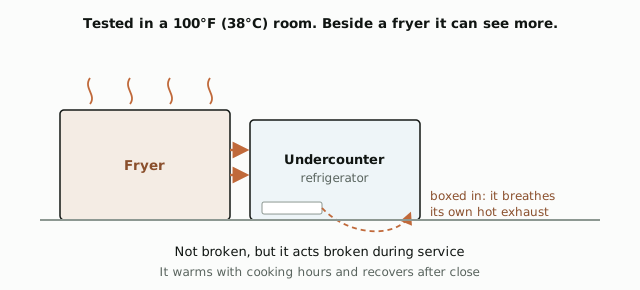
A restaurant condenser breathes kitchen air, and that air carries grease and flour. A clogged coil cannot shed heat, so the compressor runs longer and hotter. The box holds for weeks, then starts to slip.
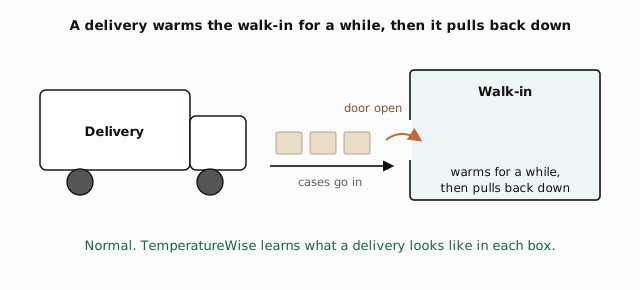
The rush, a hot line, deliveries and defrosts move the temperature on every working day. None of them is a failure.
A threshold alarm
Sounds whenever a box crosses one fixed line. A busy service or a normal defrost crosses it, so it goes off every day and staff learn to ignore it. In one real freezer log, a normal defrost set it off for 55 minutes. More in why temperature alarms cry wolf.
TemperatureWise
Learns each box's normal pattern in its first week: its busy hours, its deliveries and its defrosts. It stays quiet for the routine and alerts when a box stops behaving like itself, like the three failures above. No false alarms from a normal service.
Pricing and payback
| Item | Once | Per year |
|---|---|---|
| 4 LoRa sensors at $200 | $800 | |
| Gateway for a mid-sized site | $250 | |
| Monitoring, 4 sensors at $250 | $1,000 | |
| Total | $1,050 | $1,000 |
On your own internet, so connectivity is free. A small restaurant with three reach-ins on the entry sensors pays $175 up front and $750 a year. Price list of 1 September 2026.
In the thread above, a door left open on a closed day cost about $1,000 of stock. That is the yearly fee for two walk-ins.
Monitoring is $250 per sensor per year, about $21 a sensor a month. A walk-in usually holds more than one bad night's worth of stock, and the fee stays the same however full it is.
The $1,000 figure is from one r/KitchenConfidential thread, as recorded in our research. Your own stock value goes in the calculator below.
Want a detailed calculation for your own site? The full calculator on the TemperatureWise page takes your rooms, sensors and connection.
Open the full calculatorHow it works
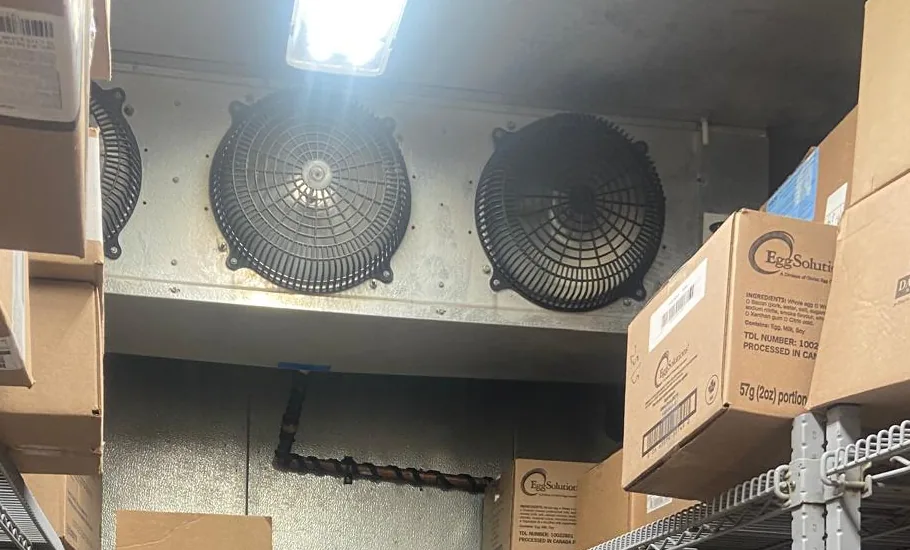
TemperatureWise marks where each sensor and the gateway go before anything ships.
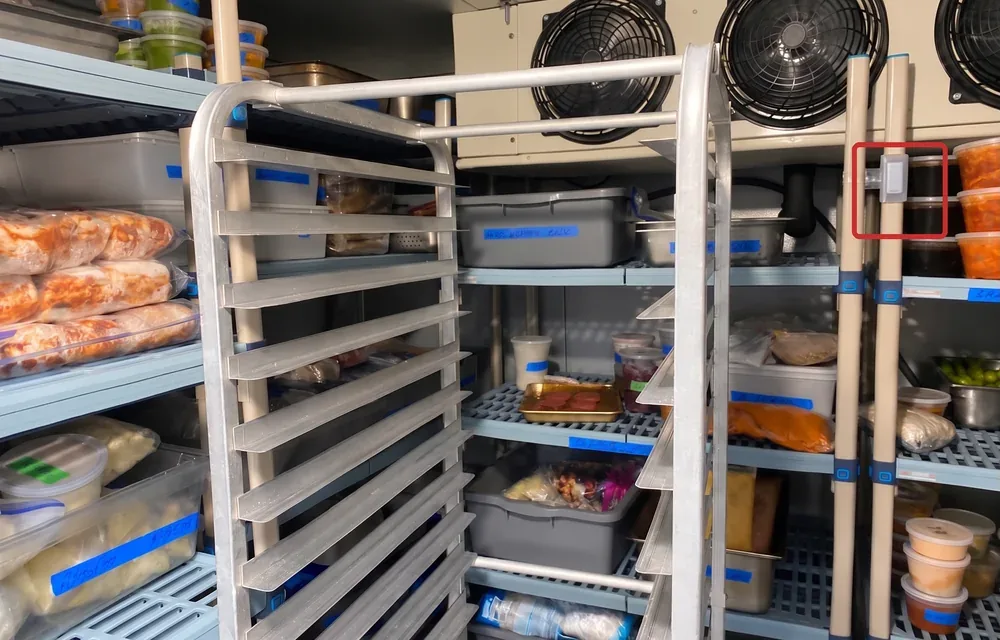
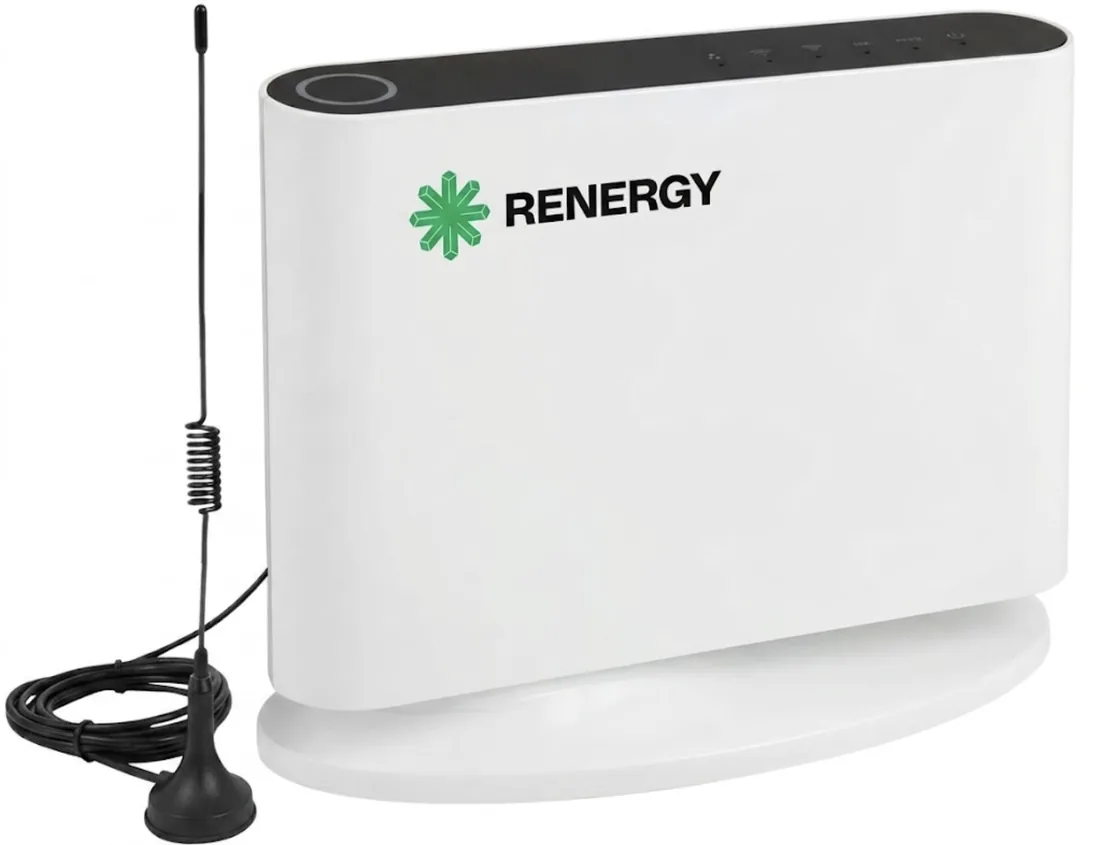
Magnet, adhesive pad or one screw. The gateway goes into an ordinary socket.
TemperatureWise learns each unit's defrost pattern and sets alerts around it, so a normal defrost is not an alarm.
The rules
US · FDA Food Code
Cold food is held at 41°F (5°C) or colder. Most states adopt the Food Code, some with their own changes.
Read the FDA Food CodeUS · the cooling rule
Cooked food goes from 135°F to 70°F (57°C to 21°C) within 2 hours, and to 41°F (5°C) within 6 hours in total.
Read the FDA Food CodeOntario · O. Reg. 493/17
Cold food is held at 4°C (39°F) or colder (s. 27), in equipment with an accurate thermometer that is easy to read (s. 30).
Read O. Reg. 493/17The inspector sees the day of the visit. TemperatureWise keeps the nights, weekends and closed days in between. The sign-off stays with you.
$175 up front and $750 a year for a small restaurant with three reach-ins on its own Wi-Fi, or $1,050 up front and $1,000 a year for two walk-ins. TemperatureWise monitoring is $250 per sensor per year, with no charge for the dashboard, alerts or setup.
It can watch the base cabinet, but not the food in the pans on top. The pans follow the kitchen air more than the machine, and pans filled above the line sit warm while the base reads fine. A probe thermometer in the top inch of food is still the honest check.
Not with TemperatureWise. It learns each box's defrosts, busy hours and deliveries in the first week and sets alerts around them, so a normal day is not an alarm. Simple threshold alarms often do go off, which is why staff learn to ignore them.
Yes, one per reach-in or undercounter. A walk-in takes two sensors for a mid-sized box and three for a large one. On the TemperatureWise entry tier, each reach-in sensor is $25 once and $250 a year.
Yes. Each site gets its own gateway, and every site shows on one screen, with alerts that name the site and the box.
Proof
Send us 30 days of readings from one room, or let us put a sensor in it. We will show you what it was doing before anyone noticed. No purchase needed.