A six-figure loss with nobody on site
During a long weekend, a Sacramento freezer failed and destroyed $125,000 in inventory while nobody was there to catch the fault.
Enter your work email to continue through the incident data, diagnosis and results.
Return to all case studies
How TemperatureWise caught a failing freezer at a Philadelphia distribution center before a single smoothie was lost.
A direct-to-home frozen smoothie brand monitors freezers across Mississauga, Philadelphia and Sacramento in one TemperatureWise portfolio.
In April 2025, the Philadelphia distribution center held about $150,000 in frozen inventory when TemperatureWise detected a developing evaporator-side fault. The AI alert arrived about two days before the April 22 failure peak, and no product was lost.

The brand needed more than a threshold alarm. It needed enough warning and enough context to act before inventory was at risk.
During a long weekend, a Sacramento freezer failed and destroyed $125,000 in inventory while nobody was there to catch the fault.
After that loss, the brand deployed TemperatureWise across its three distribution centers in Sacramento, Philadelphia and Mississauga.
Repeated alarms shorten battery life and still depend on someone acting. In Philadelphia, the freezer looked normal while its recovery worsened.
TemperatureWise pointed the Philadelphia team to a possible issue on the evaporator side two days before failure in that walk-in. One technician replaced the failed defrost timer and kept every shipment moving.
“Without your timely interference, things could have gone sideways. It turned out to be a great save.”Operations Manager, frozen smoothie brand
Real sensor data from the Philadelphia freezer, April 11 to 28, 2025. The rising temperature floor begins on April 14, well before the failure peak.
Evidence: view the exported sensor readings (CSV). The chart displays every third reading for readability.
Loading sensor data...
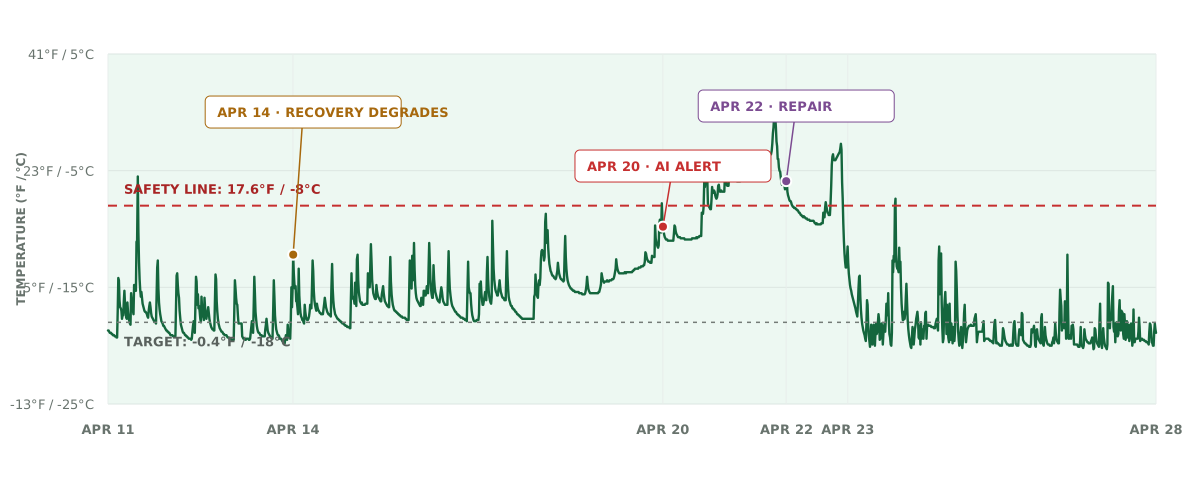
Normal cycling near -0.4°F / -18°C.
The floor stops returning to -0.4°F / -18°C after defrost.
AI flags a likely evaporator fault at 10.4°F / -12°C.
Peaks at 31.5°F / -0.3°C. The technician replaces the defrost timer.
Stable below -0.4°F / -18°C. Zero inventory lost.
The question is not if your freezers will fail unannounced. It is when.