
Temperature mapping for food cold storage
Cold storage temperature mapping for food cold rooms, freezer rooms and warehouses
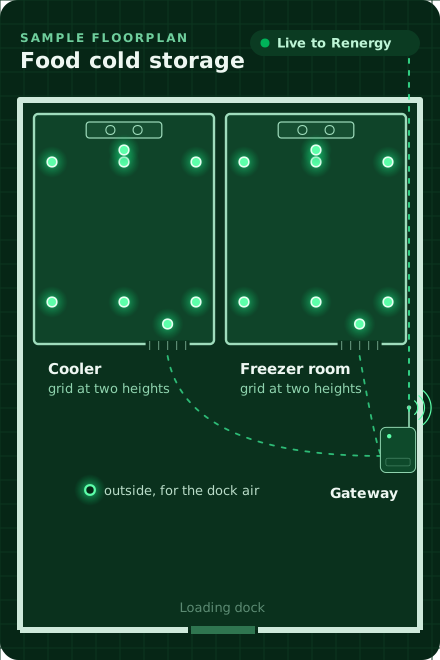
We ship calibrated wireless sensors for your cold rooms, freezer rooms and warehouse, and your team places them with us on a video call. The readings reach us live, and the signed report comes 2 business days after the study.
- No site visit
- 3-day study
- Door and power tests
- Report in 2 business days
From $1,600for a walk-in up to about 10 ft (3 m) a side
19sensors in a 10 ft walk-in
2 business daysto the signed report
How it works
From your cold room to a signed report, live

Calibrated sensorsCertificates in the report
Own cellular linkNothing joins your network. No IT headache.
Signed by a certified engineerA Renergy engineer with career expertise in cold chain logistics
Packages
Every price, posted. Pick your unit.
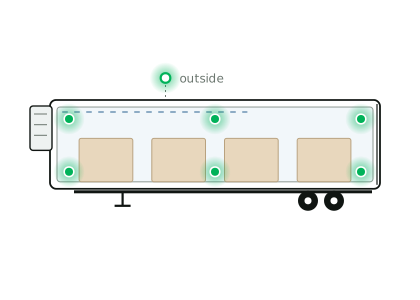
US dollars, before tax, for a remote study. Shipping at the carrier's rate, no markup. On-site service and -80°C (-112°F) freezers are quoted separately.
Keep some of the sensors after the study, and you have continuous monitoring for $250 a sensor a year.
See TemperatureWiseOrdering
Four steps, no site visit
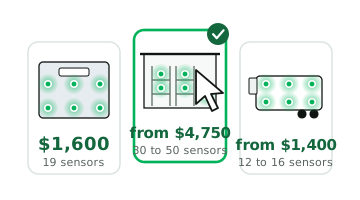
Pick a package
By unit size, with a date.
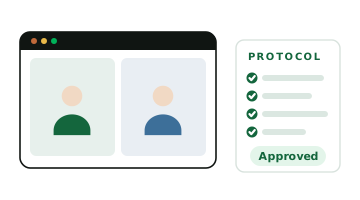
Approve the protocol
On a call, before we ship.
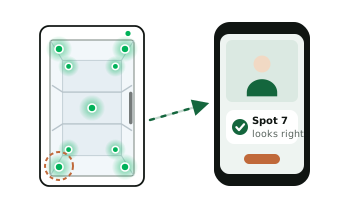
Place sensors on video
We check each spot with you.
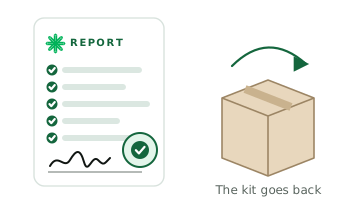
Get the signed report
2 business days after the study.
Need more hands-on help? We also offer assisted installation, up to full white-glove service, quoted separately.
Talk with usThe report
The report fills in while the study runs

The details
How a cold room study runs
A grid at two heights
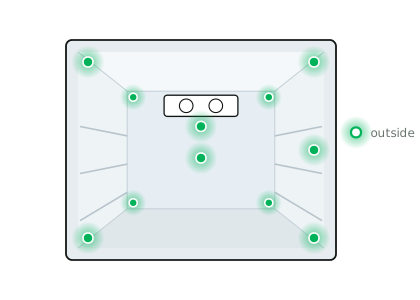
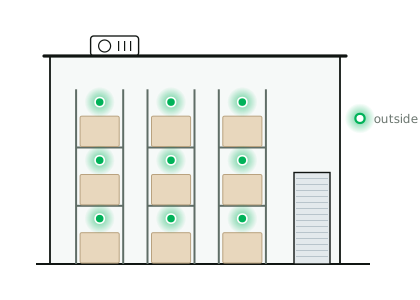
The grid grows with the room: 2 sensors along each side up to 10 m (33 ft), 3 up to 40 m (130 ft), at two heights, and three heights once the room is over 5 m (16 ft) tall. The study adds one in the center, one by the door, one near the coil and one outside the room as a reference. A walk-in up to about 10 ft (3 m) a side takes 19.
WHO guidance runs a cold room study for 24 to 72 hours, and we run 3 days.
The door test sets how long a door may stand open
With your agreement, the protocol sets a time to hold the door open. The map shows how long the room takes to recover, which sets how long a door may stand open while you load.
The power test shows how long you have
The protocol can also set a time to switch the cooling off. The map shows how long the room holds in a power cut before product is at risk.
Freezer rooms show their defrost in the map
A freezer room heats its coil on a timer, several times a day, and the air near the coil warms each time. Three days catches several defrosts, so the map separates a normal defrost from a spot that is genuinely warm.
A whole cold storage warehouse
A whole cold storage warehouse runs 7 days at three heights, in summer and winter.
We already know your rooms
TemperatureWise monitors walk-in coolers and freezers every day, and the map uses the same knowledge of how walk-ins work and how they fail.
Who asks
Who asks for the map
Your customers
Retailers, food service chains and the brands a 3PL stores for can ask to see that a room was mapped. For food, the push usually comes from a customer's auditor rather than a law.
WHO guidance
Written for medicines but used widely: map a room before it is first used, after a significant change such as new racking or a new evaporator, and on a cycle such as every 3 years.
WHO mapping guidanceA new room
A new room is the cheapest time to find a dead corner, before the stock goes in. The map is the evidence that the whole room holds temperature, not just the spot where your probe hangs.
Common questions
Do food cold storage rooms need temperature mapping?
Usually when a customer's audit asks for it, or when a room is new or has changed. For food, the push comes from customers more than from a law. The map is the evidence that the whole room holds temperature, not just the spot where the probe hangs.
How long does cold room temperature mapping take?
WHO guidance runs 24 to 72 hours for a cold room. We run 3 days, so several defrost cycles show up. The signed report comes 2 business days after the study ends.
How many sensors does a cold room need?
A grid of 2 sensors along each side up to 10 m and 3 up to 40 m, at two heights, plus the center, the door, the coil and one outside. A walk-in up to about 10 ft (3 m) a side takes 19.
What is a door opening test in temperature mapping?
The door is held open for a set time and the sensors record how far the room warms and how long it takes to recover. The answer sets how long a door may stand open while you load.
Can you map a freezer room?
Yes. Three days catches several defrosts, so the map separates a normal defrost from a spot that is genuinely warm. It is priced the same way as a cold room, by sensors and days.
How much does cold room temperature mapping cost?
$1,600 for a walk-in up to about 10 ft (3 m) a side, in US dollars, before tax and shipping. Larger rooms take more sensors, and are priced the same way.
Does the kit need our network or IT team?
No. The gateway sends the readings over its own cellular link, so nothing joins your network and there is nothing for IT to set up.
Can the sensors stay after the study?
Yes. Keep as many as you need and they become continuous monitoring with TemperatureWise, at $250 a sensor a year.
More temperature mapping
Book a study, or ask what yours would cost
Tell us the unit and the date.