TemperatureWise for healthcare food service

Temperature monitoring for hospital and long-term care kitchens

A record a surveyor can read, and a warning before the tray line is at risk. TemperatureWise reads every walk-in, roll-in and unit fridge every 15 minutes, in kitchens that feed the most vulnerable diners.

  • Hospital kitchens
  • Long-term care homes
  • Cook-chill production
  • Food service directors
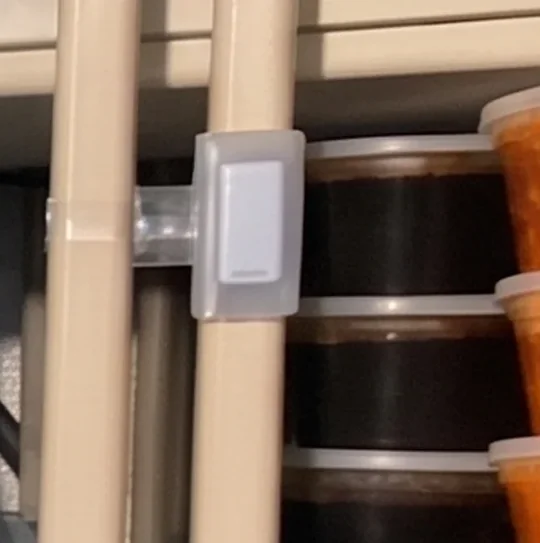
A close view of a TemperatureWise sensor in its bracket on a shelving upright inside a walk-in, with stacked food containers behind it.
96readings a day from every sensor, nights included
30 min to hoursfor a tray-line roll-in to recover after loading, as its capacity fadesRenergy failure-mode reference
F812the tag long-term care surveyors cite for food safetyCMS, under 42 CFR 483.60(i)
96 readingsa day from each sensor, nights and weekends includedTemperatureWise, every 15 minutes

What you get

Four things TemperatureWise does for a healthcare kitchen

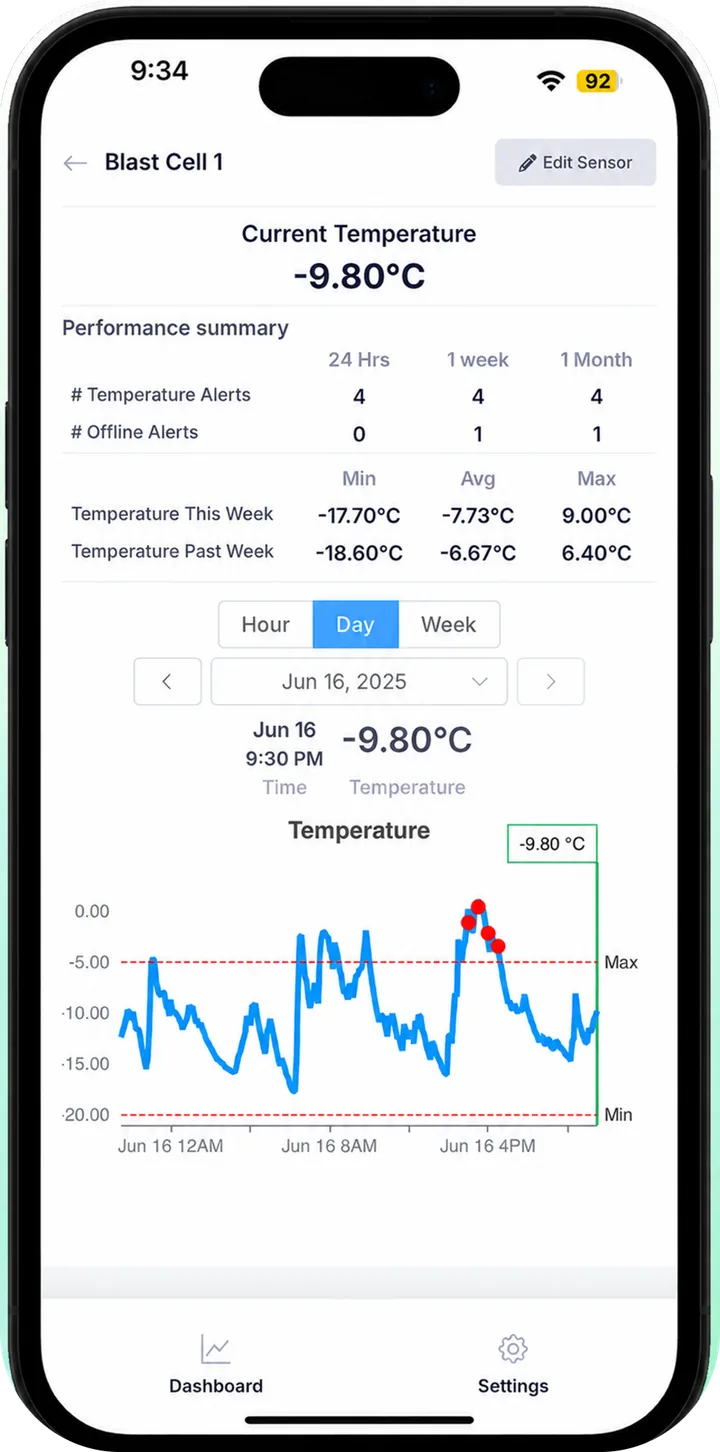
The TemperatureWise app showing a temperature trend chart for one unit over a 24 hour period.Illustrative data

A record ready for the surveyor

Every reading from every unit, every 15 minutes, kept indefinitely. When a surveyor asks how the walk-in held last Tuesday night, the answer is on the screen.

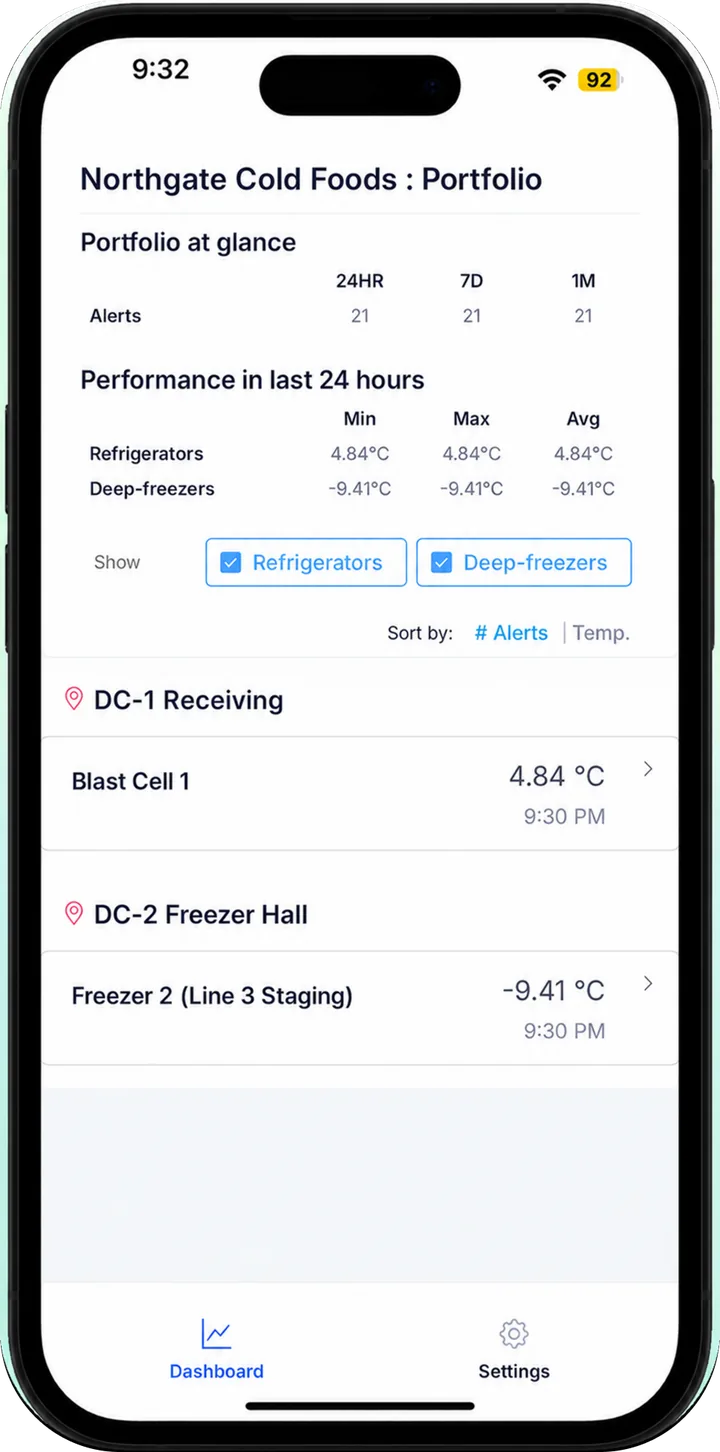
The TemperatureWise app showing a portfolio with a receiving dock, a blast cell and a freezer hall, each with its latest reading.Illustrative data

The kitchen and the unit fridges on one screen

The main kitchen, the tray line and the small fridges on each resident unit, in one place. Each alert names the unit and the room.
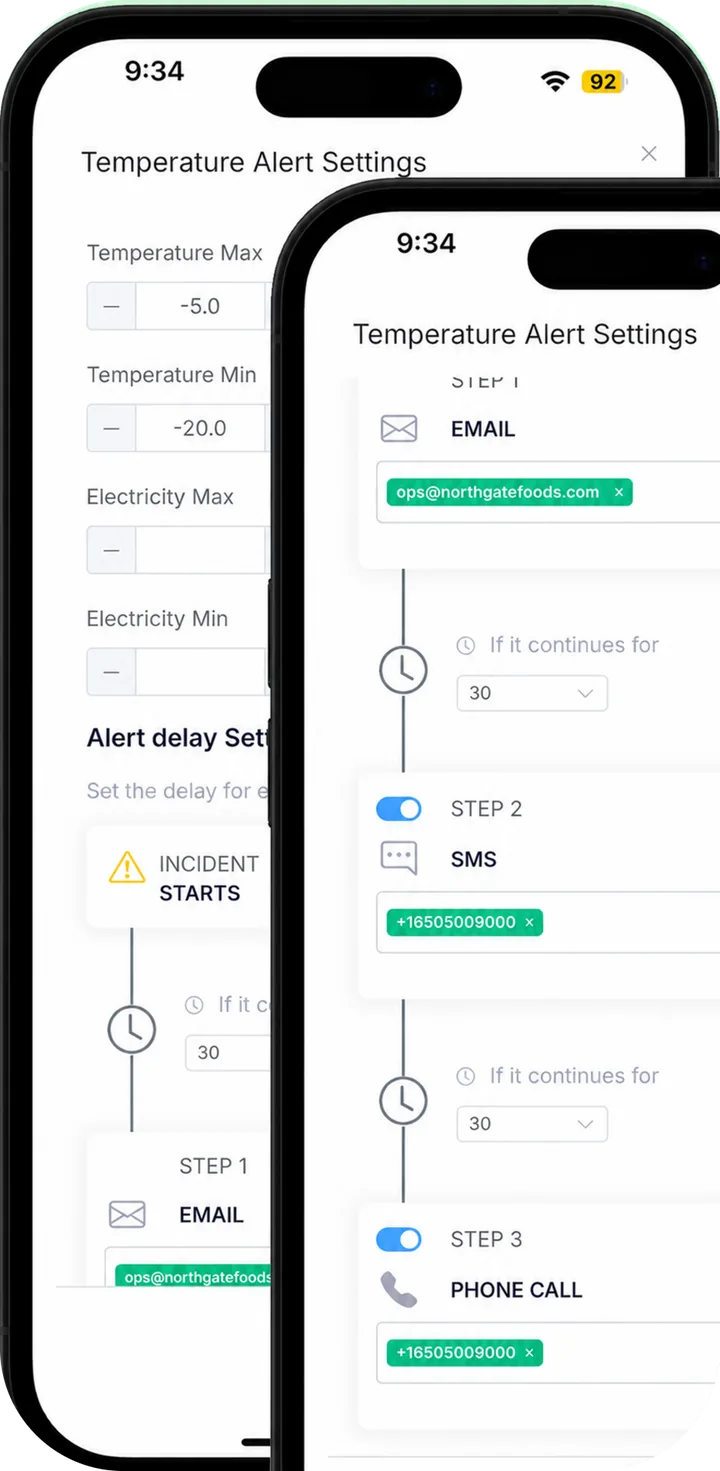
TemperatureWise alert settings with three steps: email, then a text message, then a phone call, each after a delay.Illustrative data

Alerts climb until someone answers

Email, then a text, then a call, to the people you name, in order. A night-shift fault reaches the person on call.
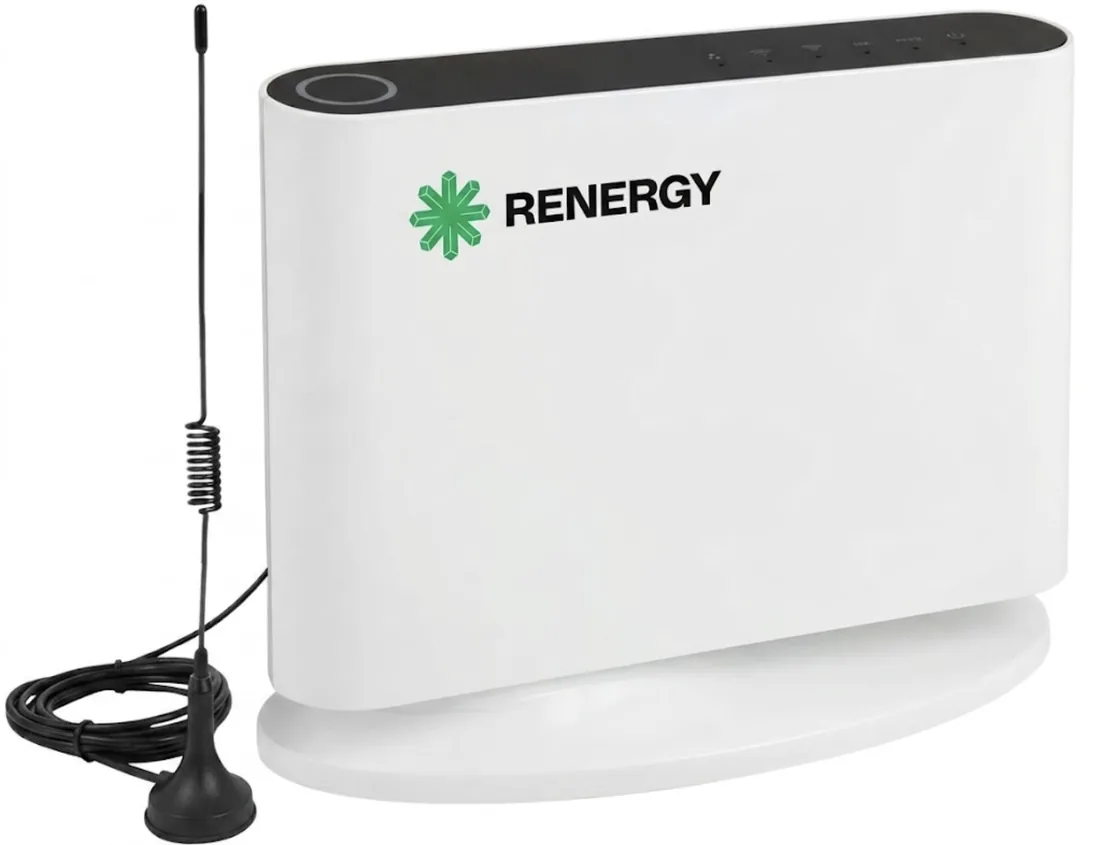
The Renergy gateway, a white desktop unit with a magnetic whip antenna on a lead.

Nothing drilled, nothing on the hospital network

LoRa radio passes through walk-in panels and interior walls, so sensors across the kitchen and the units report to a gateway. With cellular, nothing touches the hospital network.

How one gateway covers a multi-room site

Where it goes wrong

Five ways a healthcare kitchen loses temperature

Food here is made in one place and served somewhere else, hours later. Each fault below follows from that.
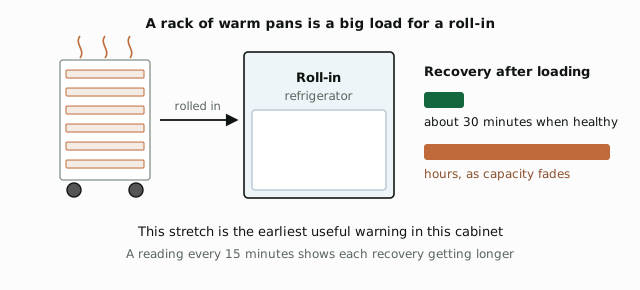
A rolling rack of warm sheet pans going into a roll-in refrigerator on the tray line. Below, recovery after loading: about 30 minutes when the cabinet is healthy, stretching to hours as its capacity fades.
How it fails

Tray-line roll-ins lose ground after each load

Roll-ins take racks of warm food straight from production. Recovery after loading takes about 30 minutes in a healthy cabinet and stretches to hours as its capacity fades. That stretch is the earliest warning this cabinet gives.
How fast
Weeks, one load at a time
What the log shows
Each recovery after loading takes longer
How to tell
The rest of the day looks fine
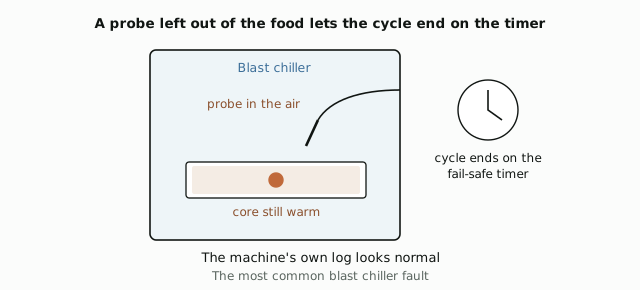
A blast chiller with a pan of cooked food inside. The product probe hangs in the air on its cable instead of sitting in the thickest piece of food. The cycle ends on the fail-safe timer, the core of the food is still warm, and the machine's own log looks normal.
How it fails

A blast chiller probe left out of the food

A blast chiller ends its cycle when the probe in the food reaches temperature. If the probe is broken or never inserted, the cycle ends on a timer instead. The food leaves warm inside, and the log looks normal. TemperatureWise cannot see this one either.
How often
The most common blast chiller fault
What the log shows
A normal cycle, on the machine and on TemperatureWise
What catches it
A check of the food's core temperature
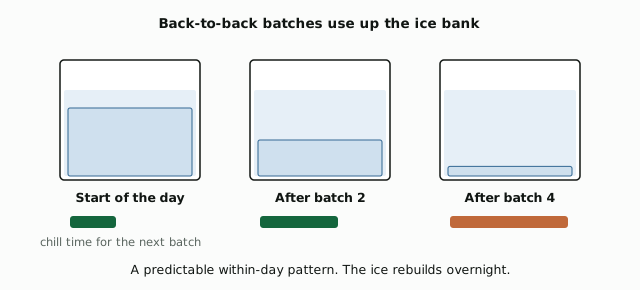
A cook-chill ice builder tank at three points in a production day: full of ice at the start, about half after the second batch, and nearly gone after the fourth. Each batch takes longer to chill than the one before, and the ice bank rebuilds overnight.
How it fails

Back-to-back cook-chill batches drain the ice bank

Cook-chill tumble chillers use ice built overnight in a water tank. Back-to-back batches use it up, so each batch takes longer to chill than the one before.
How fast
Across one production day
What it looks like
Chill times lengthen batch by batch
How to tell
It resets overnight
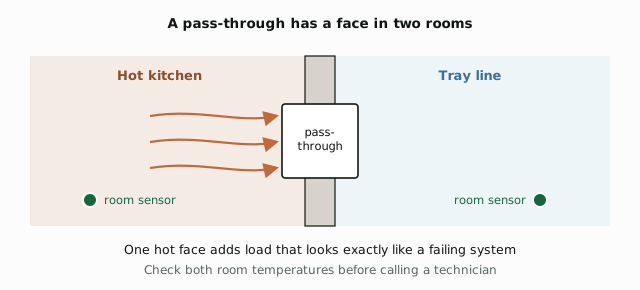
A pass-through refrigerator set into the wall between a hot kitchen and the tray line, seen from above. Heat from the hot room pours onto one face, which adds load that looks exactly like a failing system. Checking both room temperatures tells the two apart.
How it fails

A pass-through with one face in a hot room

Pass-throughs sit in the wall between two rooms. When the room on one side runs hot, the extra load looks exactly like a failing system.
How fast
Daily, with the hot room's hours
What the log shows
The cabinet warms and recovers with the next room
How to tell
A sensor in each room shows the cause
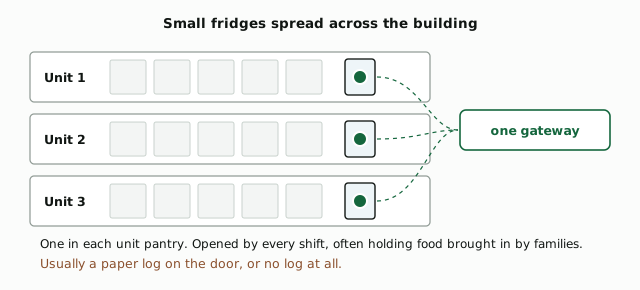
A long-term care home with three resident units, each with a small nourishment fridge in its pantry. Each fridge is opened by every shift and often holds food brought in by families, and each has its own paper log or none. One TemperatureWise sensor in each reports to the same gateway.
How it fails

Nourishment fridges on resident units, opened by every shift

Long-term care units keep small fridges for snacks and for food families bring in, and the US federal rule requires a policy for that food. Every shift opens them, and many keep a paper log on the door or none.

When
Any time, on any unit
What the log shows
Warm spells that follow shift changes
TemperatureWise
One sensor each, on the same gateway

Pricing and payback

A kitchen and its unit fridges cost $2,700 up front and $2,550 a year

Two walk-ins, two roll-ins and four unit fridges

ItemOncePer year
10 LoRa sensors at $200$2,000
Gateway for a larger site$450
Cellular connection$125$50
Battery backup$125
Monitoring, 10 sensors at $250$2,500
Total$2,700$2,550

Two sensors in each walk-in, one in each roll-in and unit fridge. No extra charge for the dashboard, alerts, reporting or setup. Price list of 1 September 2026.

About $21 a unit a month, for a record with no gaps

Monitoring is $250 per sensor per year. That buys a reading every 15 minutes from each unit, 96 a day, overnight included.

A paper log records what somebody wrote down. A continuous record shows what the walk-in actually did, including the hours nobody was there.

Want a detailed calculation for your own site? The full calculator on the TemperatureWise page takes your rooms, sensors and connection.

Open the full calculator

How it works

Three steps, nothing drilled, no shutdown

  1. We plan it from your floor plan

    TemperatureWise marks where each sensor and the gateway go before anything ships.

  2. You place the sensors and plug in the gateway

    Magnet, adhesive pad or one screw. The gateway goes into an ordinary socket.

  3. It learns each unit in the first week

    TemperatureWise learns each unit's defrost pattern and sets alerts around it, so a normal defrost is not an alarm.
The Renergy gateway, a white desktop unit with a whip antenna.
In the kitchen officeThe gateway sits on a shelf, plugged into an ordinary socket.
LoRa radio through walls and walk-in panels. Nothing drilled.
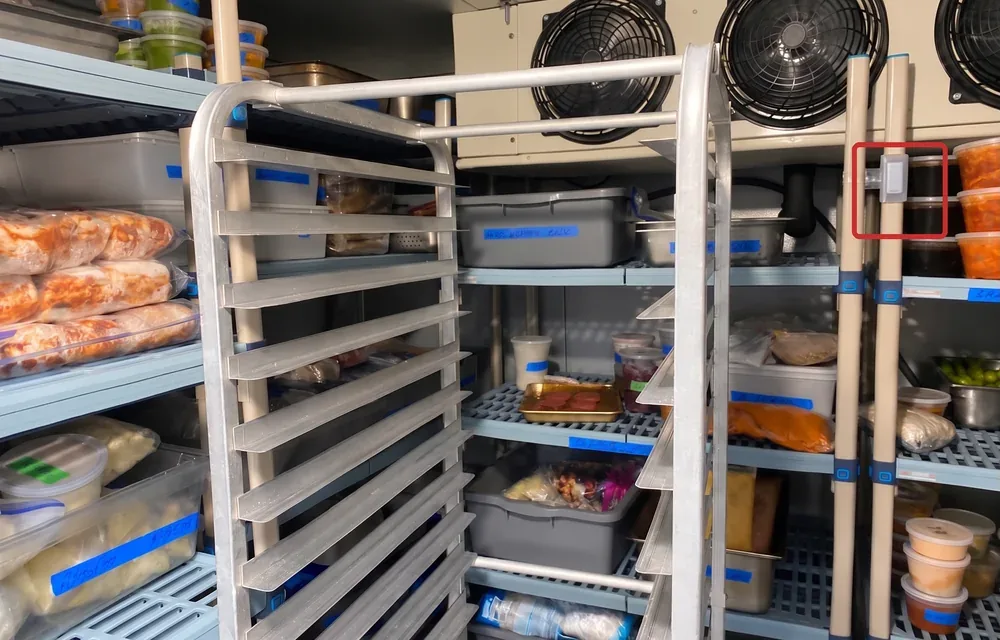
Inside a loaded walk-in cooler: wire shelving stacked with labelled food containers, a sheet pan rack, the evaporator fans above, and a small white TemperatureWise sensor clipped to a shelving upright, marked with a red outline.
In the walk-inThe sensor clips to a shelving upright, away from the fans' cold air.
Every 15 minutesReadings kept indefinitely
Rated to -40°F (-40°C)Battery lasts 5 to 8 years
Temperature and humidityFrom one sensor

The rules

The CMS and Ontario rules a healthcare kitchen answers to

US hospitals · 42 CFR 482.28

The Condition of Participation for food and dietetic services. Hospitals run organized dietary services under it, and compliance is checked by survey.

Read 42 CFR 482.28

US long-term care · 42 CFR 483.60(i)

Food is stored, prepared, distributed and served to professional standards for food service safety, with a policy for food families bring in. Surveyors cite failures as F812.

Read 42 CFR 483.60

Ontario · O. Reg. 246/22, s. 78

A long-term care home stores food using methods that prevent food borne illness, and has equipment that can hold perishable cold food at safe temperatures.

Read O. Reg. 246/22

The FDA Food Code treats older and immunocompromised people fed by a health care facility as a highly susceptible population, which is why the bar is higher here. TemperatureWise produces the record; the review and sign-off stay with you.

Common questions

How do hospitals monitor refrigerator temperatures in the kitchen?

With a sensor in each walk-in, roll-in and reach-in that records every 15 minutes and alerts named people when a unit drifts. TemperatureWise does this with battery sensors and a gateway, so nothing is drilled, and on cellular nothing touches the hospital network.

Can TemperatureWise tell if a blast chiller cooled the food properly?

No, not on its own. A TemperatureWise sensor in the cabinet shows each cycle, but a cycle that ended on the timer with the probe out of the food looks normal to it too. The food's core temperature has to be checked with a probe.

How much does temperature monitoring cost for a long-term care home?

About $2,700 up front and $2,550 a year for two walk-ins, two roll-ins and four unit fridges on TemperatureWise, with cellular and battery backup. Each extra unit fridge adds $200 once and $250 a year.

Who owns the fridge temperature logs in long-term care?

Whoever your home's policy names. TemperatureWise takes the writing out of it: every unit records itself, and the policy only has to say who answers an alert, and in what order.

See what your coldest room has been doing

Send us 30 days of readings from one room, or let us put a sensor in it. We will show you what it was doing before anyone noticed. No purchase needed.

Sources for every figure on this page
  1. Onset times, log signatures and equipment ratings: Renergy's internal refrigeration failure-mode reference, September 2026. The roll-in recovery times and the blast chiller probe fault are from its roll-in and blast chiller sections
  2. Prices, sensor specifications and alert steps: the TemperatureWise price list of 1 September 2026
  3. US: 42 CFR 482.28 and 42 CFR 483.60(i) (eCFR), and the FDA Food Code definition of a highly susceptible population
  4. Ontario: O. Reg. 246/22 under the Fixing Long-Term Care Act, 2021, s. 78 (3) and (6)
  5. The three case studies at the foot of the page: the Philadelphia freezer, the dual-system freezer and the Mississauga stationary reefer

Last reviewed 30 September 2026