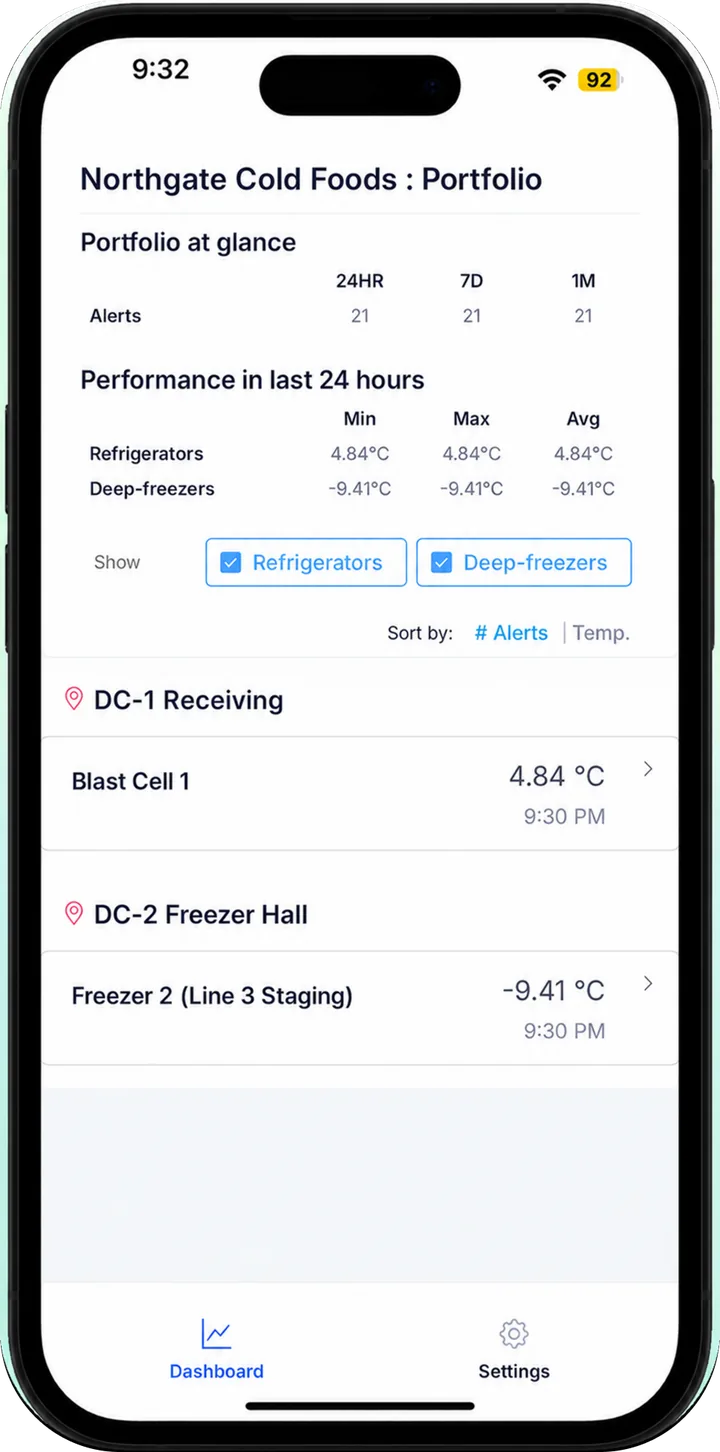
 Illustrative data
Every outlet on one screen
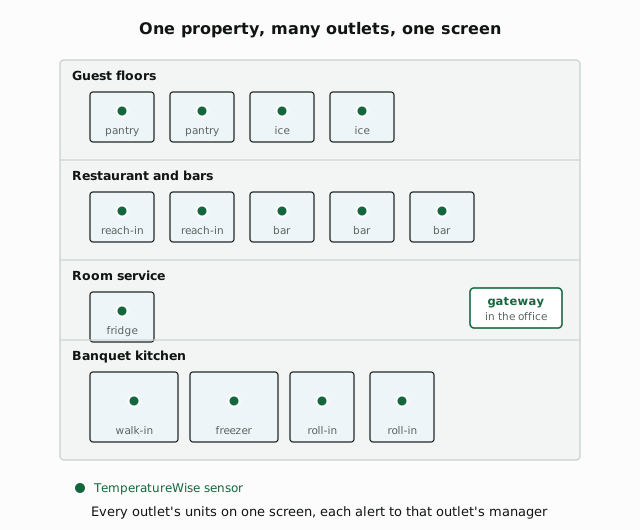
The banquet kitchen, the restaurant, room service and every bar on one screen. Each alert names the outlet and the unit.

TemperatureWise for hotel kitchens
A hotel's cold units are spread across the banquet kitchen, the restaurant, room service and the bars, each with its own manager. TemperatureWise puts all of them on one screen, at $250 a sensor per year.
What you get
Illustrative dataThe banquet kitchen, the restaurant, room service and every bar on one screen. Each alert names the outlet and the unit.
 Illustrative data
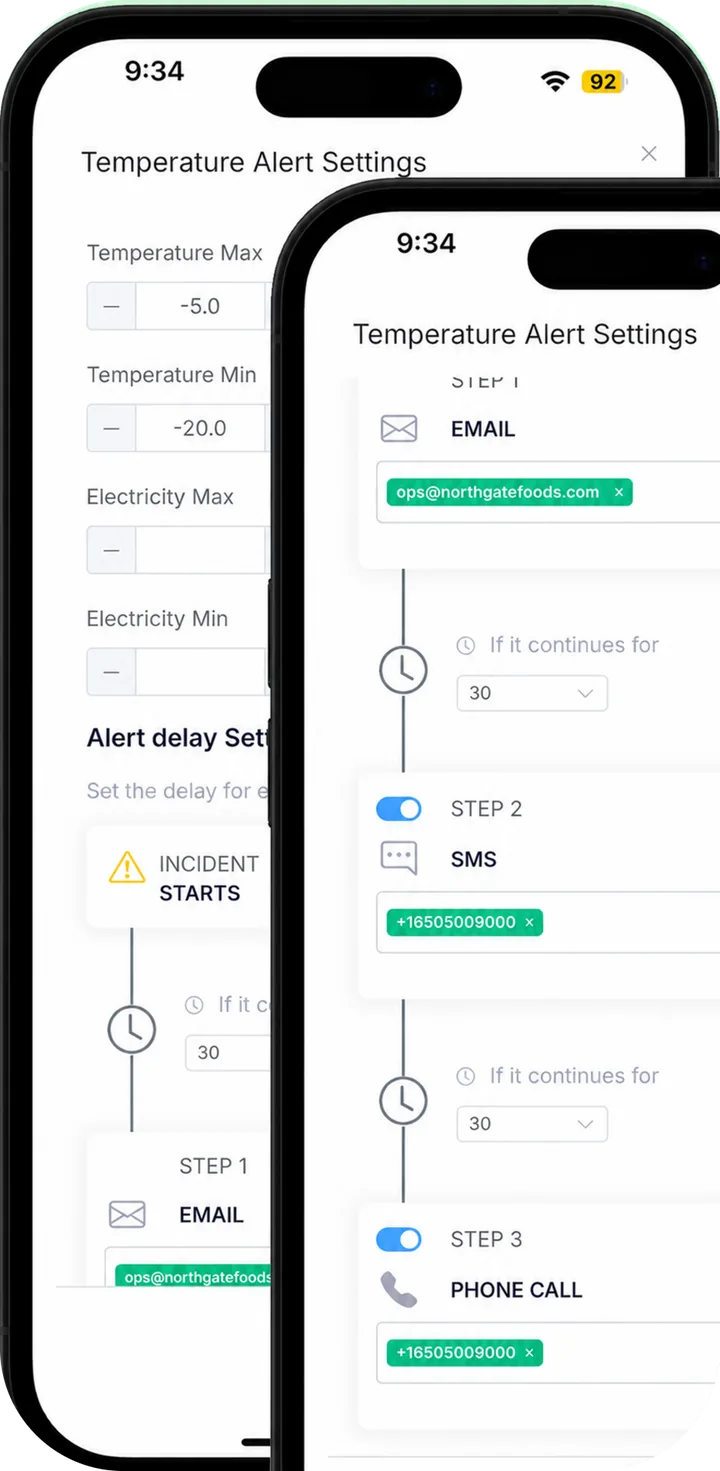
Email, then a text, then a call, to up to three people per sensor. A bar cooler alert reaches the bar manager, not the whole hotel.
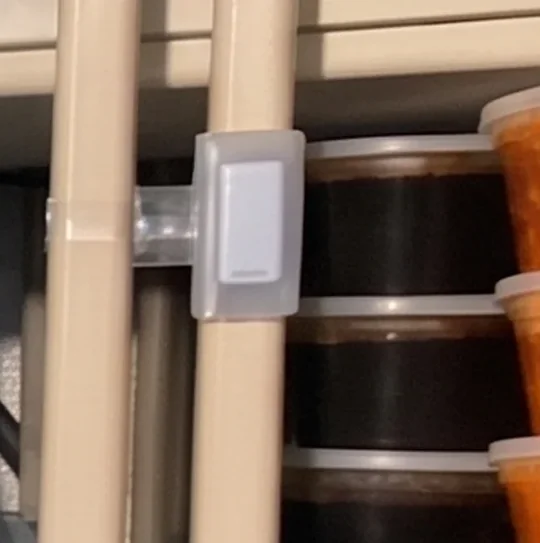
Floor pantries and room service fridges belong to no one outlet. With a sensor in each, they get a name on the alert list.
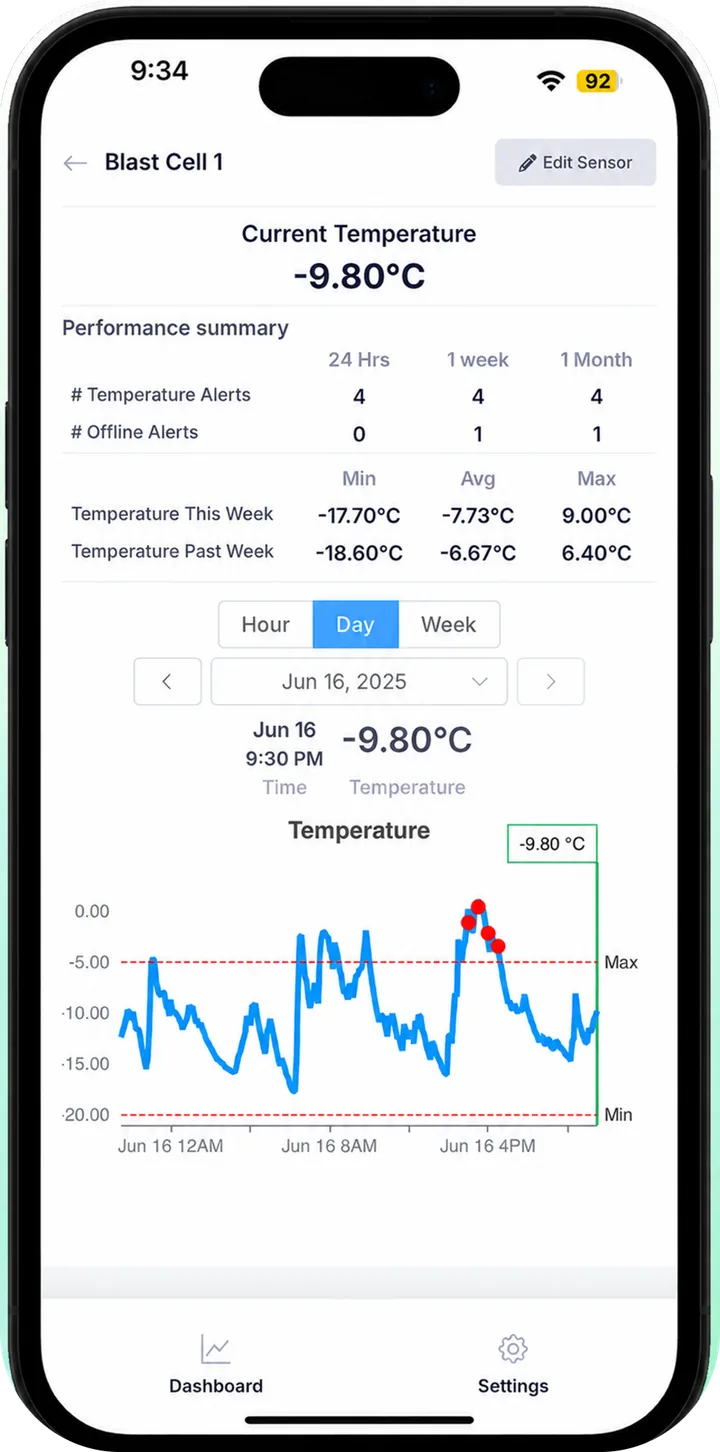 Illustrative data
Every unit, every 15 minutes, kept indefinitely, including the nights and the days a banquet hall stands empty.
Where it goes wrong
A hotel runs many small cold units, busy at different hours. The job is to tell a unit that is failing from one that is just in service.
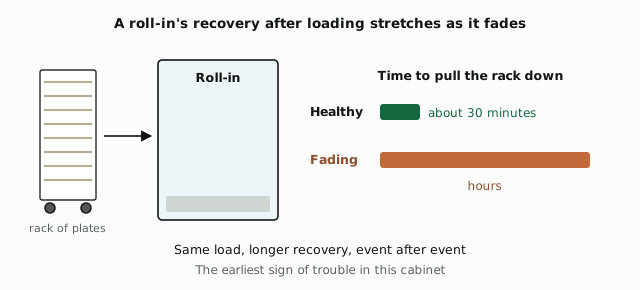
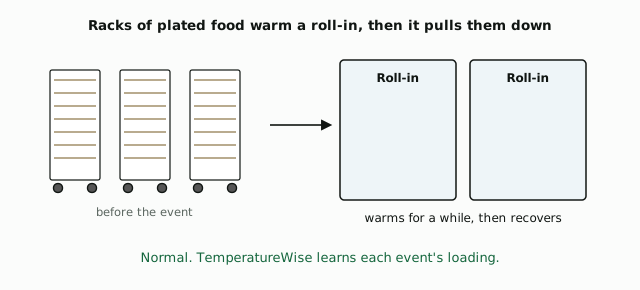
Before an event, the banquet kitchen fills roll-in cabinets with racks of plated food. A healthy roll-in pulls the load down in about 30 minutes. As its capacity fades, the same load takes hours, and the next rack goes into a cabinet that never recovered.
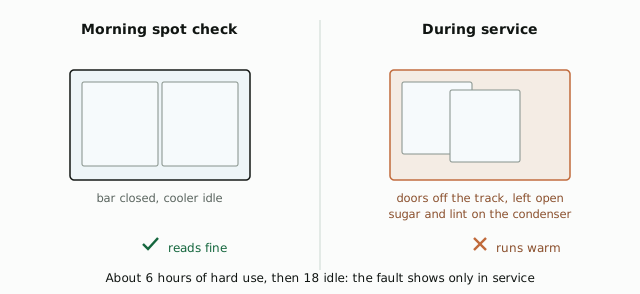
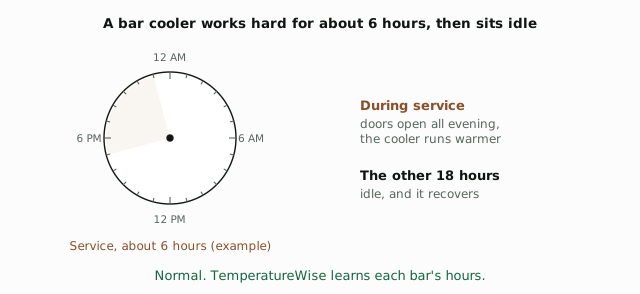
Bar coolers take hard use for about 6 hours and sit idle for 18. Sliding doors come off their track or get left open, and a condenser at floor level collects spilled sugar and lint. The fault shows in service and is gone by the morning check.
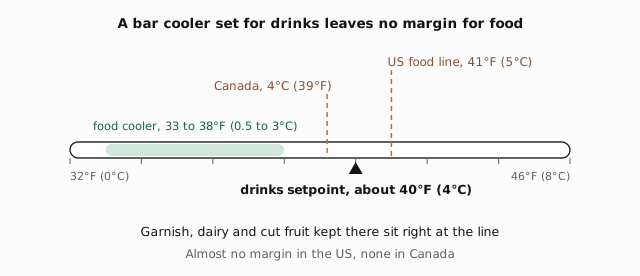
Some bar coolers are set around 40°F (4°C) for drinks. That leaves almost no margin against the 41°F (5°C) food line, and none against Canada's 4°C (39°F). Garnish, dairy and cut fruit kept there sit right at the line.
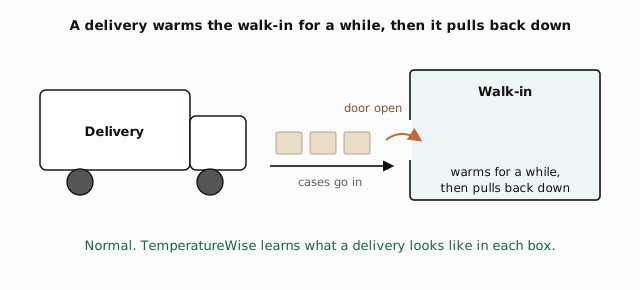
Banquet loading, bar service, deliveries and defrosts move the temperature every day. None of them is a failure.
A threshold alarm
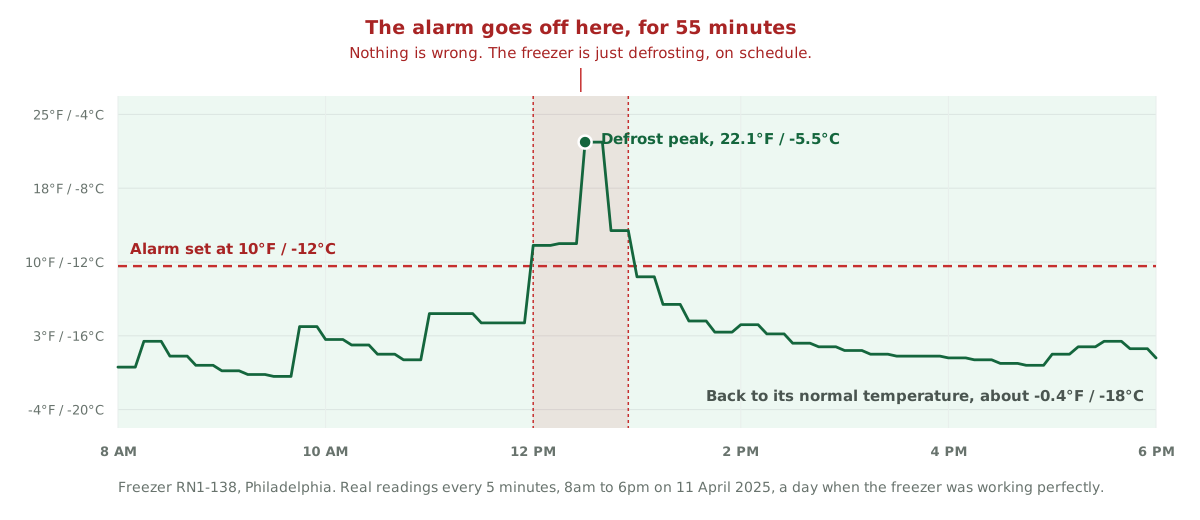
Sounds whenever a unit crosses one fixed line. A banquet load or a normal defrost crosses it, so it goes off every day and staff learn to ignore it. In one real freezer log, a normal defrost set it off for 55 minutes. More in why temperature alarms cry wolf.
TemperatureWise
Learns each unit's normal pattern in its first week: its service hours, its loading and its defrosts. It stays quiet for the routine and alerts when a unit stops behaving like itself, like the three failures above. No false alarms from a normal service.
Pricing and payback
| Item | Once | Per year |
|---|---|---|
| 12 LoRa sensors at $200 | $2,400 | |
| Gateway for a larger site | $450 | |
| Cellular connection | $125 | $50 |
| Monitoring, 12 sensors at $250 | $3,000 | |
| Total | $2,975 | $3,050 |
Two sensors in each of the banquet walk-in cooler and freezer, one in each of two roll-ins, two restaurant reach-ins, three bar coolers and the room service fridge. Cellular keeps it off the hotel network. Price list of 1 September 2026.
TemperatureWise monitoring is $250 per sensor per year, about $21 a month, the same for a banquet walk-in as for a bar cooler.
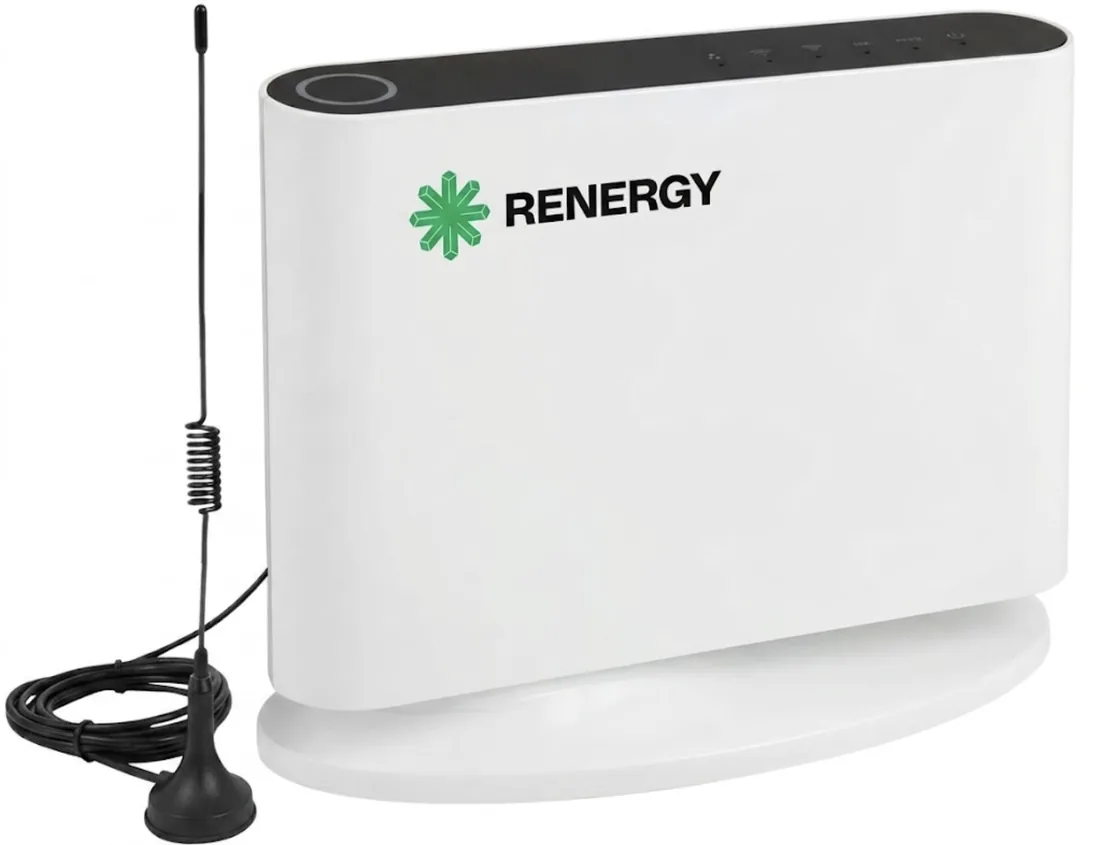
Add a bar and it adds a sensor. TemperatureWise checks the gateway count from your floor plans before anything ships, so a tall building is sized before install day.
Want a detailed calculation for your own site? The full calculator on the TemperatureWise page takes your rooms, sensors and connection.
Open the full calculatorHow it works
TemperatureWise marks where each sensor and the gateway go, outlet by outlet, before anything ships.
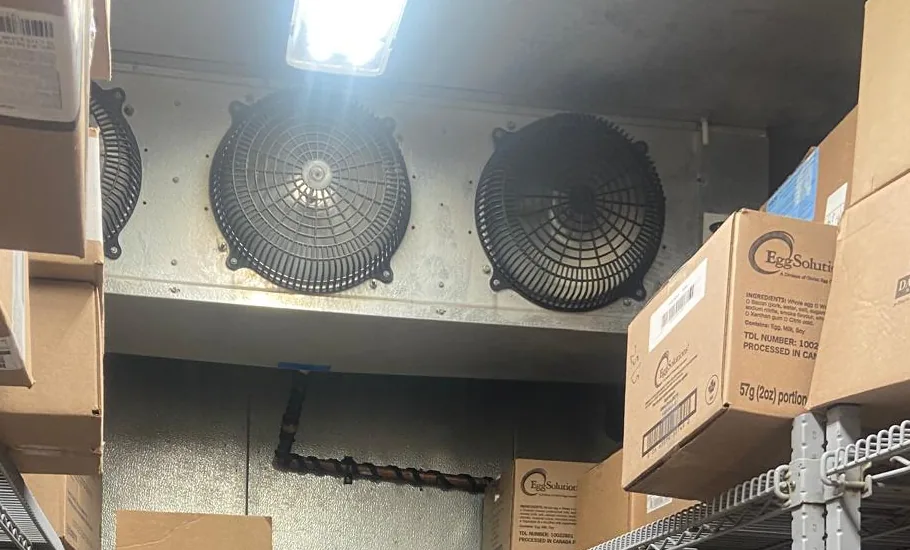
Magnet, adhesive pad or one screw, one outlet at a time, between services.
Its service hours, its loading and its defrosts, so none of them is an alarm.
The rules
US · FDA Food Code
Cold food is held at 41°F (5°C) or colder, in a bar cooler as much as in the banquet walk-in.
Read the FDA Food CodeOntario · O. Reg. 493/17
Food is held at 4°C (39°F) or colder (s. 27), frozen food stays frozen (s. 28), and every unit has an accurate thermometer (s. 30).
Read O. Reg. 493/17The rule follows the food, so garnish and dairy in a bar cooler count too. TemperatureWise produces the record; the sign-off stays with you.
About $2,975 up front and $3,050 a year for a hotel with a banquet kitchen, a restaurant and three bars, with twelve TemperatureWise sensors and cellular. Each extra unit adds $200 once and $250 a year.
Only whether there is ice in the bin. A TemperatureWise sensor in the bin reads near freezing while ice is there, so it shows a bin running empty, not how well the machine makes ice. Scale that cuts production over months needs the machine's own service.
Not with TemperatureWise. It learns each unit's service hours, loading and defrosts in the first week and sets alerts around them. Simple threshold alarms often do go off, which is why staff learn to ignore them.
No. TemperatureWise is for food and ice: walk-ins, roll-ins, reach-ins and bar coolers. Guest-room comfort is a heating and cooling question, which Renergy covers with ACWise.
Yes. Each property gets its own gateway, every property shows on one screen, and each alert names the property, the outlet and the unit.
Proof
Send us 30 days of readings from one room, or let us put a sensor in it. We will show you what it was doing before anyone noticed. No purchase needed.