TemperatureWise for cold storage and 3PL

Temperature monitoring for cold storage and 3PL warehouses

Know a freezer is failing while there is still time to move the stock. At one Philadelphia distribution center, TemperatureWise flagged a failing freezer 27 days before the repair, with $450,000 of product inside.

  • 3PL warehouses
  • Food distribution centers
  • Brands with their own DC
  • Parked reefers used as storage
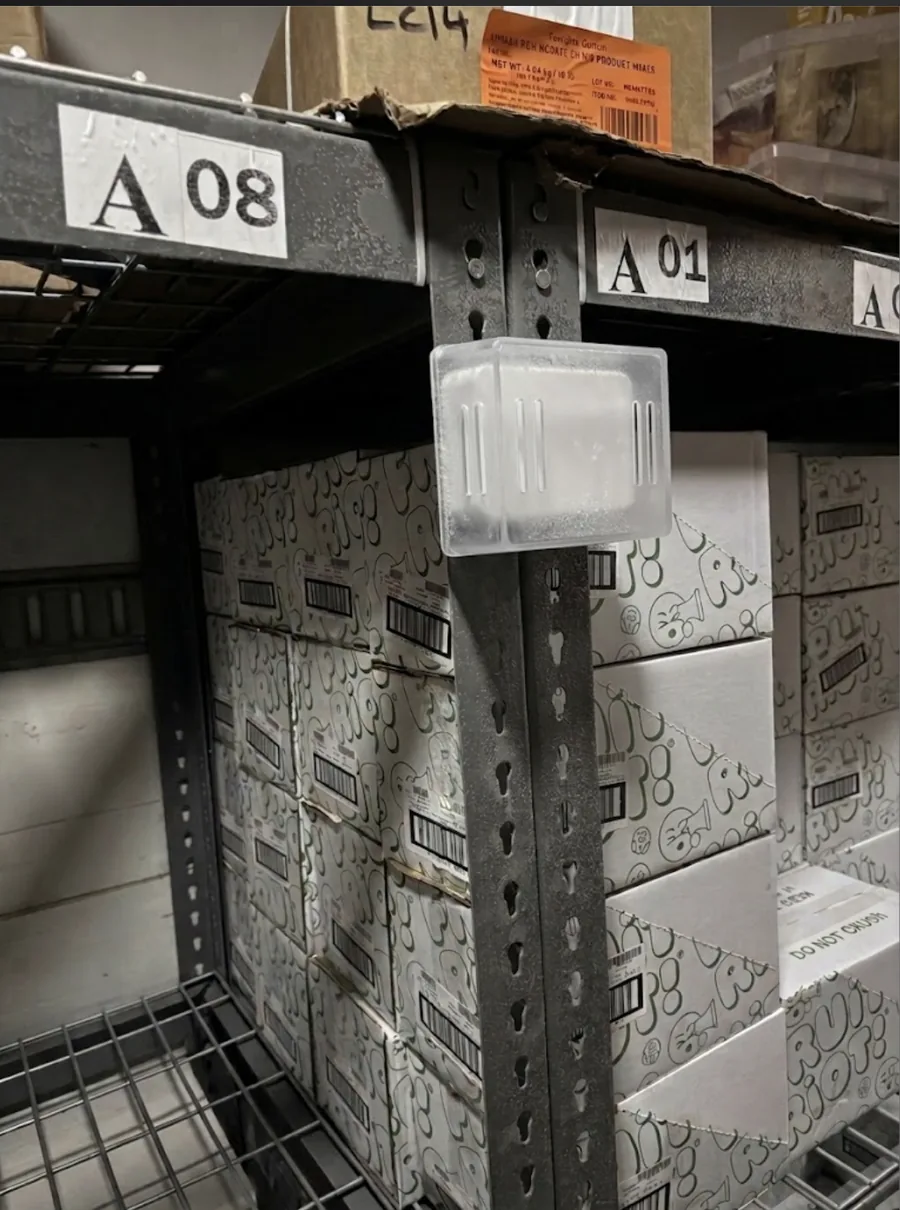
A TemperatureWise sensor clipped to the upright of a pallet rack inside a loaded freezer, covered in frost.
27 daysof warning before a $450,000 freezer repair
27 daysof warning before a $450,000 freezer repairPhiladelphia distribution center, 2025
$0 loston a $150,000 freezer, alerted 53 hours before its peakPhiladelphia, April 2025
5 h 45 minfrom the alert to the safety line on a parked reeferMississauga, December 2025

What you get

Four things TemperatureWise does for a cold store

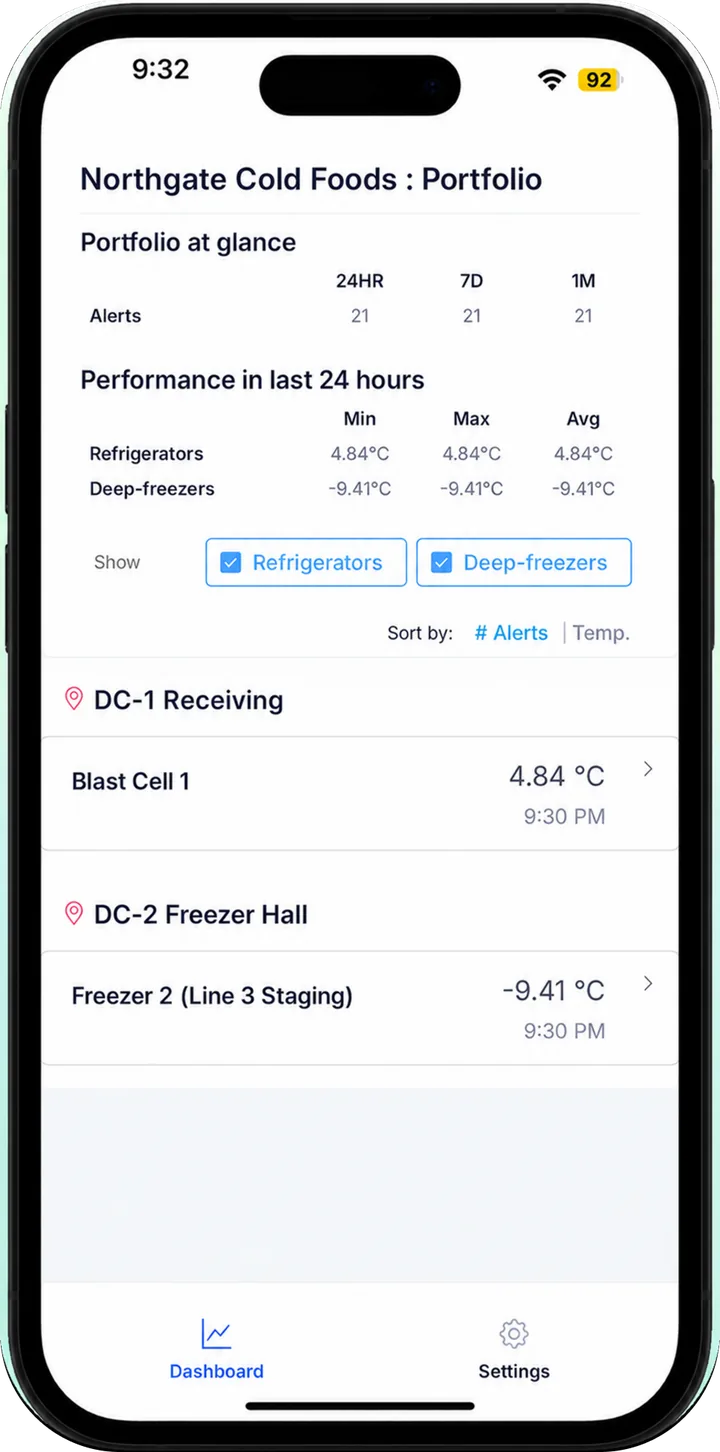
The TemperatureWise app showing a portfolio with a receiving dock, a blast cell and a freezer hall, each with its latest reading.Illustrative data

Each client sees its own rooms

You watch every room and site on one screen. TemperatureWise can also give each client a view of just the rooms that hold its product.

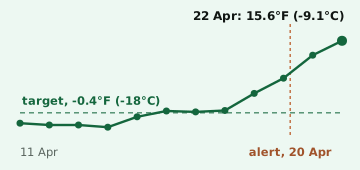
The coldest reading of each day in a Philadelphia freezer, 11 to 22 April 2025. It climbs from about -3°F (-19°C) to 15.6°F (-9.1°C), and TemperatureWise alerts on 20 April.

It sees a failing freezer days or weeks early

The coldest reading of each day creeps up before a room fails. TemperatureWise watches that trend and points at the likely cause, such as the coil or a refrigerant leak.
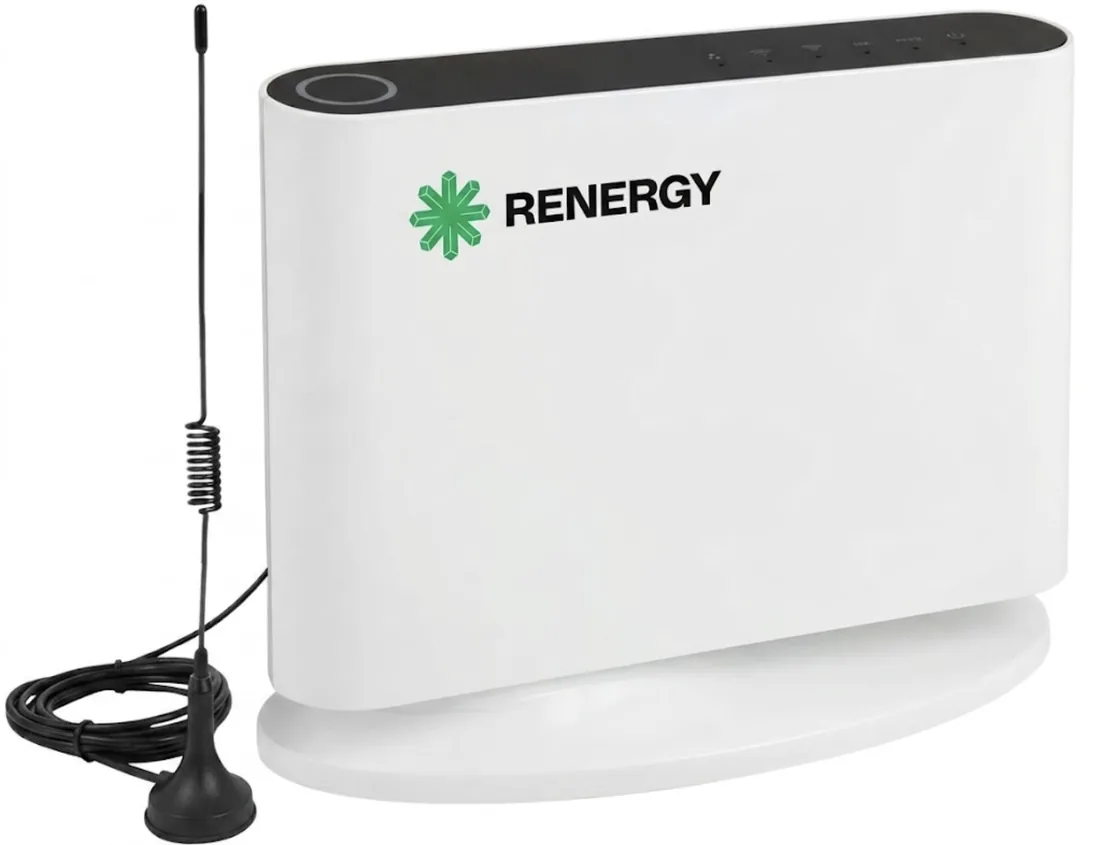
The Renergy gateway, a white desktop unit with a magnetic whip antenna on a lead.

One gateway covers the building, even in a power cut

LoRa radio passes through freezer panels and steel, so nothing is drilled and nothing depends on plant Wi-Fi. With cellular and battery backup it keeps reporting when the power goes.

How one gateway covers a multi-room site
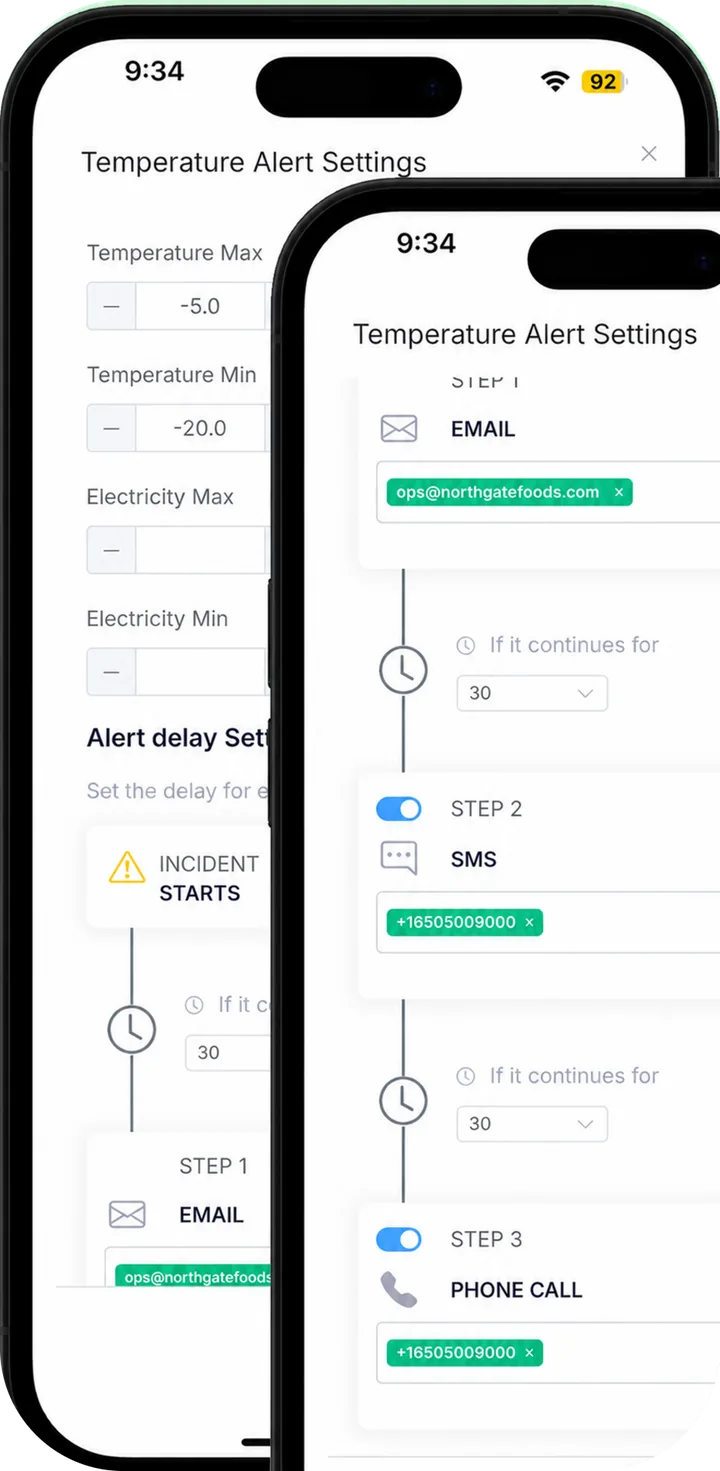
TemperatureWise alert settings with three steps: email, then a text message, then a phone call, each after a delay.Illustrative data

Alerts climb until someone answers

Email first, then a text, then a phone call, with a delay you choose between steps. Each sensor can reach up to three people by text or call.

Where it goes wrong

Five ways a cold store loses temperature

Three show up in the failure data. Two come from people who run cold rooms, in their own words.
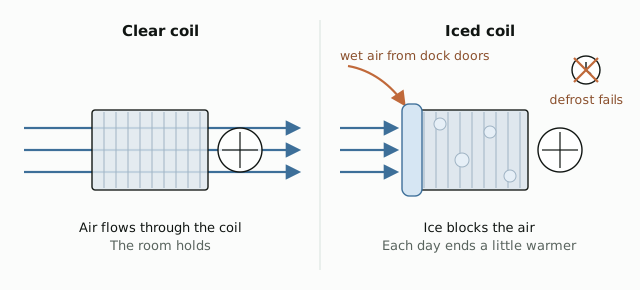
Two views of a freezer's cooling coil. On the left the coil is clear and air flows through it. On the right, wet air from the dock has frozen onto the coil and a failed defrost has left the ice there, so the air stops at the coil.
From the data

Caught 53 hours before the peak in Philadelphia, April 2025

A failed defrost or a busy dock door ices the coil

Wet air from the dock freezes onto the cooling coil, and a failed defrost leaves it there. Air stops moving through the coil, and each day ends a little warmer.
How fast
2 to 5 days
What the log shows
The coldest point of each day steps up
How to tell
Humidity rises before the temperature does
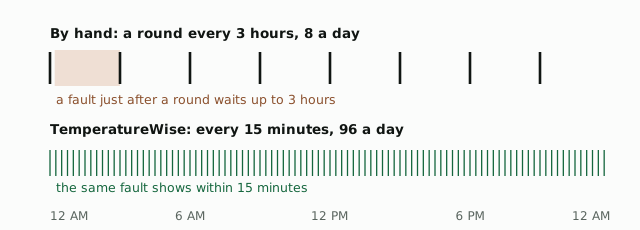
A 24-hour strip. A round by hand every 3 hours gives 8 checks a day, so a fault that starts just after a round waits up to 3 hours to be seen. TemperatureWise reads every 15 minutes, 96 times a day.
In their words

"I'm currently on the overnight rotation and one of my job duties is to ensure the refrigeration system is up and running properly by monitoring the temps."

r/refrigeration

When a person is the monitoring, a failure waits for the next round

Rounds happen every few hours, and not at all when nobody is on site. A Sacramento freezer failed over a long weekend with nobody there, and $125,000 of stock was lost.
The gap
Hours between rounds, days over a weekend
TemperatureWise
A reading every 15 minutes, 96 a day
Then
Email, text, then a call until someone answers
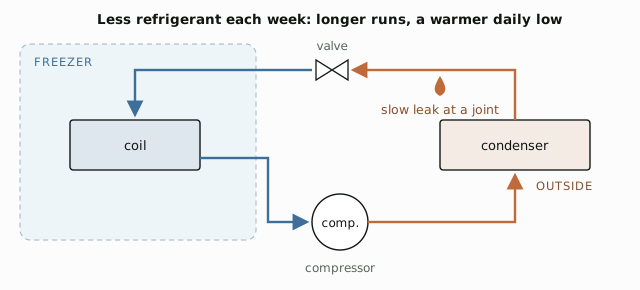
The refrigeration loop: the coil in the freezer, the compressor, the condenser outside and the expansion valve, joined by pipes. A slow leak at a joint means less refrigerant each week, longer run times and a warmer daily low.
From the data

Caught 27 days before the first repair in Philadelphia, June 2025

A slow refrigerant leak takes weeks to show

Each week there is a little less refrigerant to carry heat out. The room runs longer, and its coldest point of the day creeps up and does not come back.
How fast
1 to 8 weeks
What the log shows
The daily low creeps up
How to tell
Run times grow too. A technician confirms with pressures
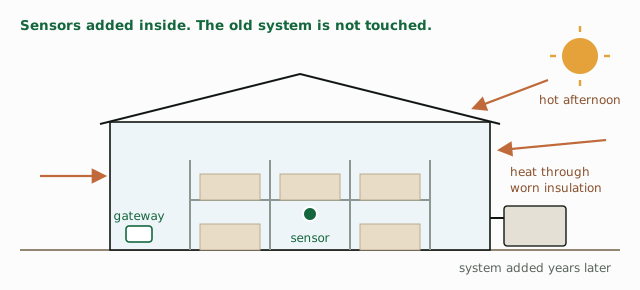
An older warehouse on a hot afternoon. Heat comes in through worn insulation in the walls and roof, and the refrigeration unit outside was added years later. TemperatureWise sensors and a gateway are added inside without touching the old system.
In their words

"Very old refrigerated (<38°F [3°C]) warehouse, not particularly well insulated, with an 'interesting' system retrofitted ca. 2010."

r/refrigeration, asking for a Wi-Fi connected controller

An old building with a patched system has little margin on a hot day

Worn insulation lets more heat in, and a system added years later may have little capacity to spare. The room warms with the afternoon heat and takes longer to recover after each load.
How fast
Every hot afternoon
What the log shows
The room warms and cools with the outdoor heat
TemperatureWise
Adds sensors without touching the old system
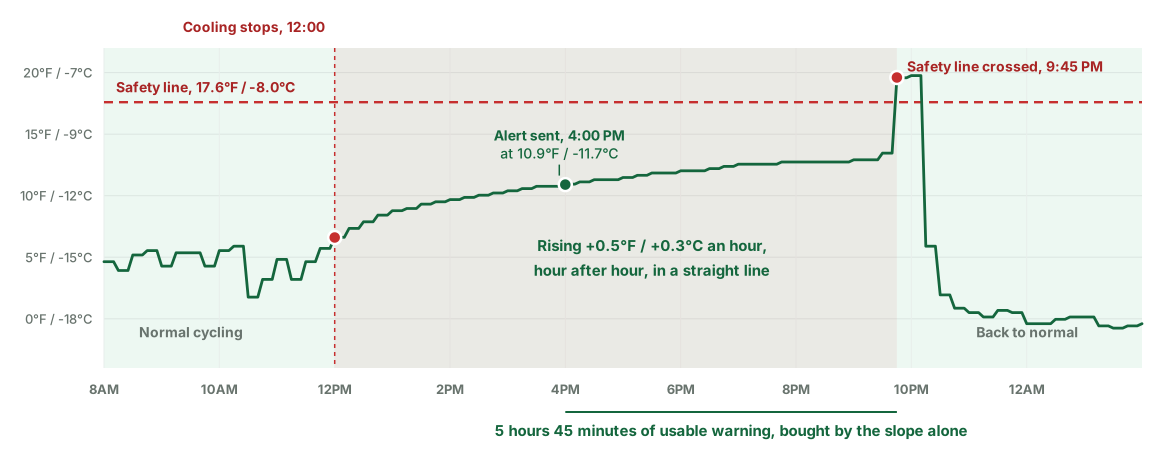
Temperature of a parked reefer in Mississauga on 26 December 2025. Cooling stops at noon and the temperature climbs in a straight line. An alert goes out at 4 PM at 10.9°F (-11.7°C), and the safety line is crossed at 9:45 PM.
From the data

Caught 5 h 45 min before the safety line in Mississauga, December 2025

A reefer parked as storage can stop and not restart

A parked reefer on an automatic stop-start cycle can fail to restart. In Mississauga one stopped at noon on 26 December, and a weak battery kept it from starting again. Up to $125,000 of stock was inside.

How fast
Hours
What the log shows
A straight climb once cooling stops
How to tell
No restart after a normal engine-off period

Real failures, real numbers

One freezer failed twice in 2025, and TemperatureWise caught it both times

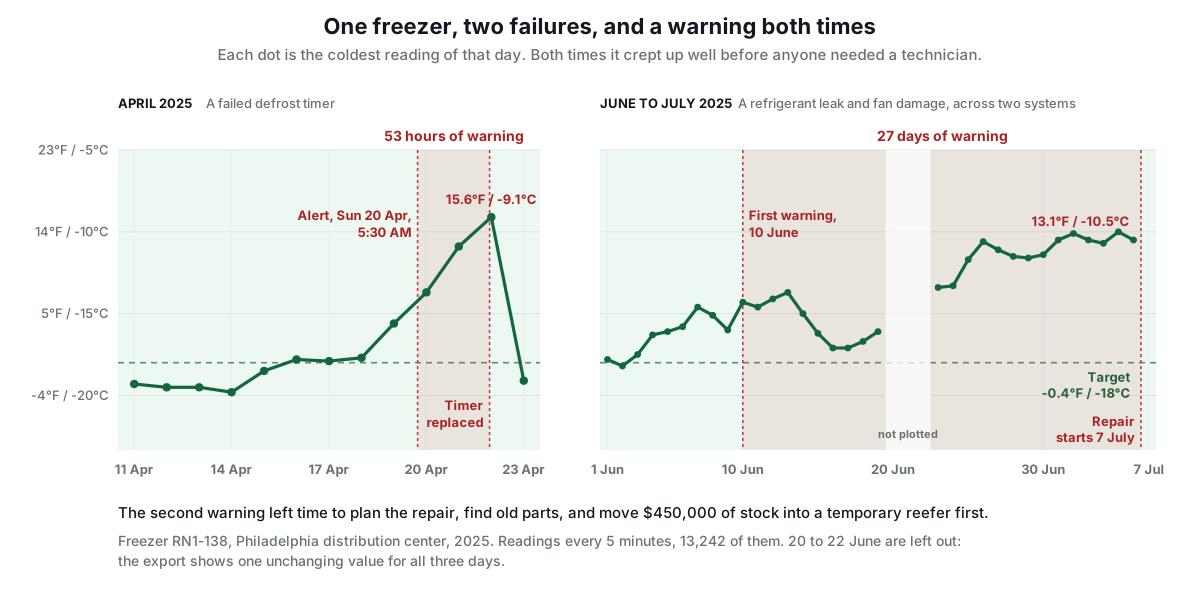
Two charts of the coldest reading each day in one Philadelphia freezer. In April 2025 it climbs for a week and an alert comes 53 hours before a failed defrost timer is replaced. In June and July 2025 it climbs for weeks and the first warning comes 27 days before repairs begin.

The June failure, step by step

  1. TemperatureWise alerts the team to a developing problem. The room can still reach about 6.8°F (-14°C).
  2. TemperatureWise's AI diagnoses a refrigerant leak and alerts the team.
  3. First repair. One of the two systems is back.
  4. $450,000 of stock moved to a temporary reefer. Final repair.
  5. Stable again near the -0.4°F (-18°C) target.

"Without your timely interference, things could have gone sideways. It turned out to be a great save."

Operations Manager, frozen smoothie brand

All three case studies are at the end of the page.

Pricing and payback

A three-room cold store costs $2,500 up front and $2,300 a year

Three large rooms, three sensors each

ItemOncePer year
9 LoRa sensors at $200$1,800
Gateway for a larger site$450
Cellular connection$125$50
Battery backup$125
Monitoring, 9 sensors at $250$2,250
Total$2,500$2,300

No extra charge for the dashboard, alerts, reporting or setup. Price list of 1 September 2026.

One caught failure is worth 54 to 196 times the yearly fee

The $125,000 one Sacramento freezer lost over a long weekend would have paid for 54 years of monitoring.

Multiple = the stock in the room ÷ the $2,300 yearly fee. The one-time $2,500 is left out, as on the TemperatureWise calculator. Losses and stock values are from the published case studies.

Want a detailed calculation for your own site? The full calculator on the TemperatureWise page takes your rooms, sensors and connection.

Open the full calculator

How it works

Three steps, nothing drilled, no shutdown

  1. We plan it from your floor plan

    TemperatureWise marks where each sensor and the gateway go before anything ships.

  2. You place the sensors and plug in the gateway

    Magnet, adhesive pad or one screw. The gateway goes into an ordinary socket.

  3. It learns each room in the first week

    TemperatureWise learns each room's defrost pattern and sets alerts around it, so a normal defrost is not an alarm.

The Renergy gateway, a white desktop unit with a whip antenna.
In the officeThe gateway sits on a shelf, plugged into an ordinary socket.
LoRa radio through walls and freezer panels. Nothing drilled.
A TemperatureWise sensor clipped to freezer racking at product height.
In the freezerThe sensor clips to the racking, at the height the product sits.
Every 15 minutesReadings kept indefinitely
Rated to -40°F (-40°C)Battery lasts 5 to 8 years
Temperature and humidityFrom one sensor

The rules

The record US and Canadian rules ask a cold store to keep

US · 21 CFR 117.206

A warehouse holding packaged food that needs refrigeration monitors its temperature and keeps records. The records are reviewed within 7 working days.

Read 21 CFR 117.206

US · 21 CFR 1.908

The loader checks that a refrigerated trailer was properly pre-cooled, where that is needed.

Read 21 CFR 1.908

Canada · CFIA

Licensing a cold store is voluntary unless the food is headed for export. A licensed store keeps a written preventive control plan.

Read CFIA's guidance on cold storages

TemperatureWise produces the record. The review and sign-off stay with you.

Common questions

How do you monitor cold storage temperature remotely?

With a battery sensor in each room and one gateway on site that sends the readings to your phone and a web dashboard. TemperatureWise uses LoRa radio, which passes through insulated freezer panels, so nothing is drilled.

How many temperature sensors does a cold storage room need?

One for a small walk-in, two for a mid-sized one and three for a large one. Large means about 2,000 sq ft (186 m²) or more. That is a starting point: TemperatureWise sizes the number from your floor plan.

How much does cold storage temperature monitoring cost?

About $2,500 up front and $2,300 a year for a site with three large rooms on TemperatureWise, with cellular and battery backup included.

Can TemperatureWise monitor a reefer trailer parked at a dock?

Yes. At a Mississauga production site, a parked reefer stopped cooling at noon on 26 December 2025. A TemperatureWise sensor alerted the team at 4 PM, at 10.9°F (-11.7°C).

Does TemperatureWise work with ammonia refrigeration systems?

Yes. TemperatureWise monitors the rooms an ammonia system cools. The mechanical health of the ammonia plant, and its gas detection, are not covered.

See what your coldest room has been doing

Send us 30 days of readings from one room, or let us put a sensor in it. We will show you what it was doing before anyone noticed. No purchase needed.

Sources for every figure on this page
  1. The April 2025 failure: the Philadelphia freezer case study and its sensor export, readings every five minutes
  2. The June to August 2025 failure: the dual-system freezer case study and its sensor export. The chart leaves out 20 to 22 June, where the export shows one unchanging value
  3. The parked reefer: the Mississauga stationary reefer case study
  4. The Sacramento loss: the Philadelphia freezer case study, which records the long-weekend failure that led the brand to TemperatureWise
  5. Prices, sensor specifications and alert limits: the TemperatureWise price list of 1 September 2026
  6. Onset times and log signatures: Renergy's internal refrigeration failure-mode reference, September 2026. The 2 to 3 hour round: how fast monitoring needs to check
  7. Operator quotes: two r/refrigeration posts, one from a worker on an overnight monitoring rotation and one asking how to add remote control to an old refrigerated warehouse
  8. US rules: 21 CFR 117.206 and 21 CFR 1.908 (eCFR). Canada: CFIA, cold storages and export certification

Last reviewed 24 September 2026