 Illustrative data
Faults show as a pattern, not a pile of alarms
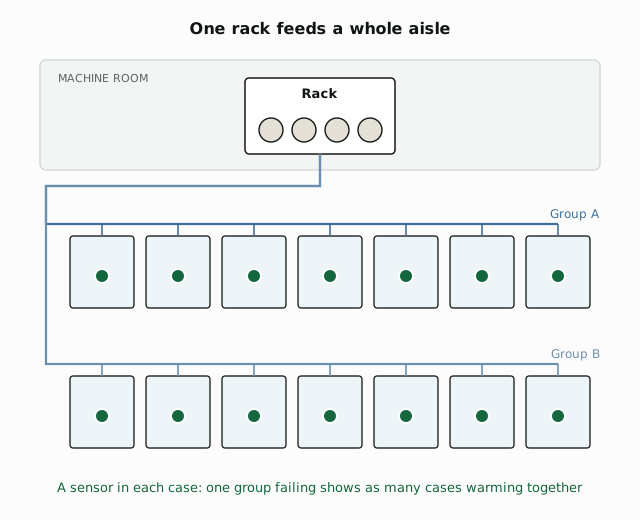
With a sensor in more than one case on each group, you see whether one case is warm or every case on a group. Every case and walk-in shows on one screen.

TemperatureWise for grocery and supermarkets
In a supermarket, one rack fault can warm a whole aisle. With a TemperatureWise sensor in more than one case on each rack group, it shows as a group fault in the first hours, not case by case.
What you get
Illustrative dataWith a sensor in more than one case on each group, you see whether one case is warm or every case on a group. Every case and walk-in shows on one screen.
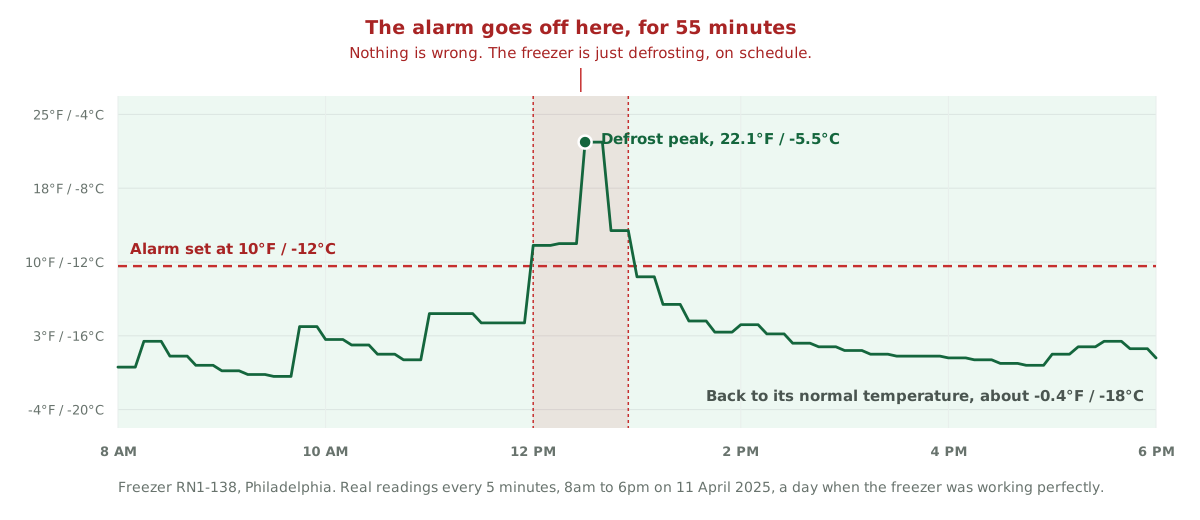
Low-temperature cases have the tallest defrost peaks in the store. TemperatureWise learns each case's defrost pattern, so a normal defrost is not an alarm.
Why temperature alarms cry wolf Illustrative data
Every case, every 15 minutes, kept indefinitely, for the inspector and for your own food safety team.
 Illustrative data
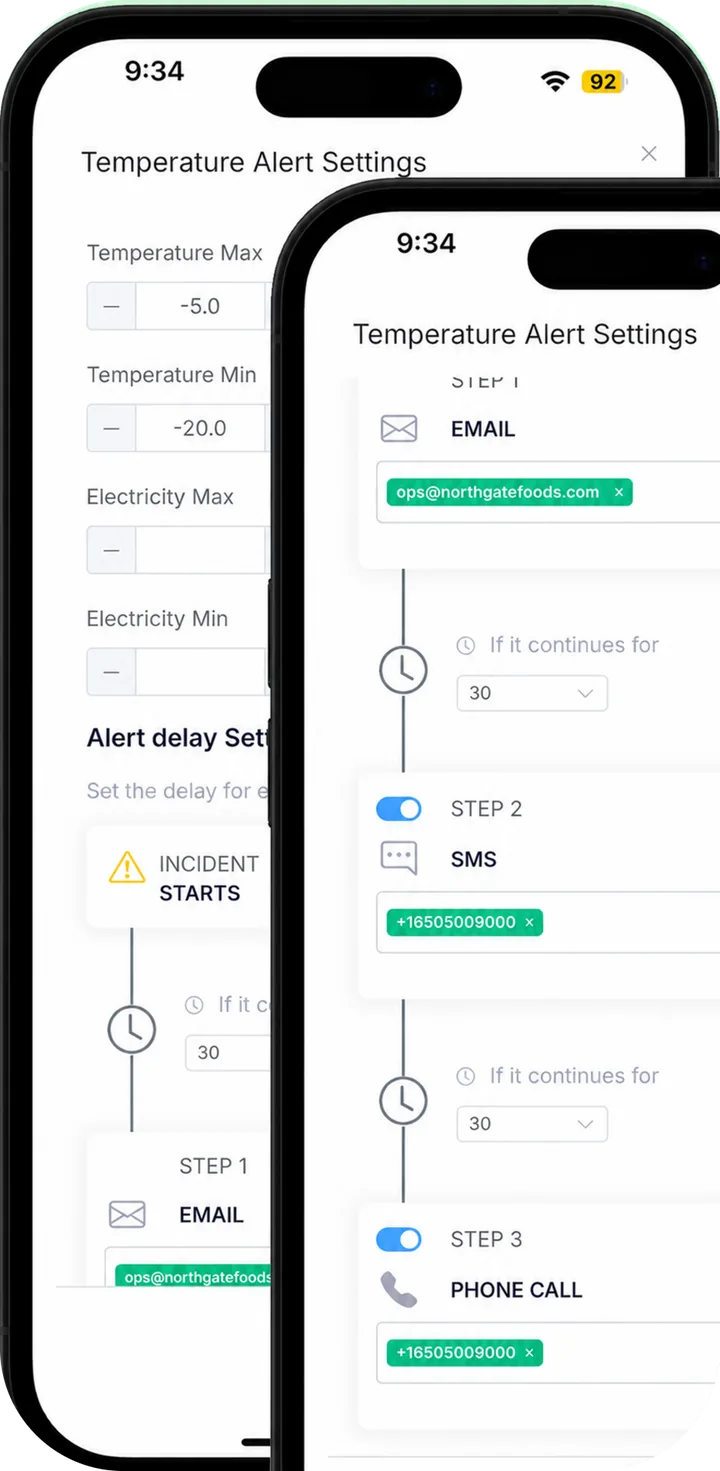
Email, then a text, then a call, to up to three people per sensor. A rack fault at 3 AM reaches someone who can call the refrigeration contractor.
Where it goes wrong
Most failures here are shared across cases. Two come from people who work in stores, in their own words; three follow from how a rack works.
"Refrigeration system went down. It's labor day weekend"
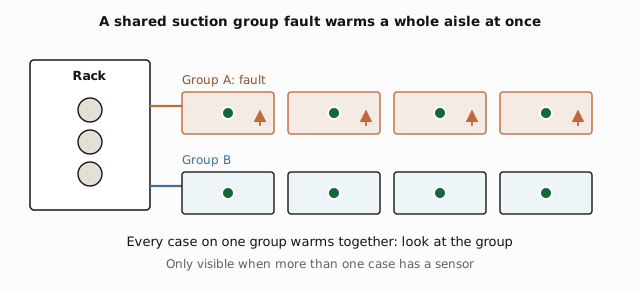
The cases in an aisle share one suction group on the rack. When the group fails, every case on it warms together. That pattern is the strongest signal in a supermarket, and you only see it with a sensor in more than one case.
"Manager says this temperature is ok, is it?"
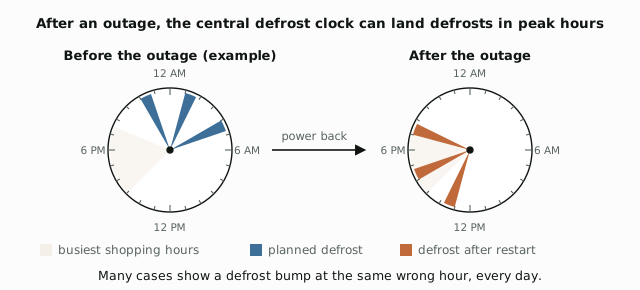
The rack runs its cases' defrosts on a central schedule. After a power outage the clock can restart at the wrong time, and defrosts land in the busiest hours, where shoppers and staff see the warm readings.
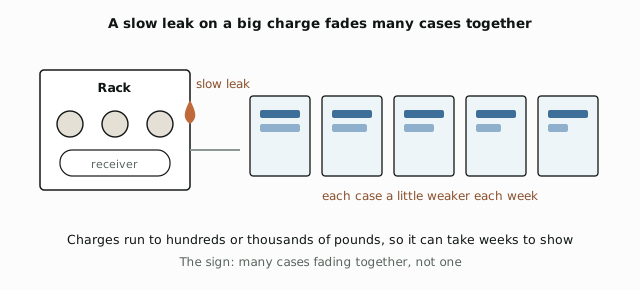
A supermarket rack holds hundreds to thousands of pounds of refrigerant. A slow leak takes weeks to show, and when it does, many cases lose ground at once rather than one.
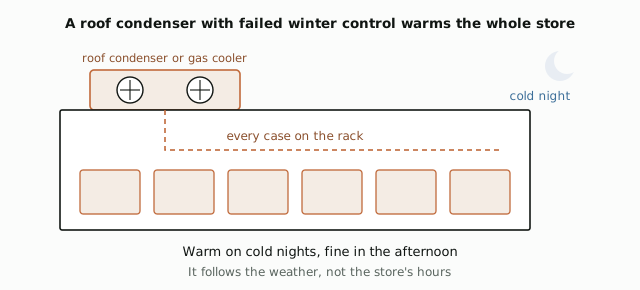
The rack sheds its heat through a condenser or a CO2 gas cooler on the roof. In cold weather, a failed head-pressure control can leave every case on the rack short of cooling on the coldest nights.
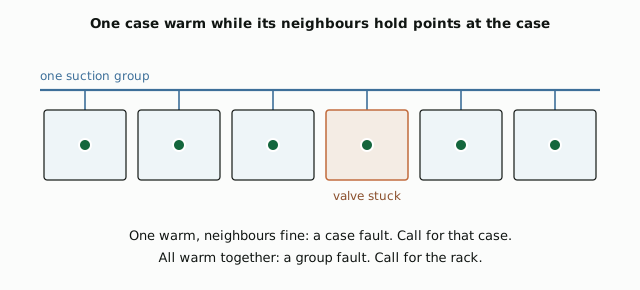
Each case has its own valve on the group. If one sticks shut, that case warms while the cases beside it hold. That is how you tell a case fault from a group fault, and it decides who gets called.
Pricing and payback
| Item | Once | Per year |
|---|---|---|
| 14 LoRa sensors at $200 | $2,800 | |
| Gateway for a larger site | $450 | |
| Cellular connection | $125 | $50 |
| Battery backup | $125 | |
| Monitoring, 14 sensors at $250 | $3,500 | |
| Total | $3,500 | $3,550 |
Two cases on each of four rack groups, and two sensors in each walk-in. No extra charge for the dashboard, alerts, reporting or setup. Price list of 1 September 2026.
One sensor on a group tells you something is wrong. Two tell you whether it is the case or the rack, which decides who you call and how fast.
A sensor in every case costs more and adds little to that question. Two per group, plus the walk-ins, is the starting point, and TemperatureWise sizes it from your case list.
Want a detailed calculation for your own site? The full calculator on the TemperatureWise page takes your rooms, sensors and connection.
Open the full calculatorHow it works
TemperatureWise marks where each sensor and the gateway go before anything ships.
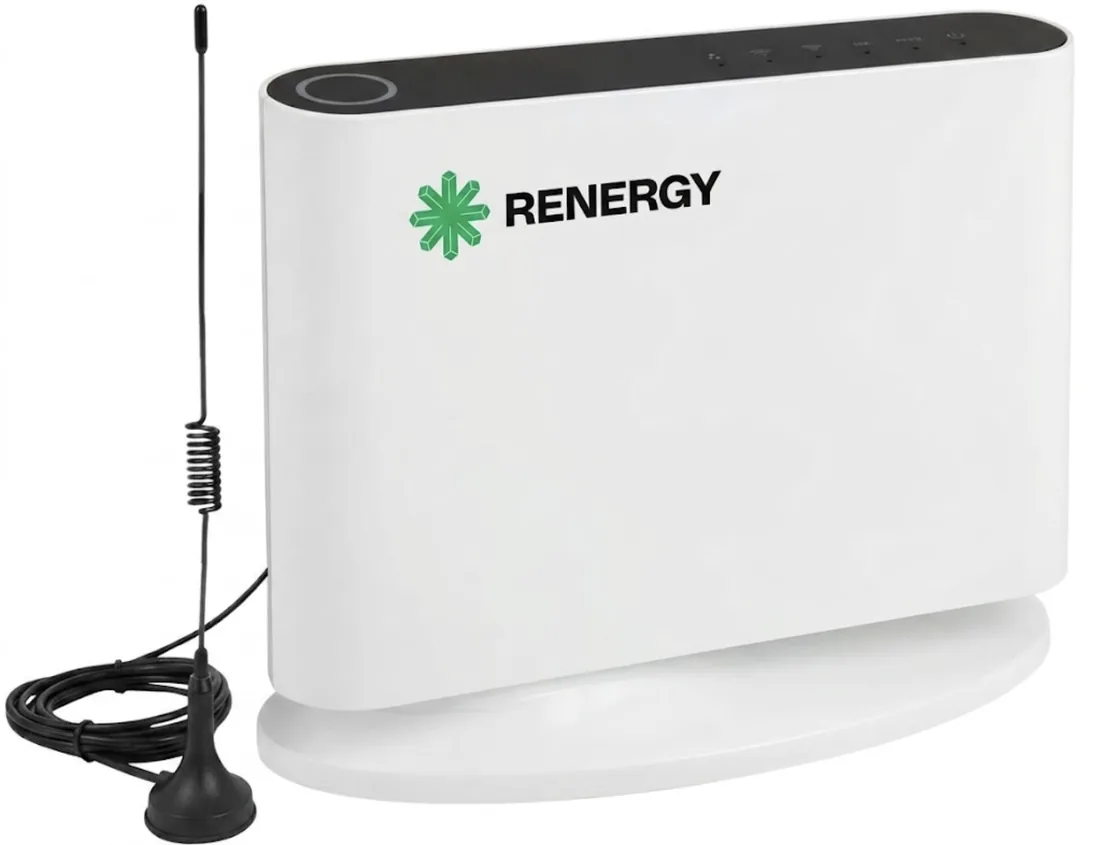
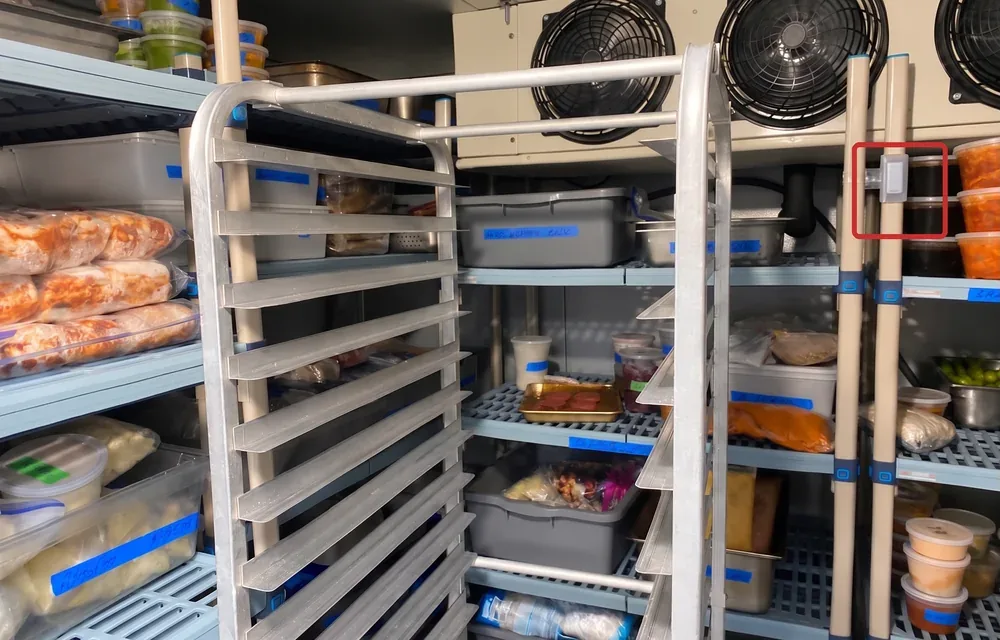
Magnet, adhesive pad or one screw. The gateway goes into an ordinary socket.
TemperatureWise learns each unit's defrost pattern and sets alerts around it, so a normal defrost is not an alarm.
The rules
US · FDA Food Code
Cold food is held at 41°F (5°C) or colder, in display cases as much as in storage.
Read the FDA Food CodeOntario · O. Reg. 493/17
Food is held at 4°C (39°F) or colder (s. 27), frozen food stays frozen (s. 28), and every unit has an accurate thermometer (s. 30).
Read O. Reg. 493/17Refrigerant leak rules apply to racks this size too, and they are changing, so check the current rule with your contractor. TemperatureWise produces the temperature record; the sign-off stays with you.
With sensors in the cases and walk-ins that report every 15 minutes to one gateway in the store. TemperatureWise starts with sensors in at least two cases on each rack group, so a group fault and a single-case fault look different.
Compare the case with its neighbours on the same group. One case warm while the others hold is a case fault; every case on one group warming together is a group or rack fault. That comparison needs a sensor in more than one case.
About $3,500 up front and $3,550 a year for a store with four rack groups and three walk-ins on TemperatureWise, with cellular and battery backup. Each extra case adds $200 once and $250 a year.
No. TemperatureWise does not read the rack controller or its alarms. It measures the cases and walk-ins on its own sensors, so it keeps reporting when the rack or its controller is the thing that failed.
Proof
Send us 30 days of readings from one room, or let us put a sensor in it. We will show you what it was doing before anyone noticed. No purchase needed.