TemperatureWise for pharmacies

Temperature monitoring for pharmacies

The fault that ruins many vaccines is a fridge running too cold, and a high-only alarm never sees it. TemperatureWise alerts at both ends of 36°F to 46°F (2°C to 8°C), with a reading every 15 minutes.

  • Community pharmacies
  • Hospital pharmacies
  • Clinics that store vaccine
  • Pharmacy chains
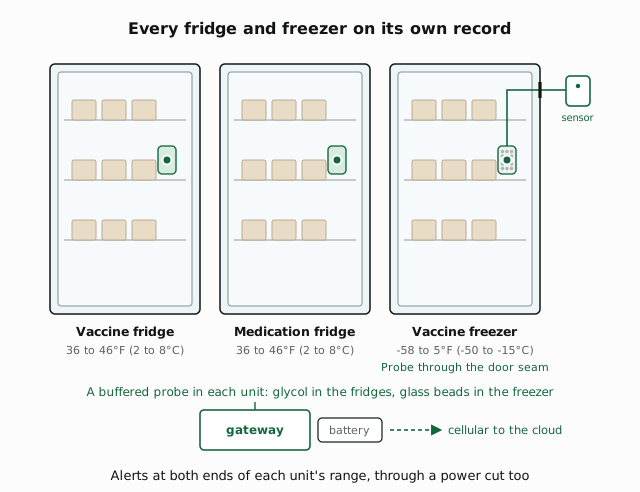
A pharmacy back room with a vaccine fridge, a medication fridge and a vaccine freezer. In each fridge a TemperatureWise probe sits in a small glycol bottle among the stock. In the freezer the probe sits in a small bottle of glass beads, and its cable runs in through the door seam to the sensor outside. The gateway on the shelf has a battery backup and a cellular link, so readings reach the cloud and alerts reach a phone even in a power cut.
Every 15 minutesa reading from each TemperatureWise LoRa sensor; CDC asks for at least every 30TemperatureWise, CDC toolkit
±0.2°C (±0.4°F)TemperatureWise LoRa sensor accuracy, against CDC's ±0.5°C (±1°F)TemperatureWise, CDC toolkit
Nearly $500,000of cold product lost in one pharmacy power outager/pharmacy thread, our research

What you get

Four things TemperatureWise does for a pharmacy

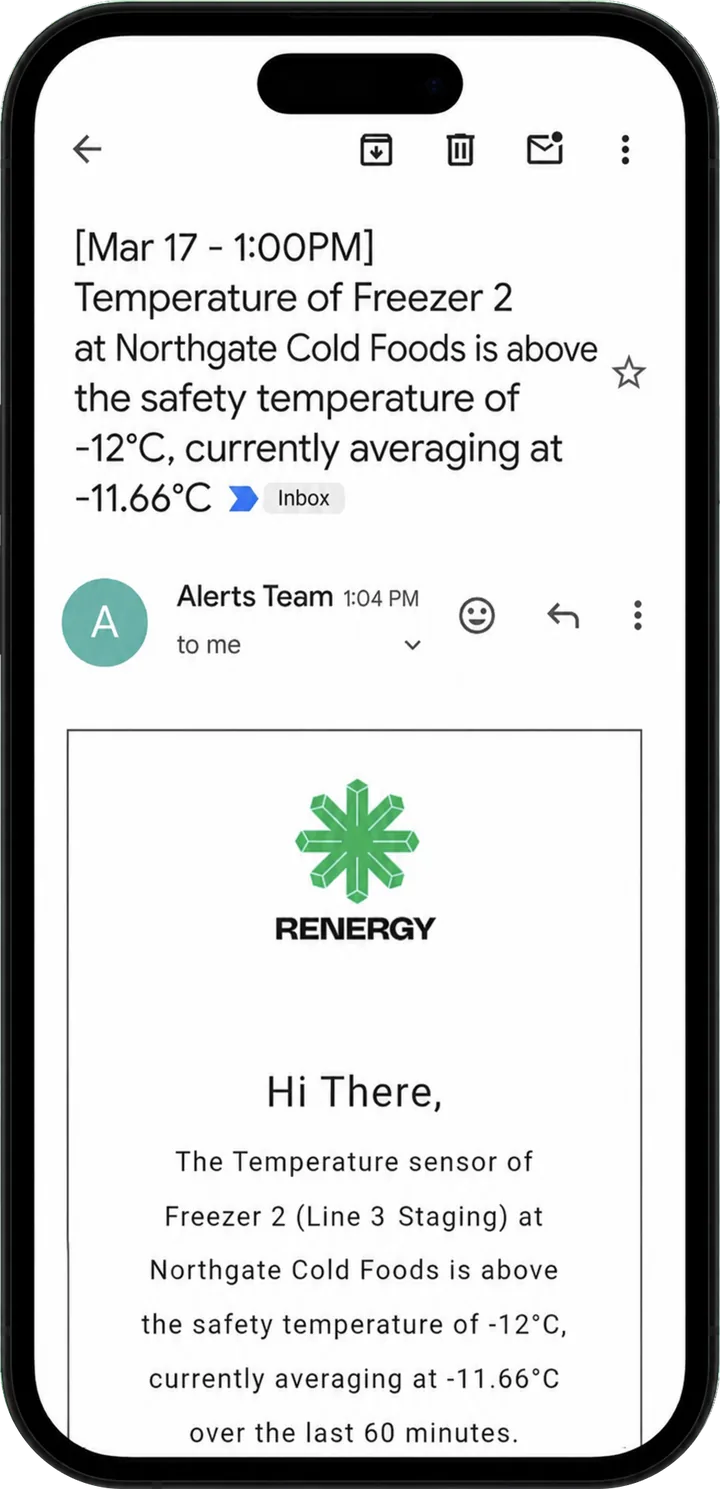
A TemperatureWise email alert saying a freezer is above its safety temperature.Illustrative data

Alerts when it runs too cold, not only too warm

A fridge running below 36°F (2°C) can freeze vaccine while a high-only alarm stays quiet. TemperatureWise alerts at both ends of the range.

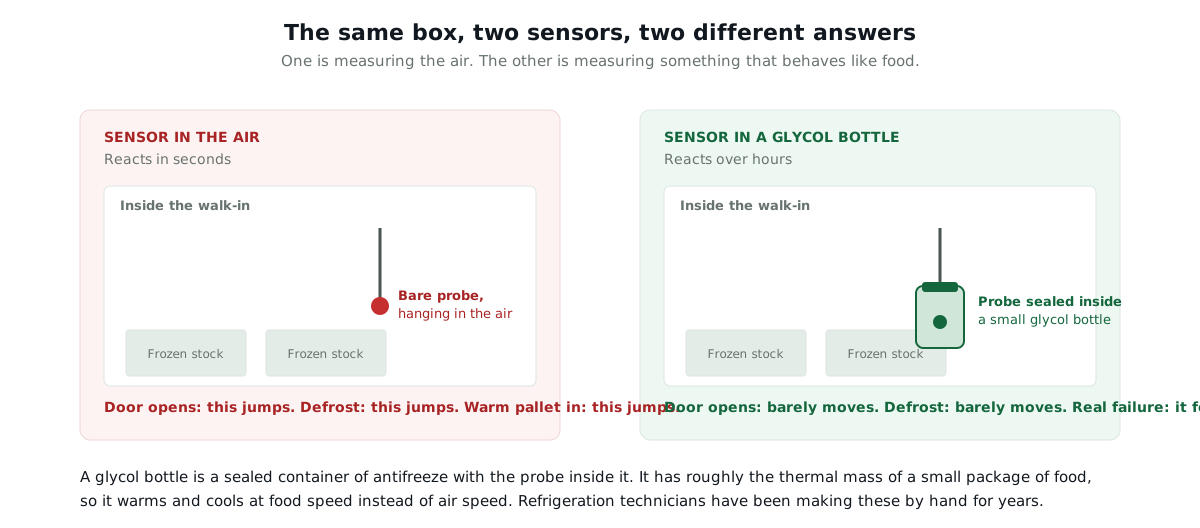
A two-panel diagram of the inside of a cold room. On the left a bare probe hangs in the air above the stock, and a door opening, a defrost or a warm pallet all make it jump. On the right the probe is sealed inside a small bottle of glycol on the shelf, and the same events barely move it while a real failure still shows up.

A buffered probe that reads what the stock feels

TemperatureWise has a probe version that sits in a glycol bottle, the kind of buffered probe CDC asks for, so door openings do not read as excursions. In the freezer, where a glycol mix can freeze, the probe sits in glass beads.

Glycol buffers and why air temperature lies
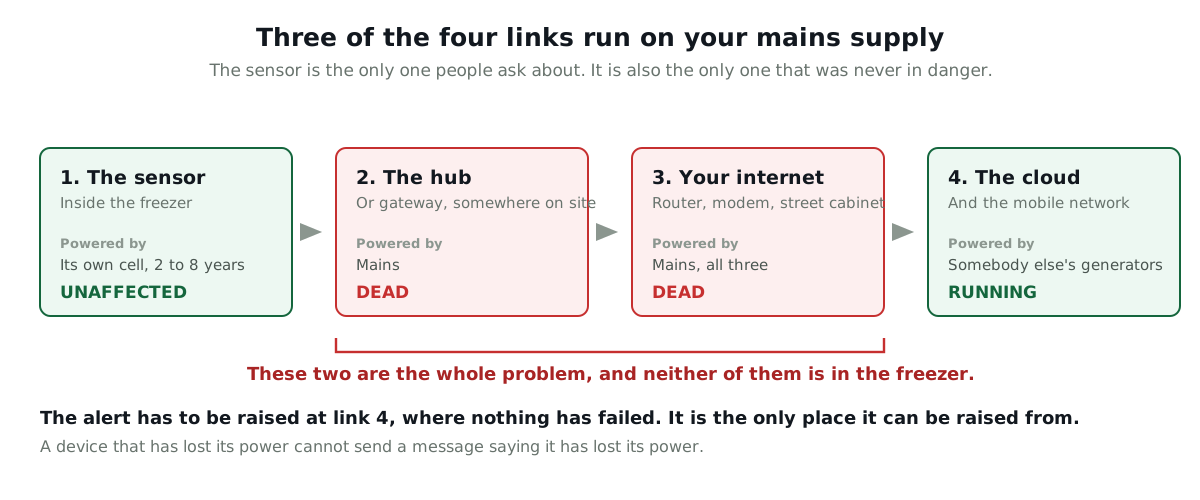
The four links between a freezer sensor and your phone. The sensor runs on its own battery and keeps reading in a power cut. The gateway and your internet run on mains and go down. The cloud and the mobile network keep running, so the alert is raised there.

The record keeps going through a power cut

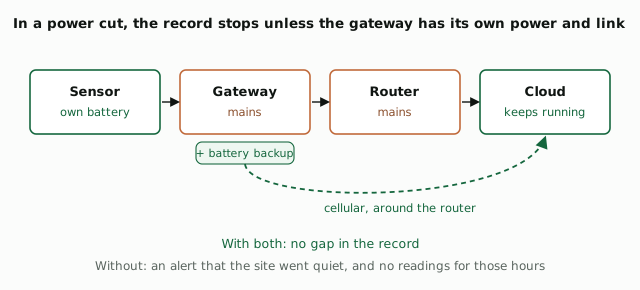
The sensors run on their own batteries. With battery backup and cellular on the gateway, readings keep reaching the cloud when the building loses power.

What happens when the power goes out
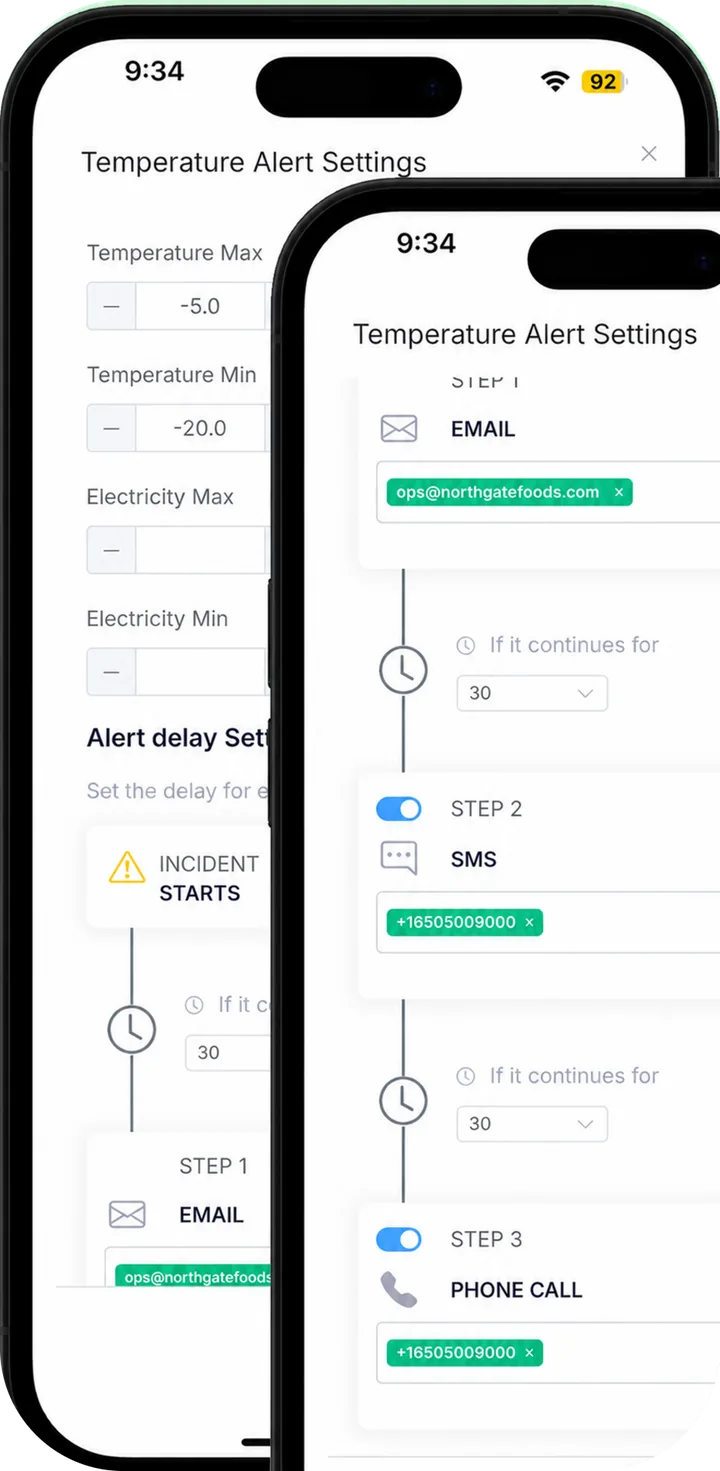
TemperatureWise alert settings with three steps: email, then a text message, then a phone call, each after a delay.Illustrative data

Alerts climb until someone answers

Email, then a text, then a call, to up to three people per sensor. A fridge failing at midnight reaches the pharmacist on call.

Where it goes wrong

Four failures worth an alert, and the everyday spikes that aren't

A pharmacy fridge holds a narrow range, 36°F to 46°F (2°C to 8°C). Four faults take it out of that range. Busy doors, defrosts and a warm room at night only look like they do.

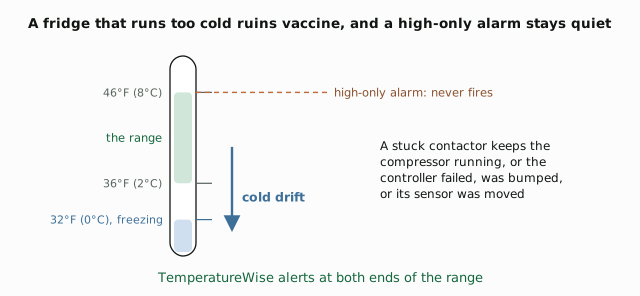
A temperature scale for a pharmacy fridge, with the 36 to 46°F (2 to 8°C) range marked. A high-only alarm sits at 46°F (8°C) and never fires when the fridge drifts cold. A stuck contactor, a failed or bumped controller, or a sensor knocked out of place keeps the compressor running, so the fridge falls below 36°F (2°C) toward freezing, where vaccines with an aluminum adjuvant lose potency for good.
How it fails

A fridge that runs too cold freezes vaccine

A contactor stuck closed, a controller that failed or was bumped, or a sensor knocked out of place keeps the compressor running. The fridge drops below 36°F (2°C), and vaccines with an aluminum adjuvant lose their potency for good if they freeze. In one r/pharmacy thread a fridge had run below 36°F (2°C) for a month.

How fast
Hours
What the log shows
A fridge running below its range
How to tell
Only a low alert catches it
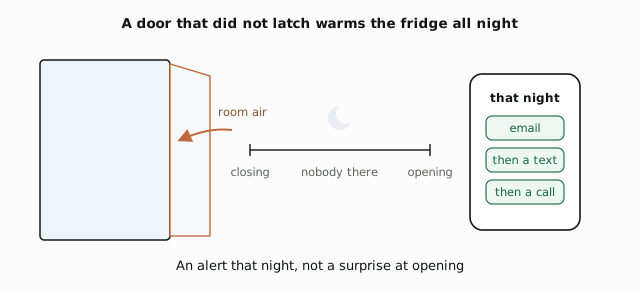
A pharmacy fridge whose door did not latch at closing time. Room air flows in through the gap all night while nobody is there, and the fridge runs flat out. TemperatureWise sends an alert that night, by email, then a text, then a phone call, instead of the problem being found at opening.
How it fails

A door that did not latch warms the fridge all night

In a pharmacy that closes at night, a door that did not latch lets room air in for hours before anyone is there to see it. The fridge runs flat out, and the stock warms through the night.

How fast
Hours
What the log shows
A warm stretch that starts at closing
How to tell
It began at the last opening
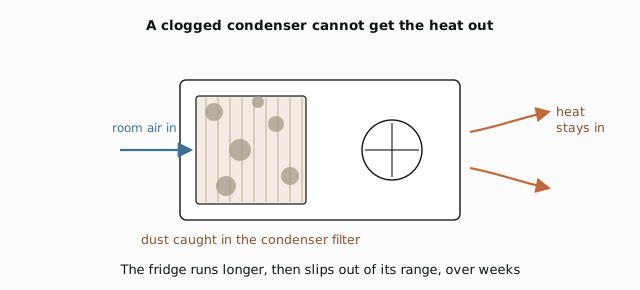
A condensing unit seen from the side. Its condenser coil is clogged with dust caught in the condenser filter, so the fan cannot push air through it and the heat stays in. The unit runs longer, and then the box it cools starts to warm.
How it fails

A clogged condenser filter fades the fridge over weeks

A pharmacy fridge sheds its heat through a condenser, often behind a filter. Left uncleaned, the filter clogs, the fridge runs longer and recovers more slowly, and then it starts to slip out of its range.

How fast
Weeks
What the log shows
Recovery after each opening getting slower
How to tell
Worse when the room is warm
The four links between a pharmacy fridge sensor and a phone. The sensor runs on its own battery and keeps reading in a power cut. The gateway and the router run on mains. With a battery backup on the gateway and a cellular link that goes around the router, the readings keep reaching the cloud, so the record has no gap. Without them, TemperatureWise still alerts that the site went quiet, but those hours have no readings.
In their words

"Store lost near 500k in cold product from a power outage"

r/pharmacy, thread title

A power cut leaves a gap in the record

When the power goes, the fridge stops, and so does most monitoring: the gateway and the router run on the mains. The program expects a continuous record, and the hours without power are the hours with no readings.

How fast
The moment the power goes
What the log shows
A gap, then a warm first reading
TemperatureWise
Battery backup and cellular keep the record going

An air probe on a fixed alarm goes off for these. A buffered probe and a learned pattern do not.

Door openings on a busy day, a long look for one box, defrosts and a room that warms at night move the air in a pharmacy fridge. The stock barely feels them.

An air probe on a fixed alarm

Reads the air, which jumps with every door opening, so it beeps all day and staff learn to ignore it. CDC asks for a probe that reflects the vaccine instead, such as one buffered in glycol.

TemperatureWise

Uses a probe in a glycol bottle, which reads what the stock feels, and learns each unit's pattern in its first week. It stays quiet for the routine, and alerts on the four failures above and at both ends of the range.

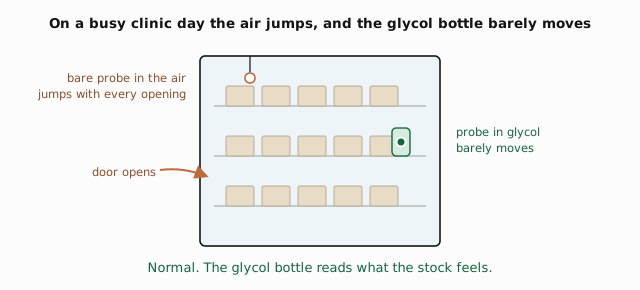
A pharmacy fridge on a busy clinic day. The door opens every few minutes. A bare probe in the air jumps with every opening. A probe sealed in a small glycol bottle among the vaccine barely moves, because it warms and cools like the stock does.
Door openings On a busy clinic day the door opens every few minutes. The air jumps; the glycol bottle barely moves.
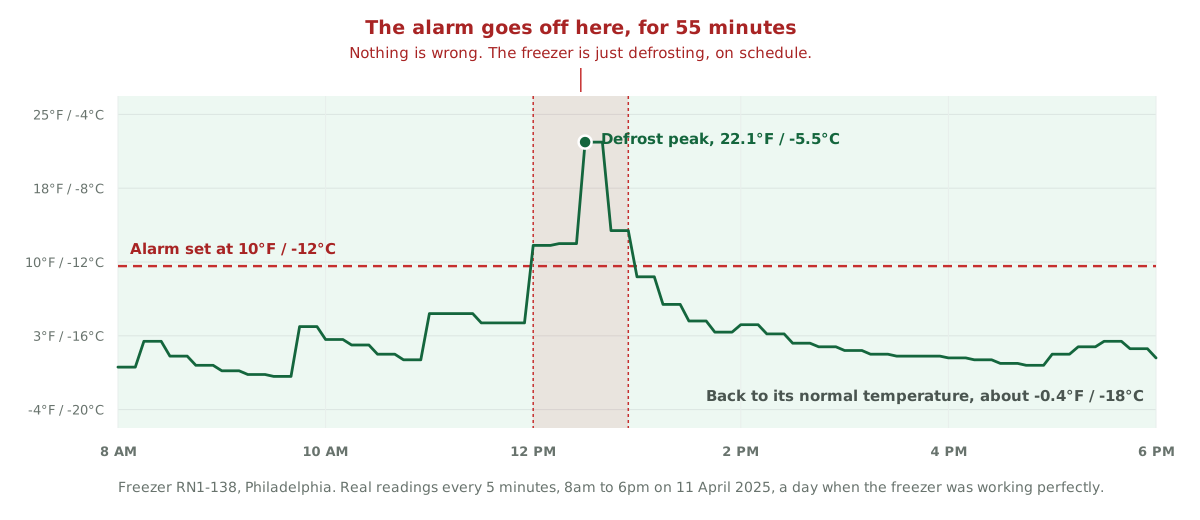
Line chart of a walk-in freezer on 11 April 2025. It runs near -0.4°F (-18°C) all morning. At midday a scheduled defrost lifts it to a peak of 22.1°F (-5.5°C), crossing a dashed alarm line at 10°F (-12°C) for 55 minutes, then it drops back to normal by early afternoon.
Defrosts An automatic defrost warms the air for a short time. A buffered probe shows the stock stays put.
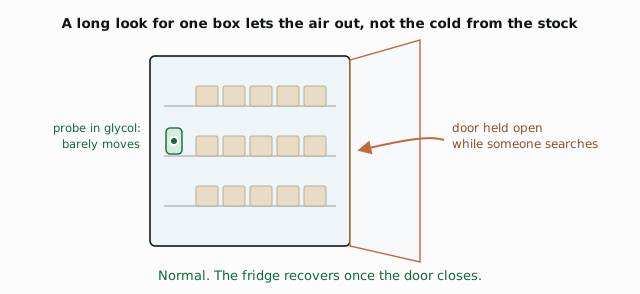
A crowded pharmacy fridge held open while someone searches the shelves for one box. The air inside jumps while the door is open. A probe sealed in a small glycol bottle among the stock barely moves, and the fridge recovers once the door closes.
A long look for one box In a crowded fridge the door stays open while someone finds the right box. The air jumps; the stock barely moves.
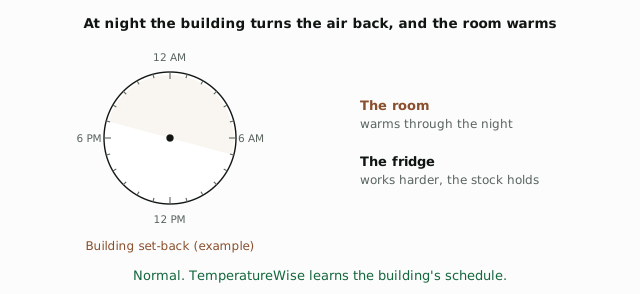
A 24-hour dial with the night hours when the building turns its heating or cooling back, and the room warms. The fridge works harder through the night and the stock holds. That is normal, with no fault in the fridge, and TemperatureWise learns the building's schedule. Example hours.
The room at night The building turns its heating or cooling back at night. The fridge works harder, and the stock holds.

Pricing and payback

A pharmacy with two fridges and a freezer costs $950 up front and $800 a year

Two fridges and a freezer

ItemOncePer year
3 LoRa sensors at $200$600
Gateway for a smaller site$100
Cellular connection$125$50
Battery backup$125
Monitoring, 3 sensors at $250$750
Total$950$800

Cellular and battery backup keep the record going through a power cut. The probe version in a glycol bottle and the NIST traceable calibration certificate are quoted separately. Price list of 1 September 2026.

One power cut cost a pharmacy nearly $500,000

In an r/pharmacy thread, a store lost nearly $500,000 of cold product in a power outage. A year of TemperatureWise for the pharmacy above is $800.

That loss is about 625 times the yearly fee. Monitoring does not stop a power cut. It tells you in time to move the stock, and it keeps the record your program will ask for.

The $500,000 is one thread's figure, as recorded in our research. Your own stock value goes in the calculator below.

Want a detailed calculation for your own site? The full calculator on the TemperatureWise page takes your rooms, sensors and connection.

Open the full calculator

How it works

Three steps, nothing drilled, the fridges stay on

  1. We plan it from your pharmacy layout

    TemperatureWise marks where each probe and the gateway go before anything ships.

  2. You place the probes and plug in the gateway

    In each fridge the probe goes in its glycol bottle among the stock. In the freezer it comes in through the door seam. The gateway goes into an ordinary socket.

  3. It learns each unit in the first week

    Its door openings and defrosts, and it alerts at both ends of the range from day one.

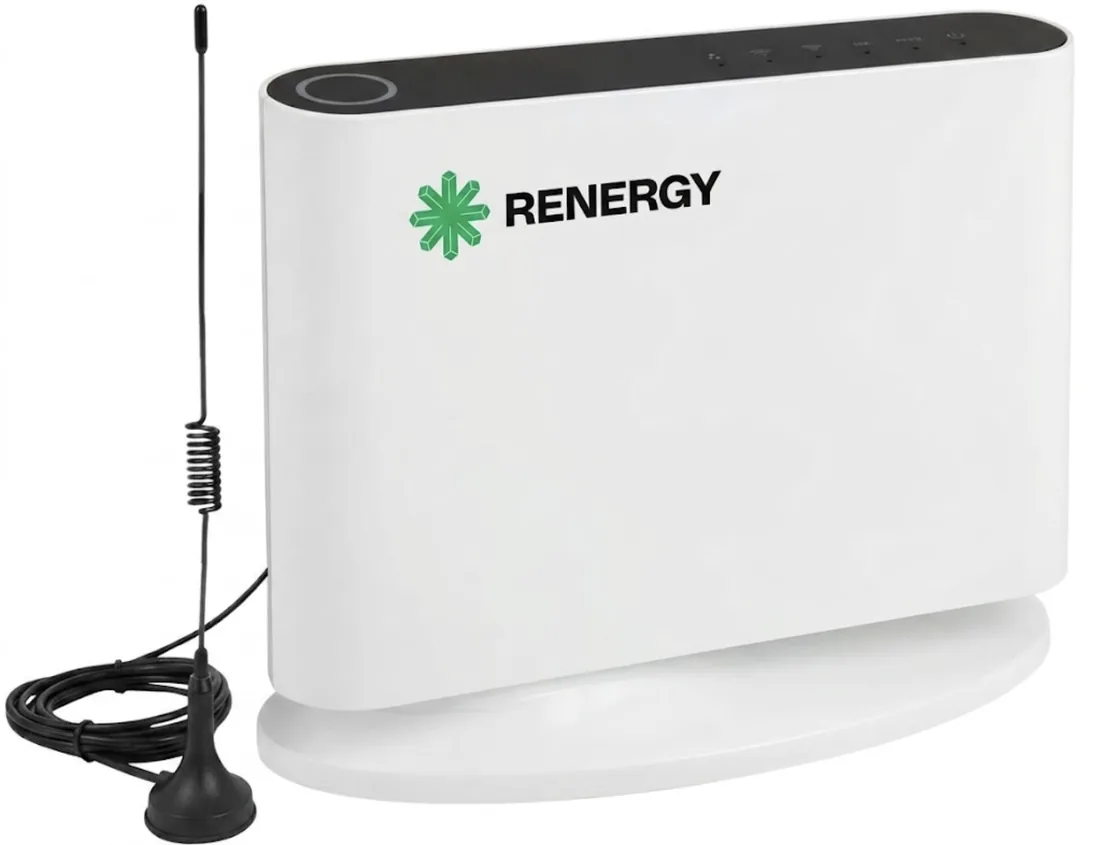
The Renergy gateway, a white desktop unit with a whip antenna.
In the back officeThe gateway sits on a shelf with its battery backup and cellular, so a power cut or a router fault does not stop the record.
LoRa radio through walls and walk-in panels. Nothing drilled.
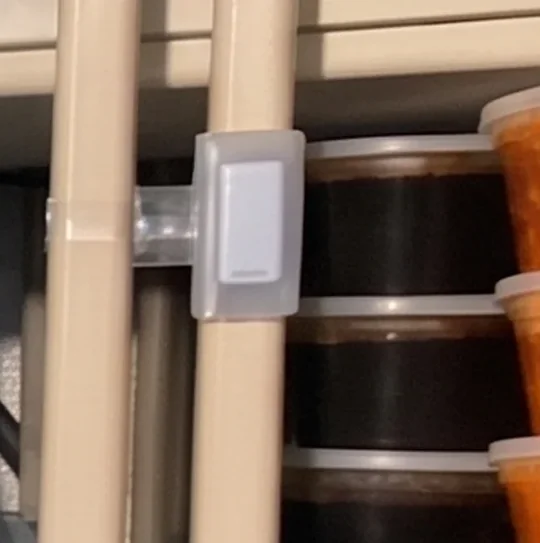
A close view of a TemperatureWise sensor in its bracket on a shelving upright inside a walk-in, with stacked food containers behind it.
In each fridgeIn a pharmacy fridge, the probe sits in a small glycol bottle among the stock. Shown here in a walk-in.
Every 15 minutesReadings kept indefinitely
±0.2°C (±0.4°F)LoRa sensor accuracy
Battery lasts 5 to 8 yearsOn the LoRa sensor

The rules

The storage rules a pharmacy fridge is held to

US · CDC vaccine storage toolkit

What they want. Fridges held between 36°F and 46°F (2°C and 8°C), watched by a data logger with a buffered probe that records at least every 30 minutes. Staff check the minimum and maximum at the start of each workday.

TemperatureWise: A probe in a glycol bottle, a reading every 15 minutes, and alerts at both ends of the range.

Read the CDC toolkit

Canada · Canadian Immunization Guide

What they want. Vaccines stored between 2°C and 8°C (36°F and 46°F), with the thermometer read and recorded at least twice each workday. Vaccines with an aluminum adjuvant lose potency for good if they freeze.

TemperatureWise: Every reading in between, every 15 minutes, with an alert when a unit leaves the range in either direction.

Read the guide's storage section

Your immunization program and your pharmacy regulator set the rest. TemperatureWise produces the record; the start-of-day check and the sign-off stay with you.

Common questions

Does TemperatureWise meet CDC's data logger requirements?

On accuracy and recording interval, the published TemperatureWise figures beat CDC's: ±0.2°C (±0.4°F) on the LoRa sensor against ±0.5°C (±1°F), and a reading every 15 minutes against every 30. A probe version for a glycol bottle and a NIST traceable calibration certificate are both available, quoted separately.

CDC's list also covers the logger's own display, alarm and low-battery indicator, and staff still record the minimum and maximum at the start of each workday. Ask your immunization program how it wants those handled with a remote system before you retire the program's own logger.

Why does a pharmacy fridge need a low temperature alert?

Because the fault that ruins many vaccines is cold, not warm. A fridge that drifts below 36°F (2°C) can freeze vaccines with an aluminum adjuvant, which lose potency for good, and a high-only alarm never fires. TemperatureWise alerts at both ends of the range.
What happens to the record in a power cut?

With battery backup and cellular on the gateway, the TemperatureWise record keeps going: the sensors run on their own batteries, and the gateway reaches the cloud without your router. Without them, TemperatureWise still alerts that the site went quiet, but readings taken while it was offline are not recovered.

How much does pharmacy fridge monitoring cost?

$950 up front and $800 a year for a pharmacy with two fridges and a freezer on TemperatureWise, with cellular and battery backup. The probe version and the calibration certificate are quoted separately.

Can a household or dorm-style fridge hold vaccine?

No. CDC says never to store vaccine in a dormitory-style unit, because its single cooling plate can freeze it. TemperatureWise can monitor one, but monitoring does not fix the cold spots.

Can a glycol bottle go in a vaccine freezer?

Not the usual mix. Half glycol and half water freezes at about -29°F (-34°C), inside a vaccine freezer's range of -58°F to 5°F (-50°C to -15°C). A buffer that is freezing or thawing holds its reading still, so it hides a freezer that is warming.

In the freezer, the TemperatureWise probe sits in glass beads instead, another buffer on CDC's list, because beads cannot freeze. Its cable comes in through the door seam, so the sensor itself stays outside the cold.

See what your coldest room has been doing

Send us 30 days of readings from one room, or let us put a sensor in it. We will show you what it was doing before anyone noticed. No purchase needed.

Sources for every figure on this page
  1. CDC: the Vaccine Storage and Handling Toolkit, July 2026: the 36°F to 46°F (2°C to 8°C) range, the freezer range of -58°F to 5°F (-50°C to -15°C), the buffered probe and its glycol, glass bead, sand and Teflon options, ±0.5°C (±1°F), recording at least every 30 minutes, the start-of-workday check, and dormitory-style units
  2. Canada: the Canadian Immunization Guide, storage and handling: the 2°C to 8°C (36°F to 46°F) range, reading the thermometer at least twice each workday, and freezing and aluminum-adjuvant vaccines
  3. Glycol freezing points: the Engineering ToolBox propylene glycol table, a 50% mix freezes at about -29°F (-34°C)
  4. The $500,000 loss and the fridge below 36°F (2°C) for a month: Renergy's research thread index, r/pharmacy, "Store lost near 500k in cold product from a power outage" and "fridge temperature deviation"
  5. Onset times, log signatures and equipment ratings: Renergy's internal refrigeration failure-mode reference, September 2026. Cold drift, the condenser filter, the door, night set-back and the buffered probe are from its laboratory and pharmacy section
  6. Prices, sensor specifications and alert steps: the TemperatureWise price list of 1 September 2026. Accuracy and the probe version: sensor accuracy, drift and calibration. What a power cut does to the record: what happens when the power goes out
  7. The three case studies at the foot of the page: the Philadelphia freezer, the dual-system freezer and the Mississauga stationary reefer

Last reviewed 1 October 2026