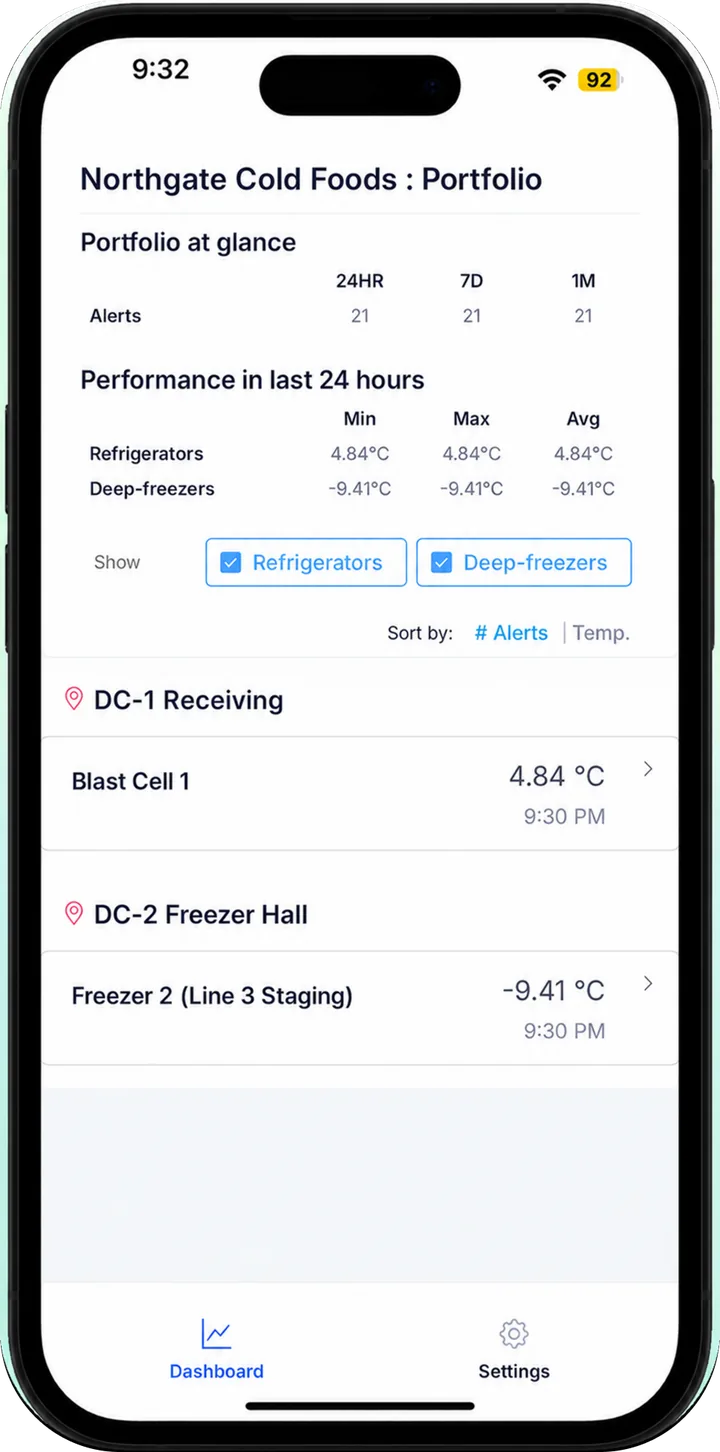
 Illustrative data
Every room and every site on one screen
A plant with a dozen cold rooms needs one view, not a dozen clipboards. TemperatureWise shows each room's latest reading, and each alert names the room and the site.

TemperatureWise for food manufacturing and catering
Every cold room and cooling step on one screen, with a record your food safety plan can use. One customer's frozen food plant has 11 to 12 cold rooms, up to 208 ft (63 m) from the office.
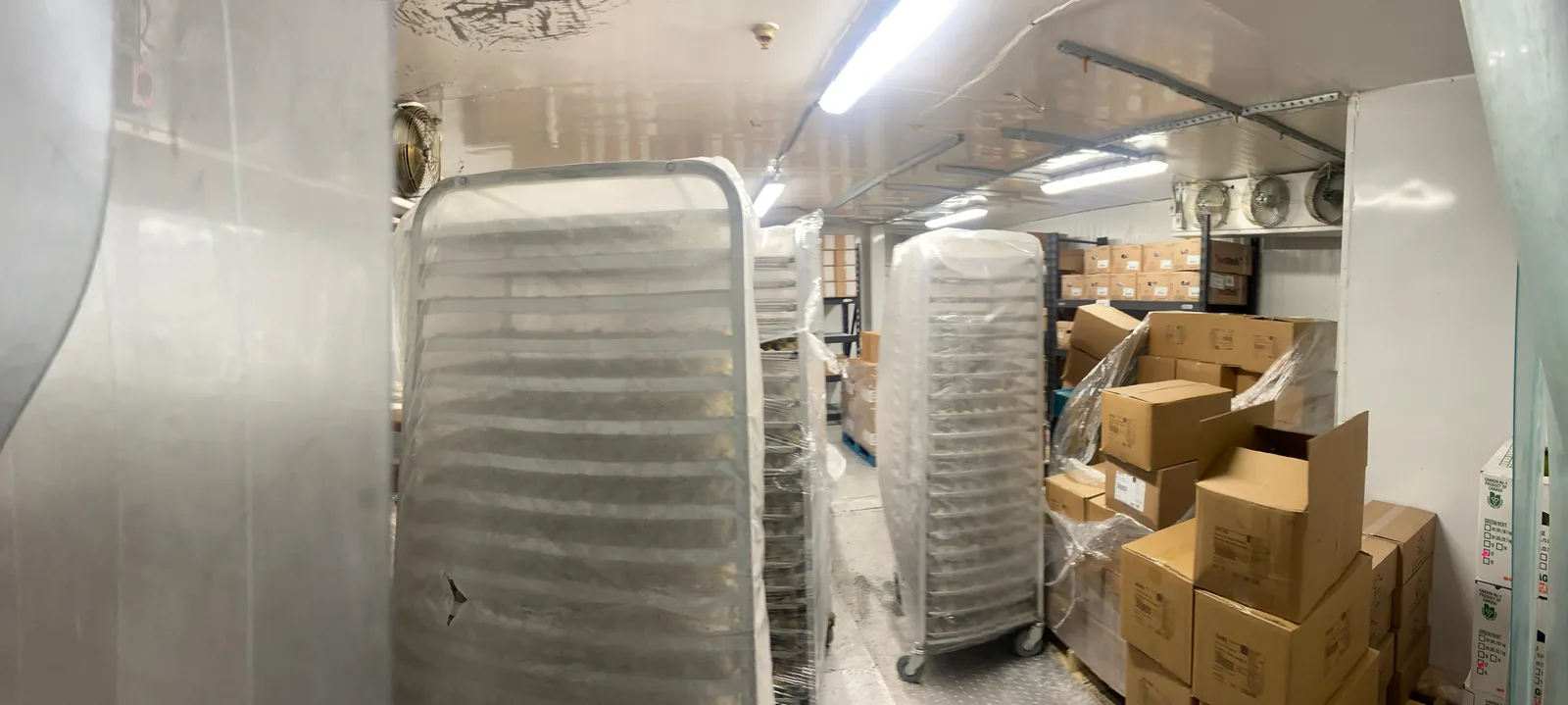
What you get
Illustrative dataA plant with a dozen cold rooms needs one view, not a dozen clipboards. TemperatureWise shows each room's latest reading, and each alert names the room and the site.
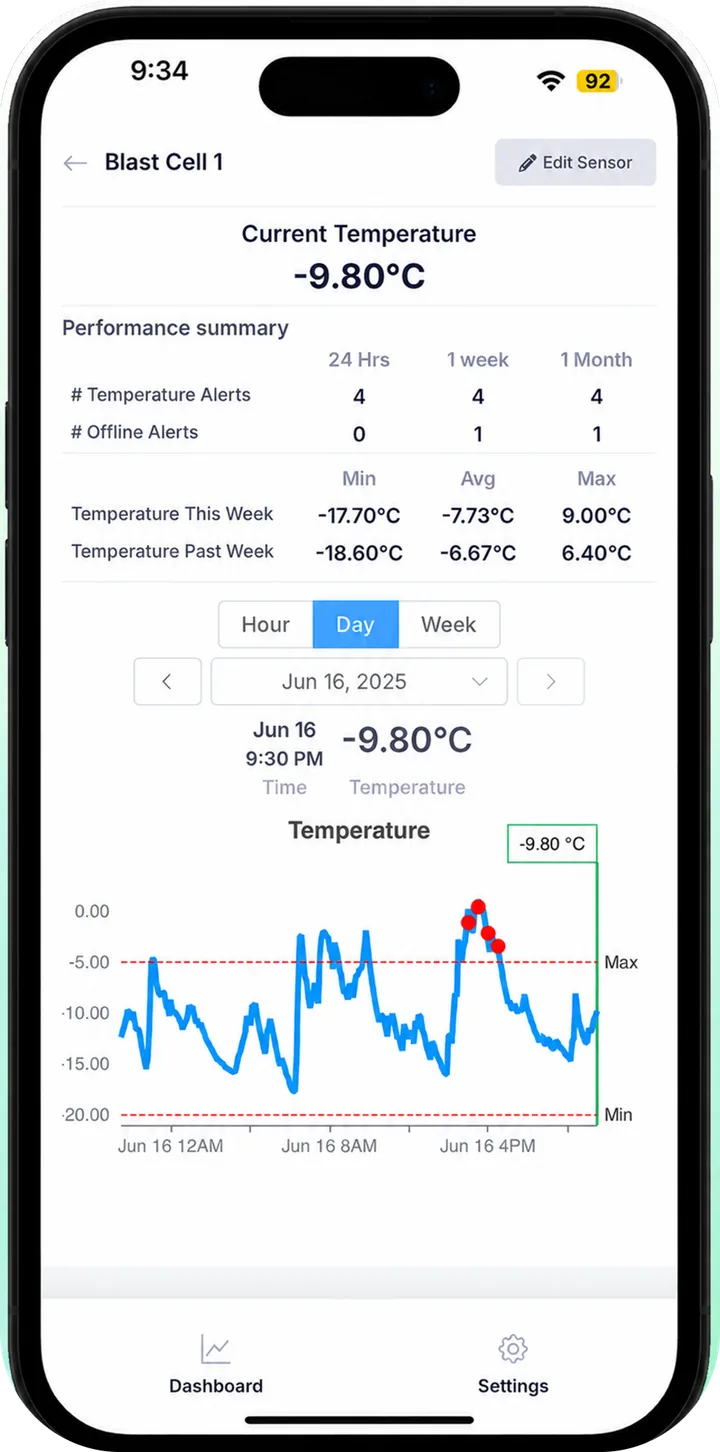 Illustrative data
A reading every 15 minutes from every room, kept indefinitely. FDA's preventive controls rule names refrigeration temperature records as monitoring records.
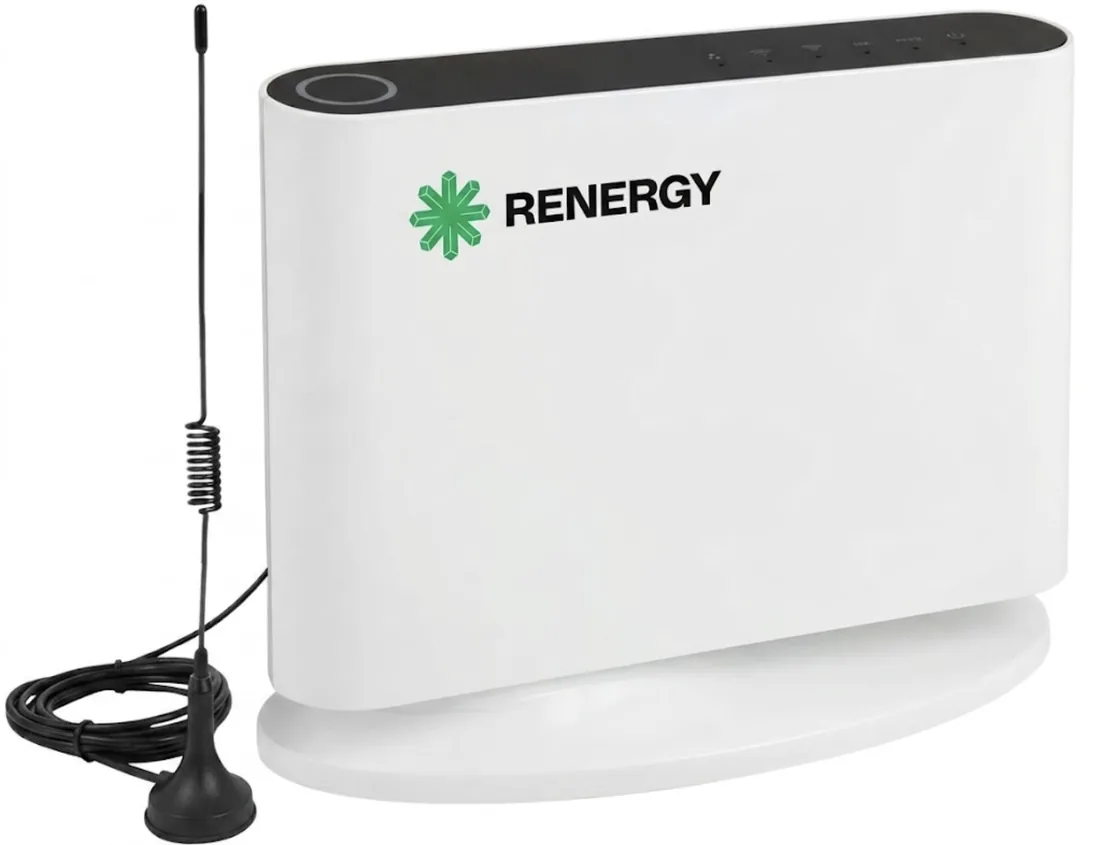
LoRa radio passes through freezer panels and interior walls, so nothing is drilled and nothing rides on plant Wi-Fi. If a building needs a second gateway, the plan says so before anything ships.
Why wireless reaches a freezer 208 ft away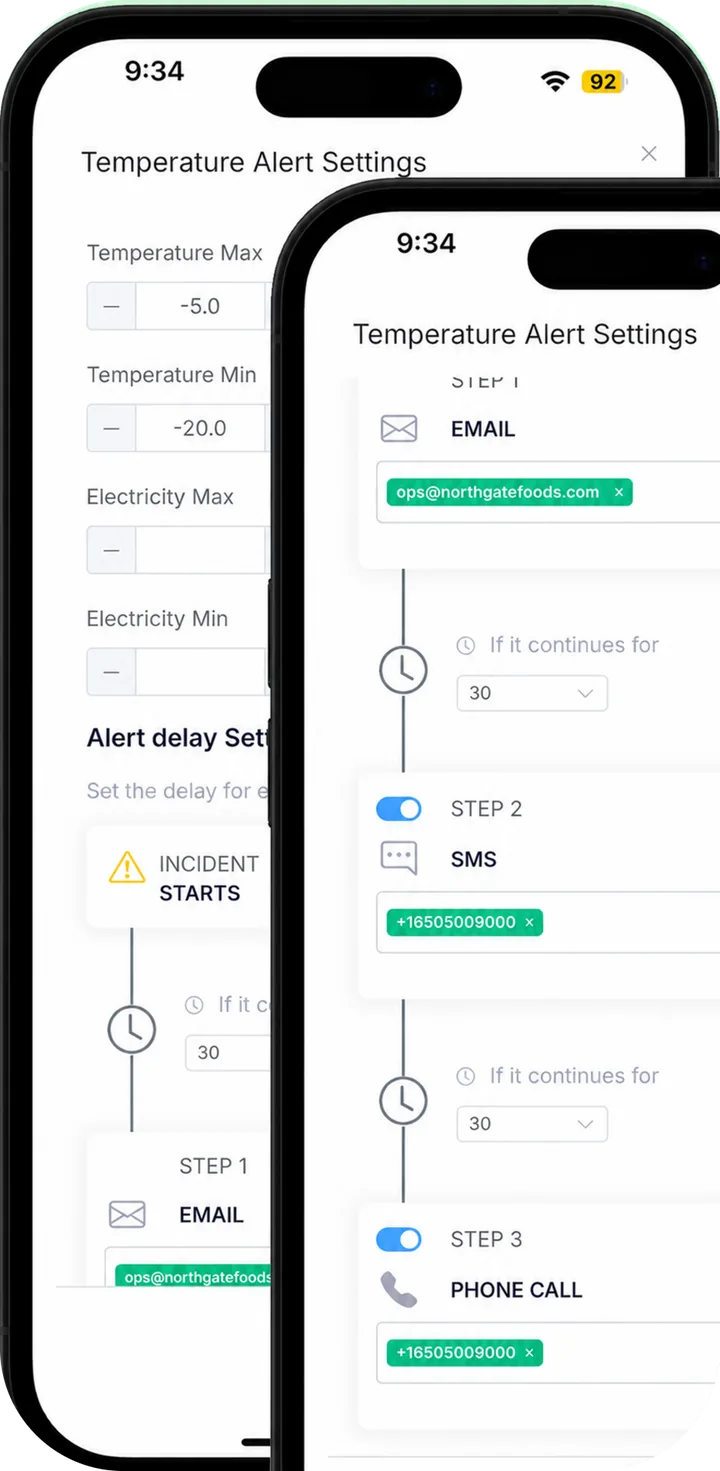 Illustrative data
Email first, then a text, then a phone call, with a delay you choose between steps. Each sensor can reach up to three people, so a night-shift fault reaches maintenance, not only the office.
Where it goes wrong
A production site moves its temperatures all day. The job is to tell the normal from the start of a failure, and to wake someone only for the second.
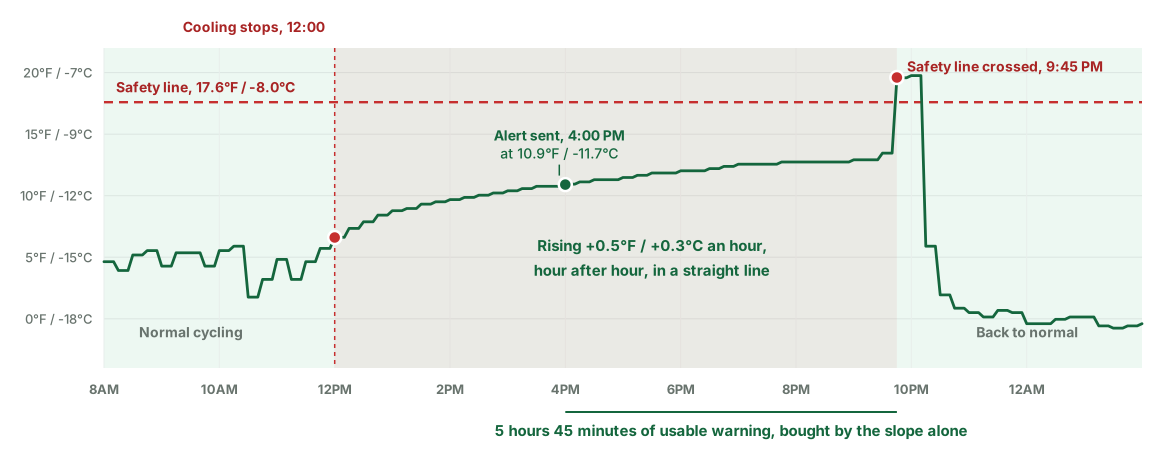
Caught 5 h 45 min before the safety line in Mississauga, December 2025
Production sites often park a reefer at the dock as extra frozen storage. At a frozen food brand's Mississauga production site, one stopped at noon on 26 December and a weak battery kept it from restarting, with up to $125,000 of stock inside.
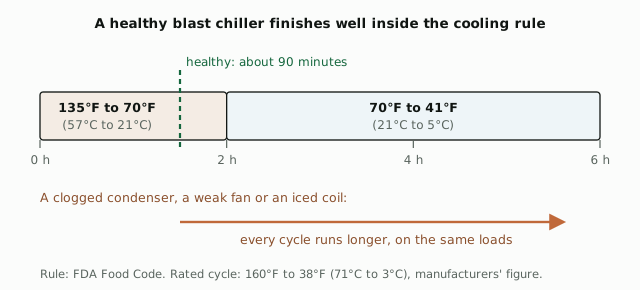
A healthy blast chiller finishes well inside the cooling rule. A clogged condenser, a weak fan or an iced coil makes every cycle longer on the same loads, until a batch can miss the rule. That is a food safety problem and a record problem at once.
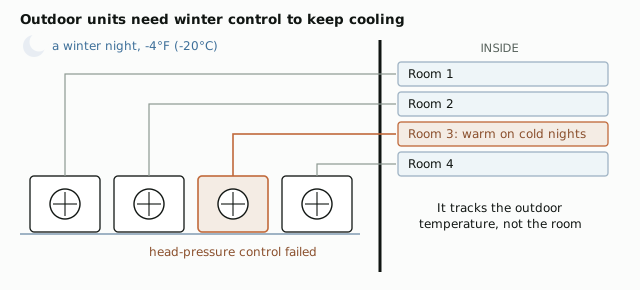
Many plants cool each room with its own condensing unit outside. In a Canadian winter, a failed head-pressure control starves that room of cooling on the coldest nights, while the rooms beside it hold. It is a much bigger problem in Canada than in the US.
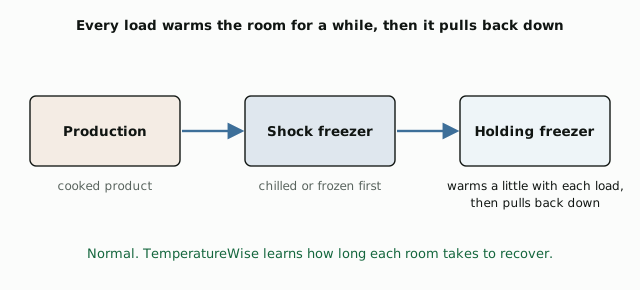
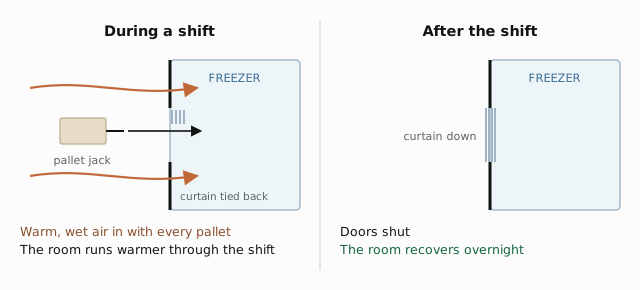
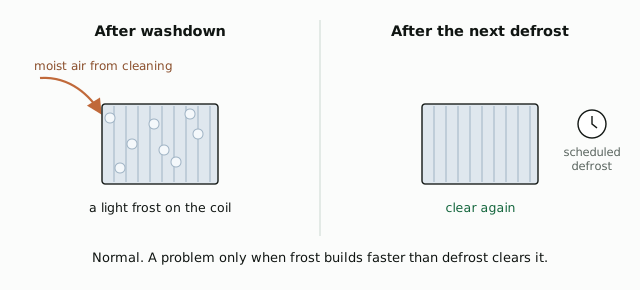
Warm loads, shift traffic, washdown and defrosts move the temperature on every production day. None of them is a failure.
A threshold alarm
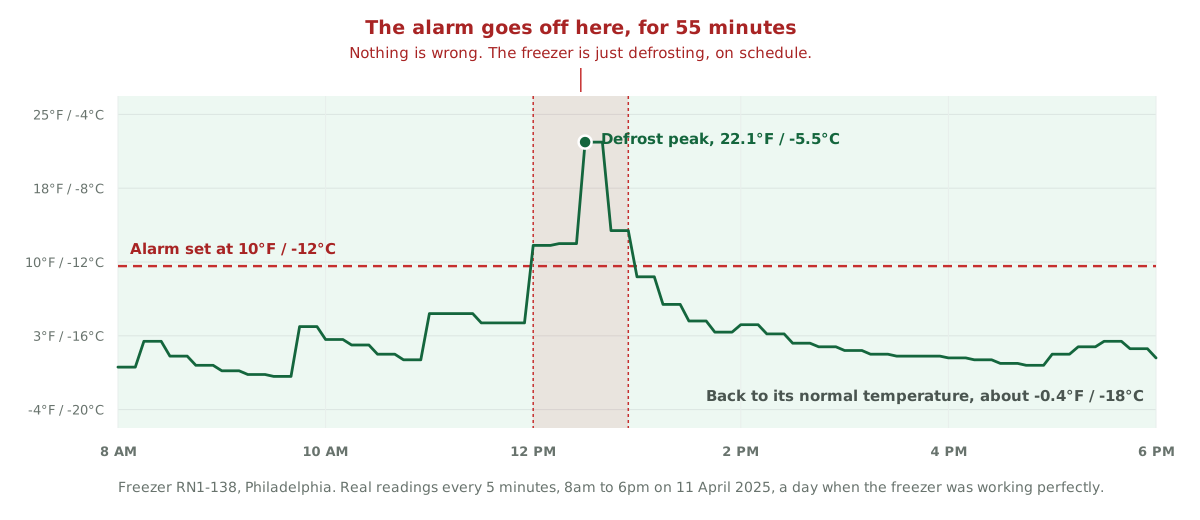
Sounds whenever a room crosses one fixed line. A warm load or a normal defrost crosses it, so it goes off every day and staff learn to ignore it. In one real freezer log, a normal defrost set it off for 55 minutes. More in why temperature alarms cry wolf.
TemperatureWise
Learns each room's normal pattern in its first week: its loads, its shifts and its defrosts. It stays quiet for the routine and alerts when a room stops behaving like itself, like the three failures above. No false alarms from the normal working day.
Freezer failures such as a failed defrost timer or a slow refrigerant leak, with real sensor data, are on the cold storage page.
A customer site
A customer's frozen food plant: 11 to 12 cold rooms, up to 208 ft (63 m) from the office. The plan marks four of them: the incoming and finished coolers and freezers.
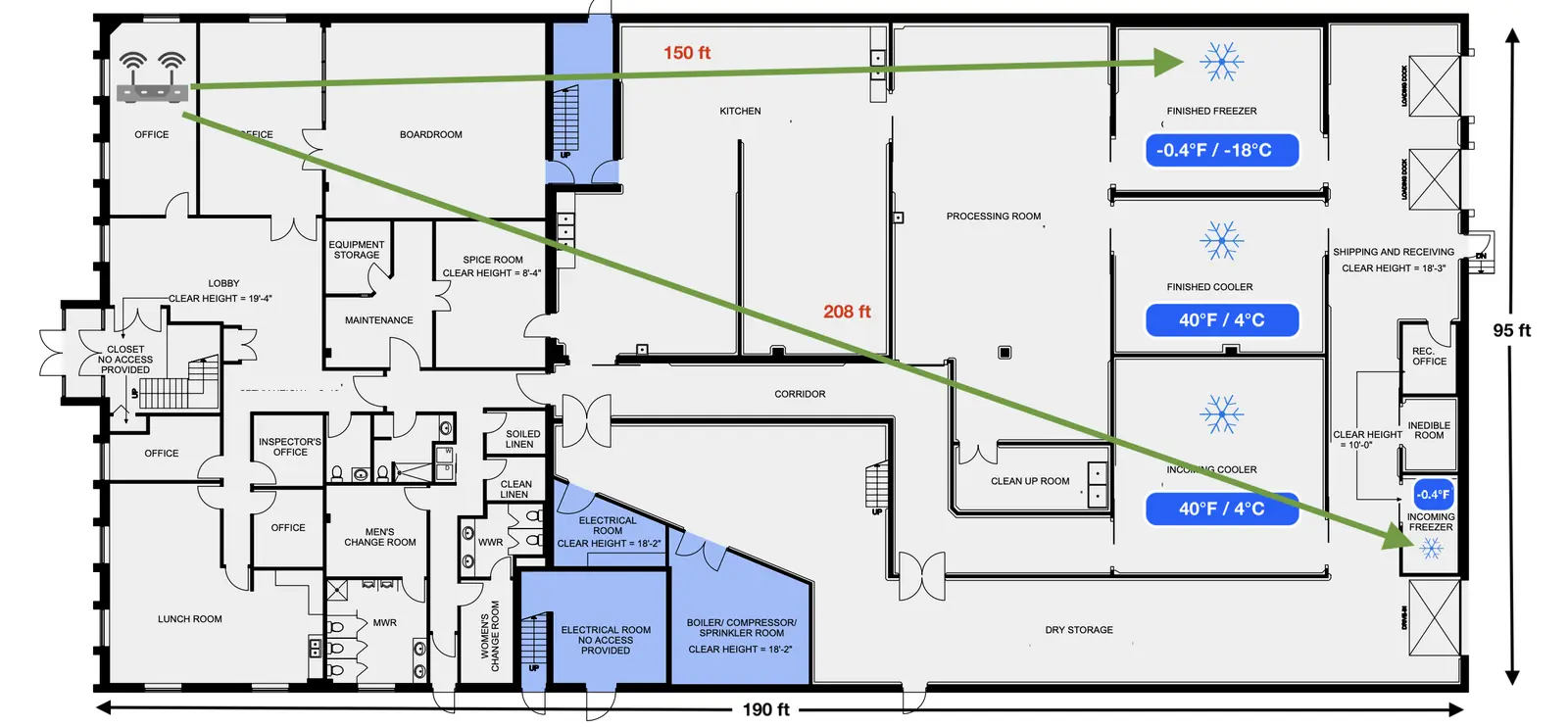
Distance is the hard part on a site like this. The cold rooms sit along the far wall: 150 ft (46 m) through six walls to the finished freezer, and 208 ft (63 m) through ten to the incoming freezer.
Why LoRa radio covers that is its own question, and the freezer wall article answers it with the same plan.
Pricing and payback
| Item | Once | Per year |
|---|---|---|
| 24 LoRa sensors at $200 | $4,800 | |
| Gateway for a larger site | $450 | |
| Cellular connection | $125 | $50 |
| Battery backup | $125 | |
| Monitoring, 24 sensors at $250 | $6,000 | |
| Total | $5,500 | $6,050 |
An example, not a quote for the site above. No extra charge for the dashboard, alerts, reporting or setup. Price list of 1 September 2026.
The same brand runs a production site in Mississauga and a distribution freezer in Philadelphia. TemperatureWise caught failures at both.
Multiple = the stock at risk ÷ the $6,050 yearly fee for the example site. The one-time $5,500 is left out, as on the TemperatureWise calculator. Stock values are from the published case studies; the Mississauga figure is that case study's upper estimate.
Want a detailed calculation for your own site? The full calculator on the TemperatureWise page takes your rooms, sensors and connection.
Open the full calculatorHow it works
TemperatureWise marks where each sensor and the gateway go before anything ships.
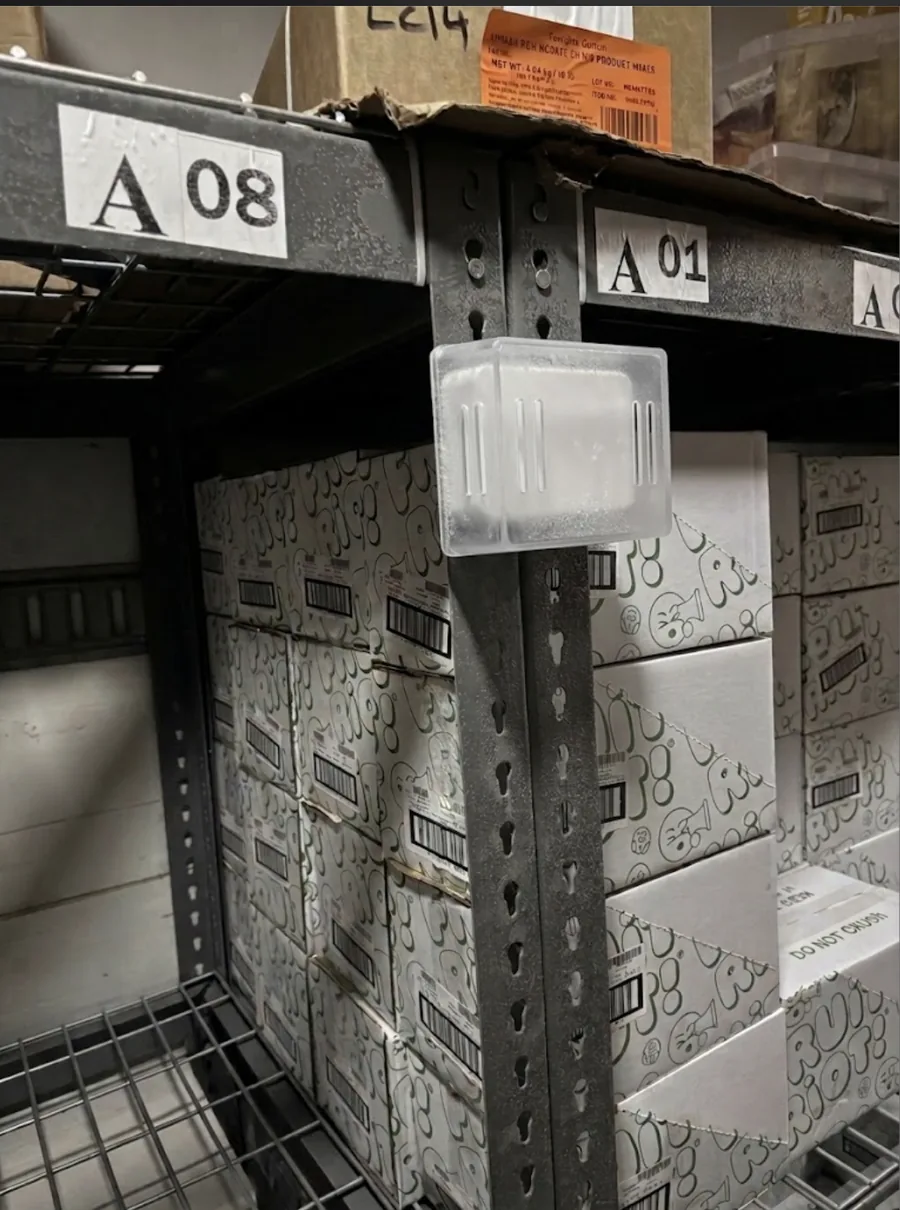
Magnet, adhesive pad or one screw. The gateway goes into an ordinary socket.
TemperatureWise learns each unit's defrost pattern and sets alerts around it, so a normal defrost is not an alarm.
The rules
US · FDA, 21 CFR 117
What they want. Your food safety plan names the controls that keep food safe, and cold storage is one of the most crucial ones. FDA wants the last two years of records: each check, what you did when one went wrong, and a qualified person's review within 7 working days.
TemperatureWise: Every room, every 15 minutes, kept well past two years, and an alert the moment one drifts.
Read 21 CFR 117.145Canada · CFIA, SFCR
What they want. If you hold a CFIA licence, you keep a written plan for keeping food safe, and keeping it cold is usually part of it. CFIA wants two years of proof that you followed it: each check, and what you did when one failed.
TemperatureWise: Every room, every 15 minutes, kept well past two years.
Read the Safe Food for Canadians RegulationsSQF and other GFSI schemes
What they want. GFSI approves certificates such as SQF, BRCGS and FSSC 22000, and their auditors check your binder. An SQF auditor wants every temperature record signed by whoever took it, checked and signed by a reviewer, and kept at least as long as your product lasts.
TemperatureWise: A complete temperature record for the binder, nights and weekends included. Your reviewer still signs it.
Read SQFI's guidance on recordsCaterers · the health department
What they want. In most US states, cooked food has to cool from 135°F to 70°F (57°C to 21°C) within 2 hours, and to 41°F (5°C) within 6. In Ontario, cold food stays at 4°C (39°F) or colder.
TemperatureWise: Every cold room and van recorded around the clock, not just on inspection day.
Read the FDA Food CodeTemperatureWise produces the temperature record. The plan, the corrective actions and the sign-off stay with you.
No. TemperatureWise learns each room's normal pattern in its first week, including loads, shift traffic and defrosts, so it alerts on a change from normal, not on the routine. A fixed threshold alarm cannot tell the two apart, which is why it goes off every day.
One for a small walk-in, two for a mid-sized room and three for a large one of about 2,000 sq ft (186 m²) or more. At one to three per room, a plant with 12 cold rooms needs between 12 and 36. TemperatureWise sizes the number from your floor plan.
Yes. A TemperatureWise sensor in the cabinet shows each chill cycle as a deep drop in air temperature, so a cycle that runs long stands out. It does not replace the product probe: the core temperature of the food still comes from the chiller's own probe.
About $5,500 up front and $6,050 a year for an example site with 12 cold rooms and two TemperatureWise sensors in each, with cellular and battery backup. Monitoring is $250 per sensor per year, so the yearly cost follows the sensor count.
Yes. A sensor in the van reports to a cellular gateway that rides in the vehicle, so the record carries on after the food leaves the kitchen. A van unit that runs off the vehicle's engine stops cooling when the engine is off, and the log shows it at every long stop.
No. TemperatureWise produces the temperature record and the alerts. Your plan sets the limits, the corrective actions and who signs off, and your auditor or inspector decides what they accept.
Proof
Send us 30 days of readings from one room, or let us put a sensor in it. We will show you what it was doing before anyone noticed. No purchase needed.