TemperatureWise for convenience stores

Temperature monitoring for convenience stores

In a convenience store every cooler is its own machine, so a fault stays in one cabinet. TemperatureWise gives each cabinet its own record, from $25 a sensor, so you can show which cooler failed and when.

  • Fuel and convenience chains
  • Independent stores
  • Franchise groups
  • Refrigeration service partners
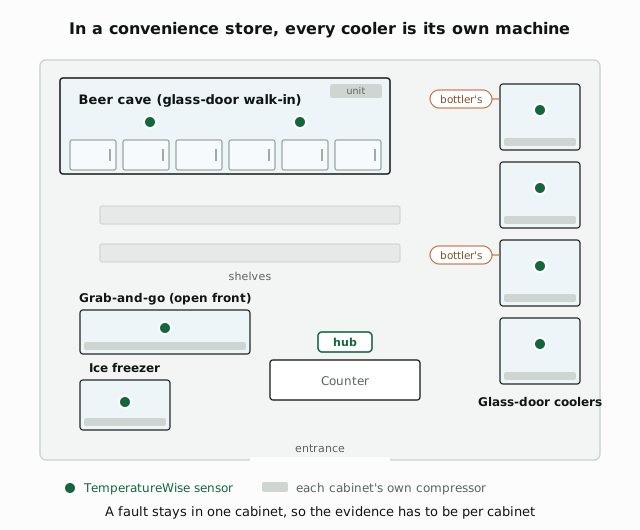
A convenience store seen from above. A glass-door walk-in beer cave runs along the back wall, glass-door coolers line the side wall, some of them owned by the drinks bottler, and a grab-and-go case and an ice freezer sit near the entrance. Every cabinet has its own compressor and its own TemperatureWise sensor, and one hub by the counter collects them all.
8 to 1repair dollars to maintenance dollars on small refrigerationService manager at a Renergy partner
About 2,000Canadian sites of one fuel and convenience chain fitting cooler sensors in 2026Same service manager, July 2026
$25 a sensorand $250 a year each, with a $50 hub per storeTemperatureWise price list

What you get

Four things TemperatureWise does for a convenience store

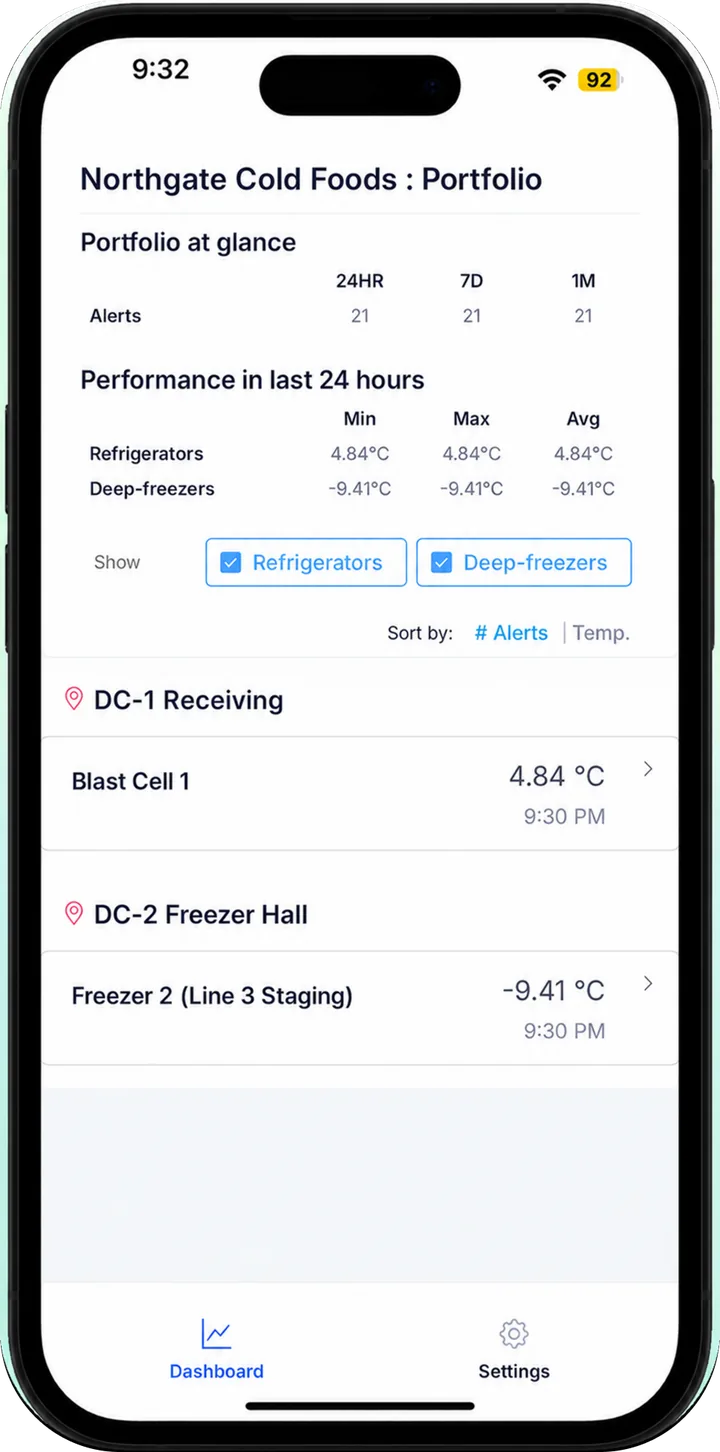
The TemperatureWise app showing a portfolio with a receiving dock, a blast cell and a freezer hall, each with its latest reading.Illustrative data

Every store and every cabinet, on one screen

Each store gets its own hub. Every cooler in every store shows on one screen, and each alert names the store and the cabinet.

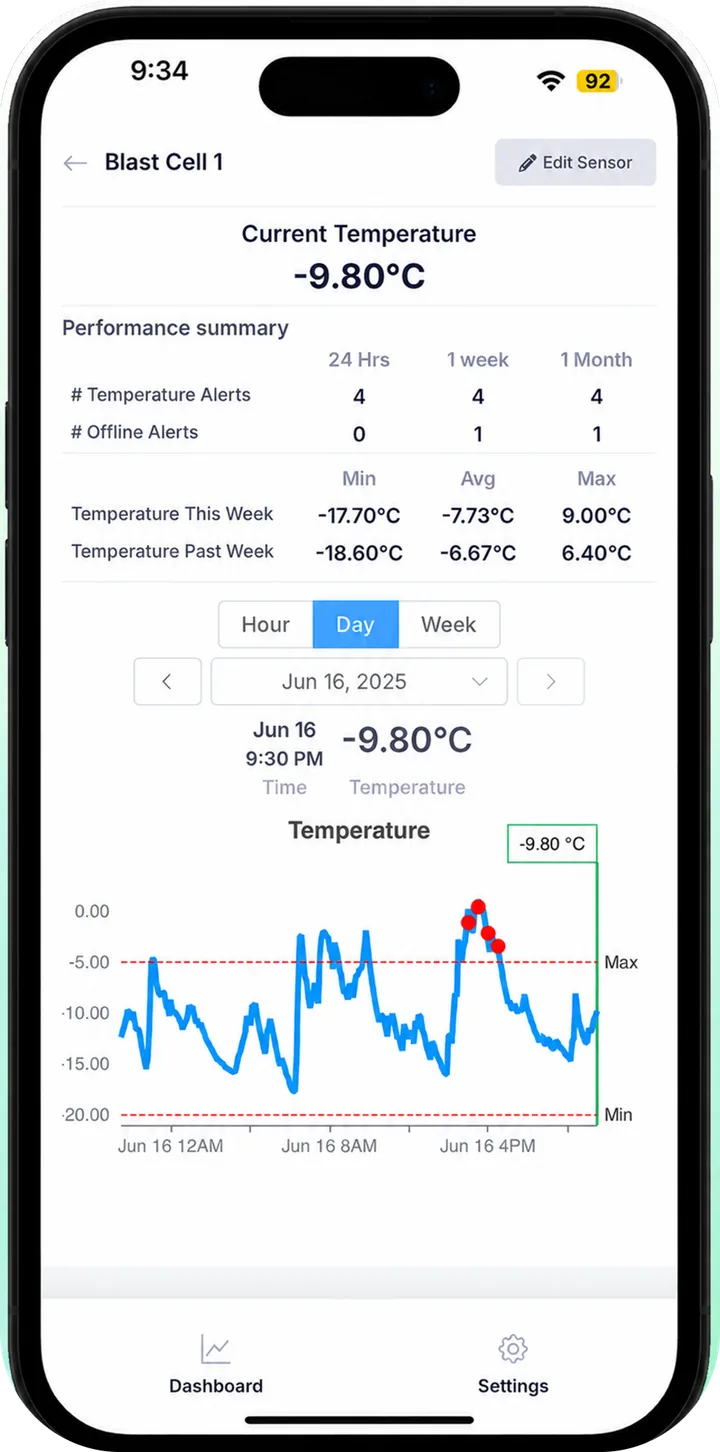
The TemperatureWise app showing a temperature trend chart for one unit over a 24 hour period.Illustrative data

A record the bottler cannot argue with

When a bottler's cooler fails, its own readings show when it started and how warm it got. That is what gets a technician booked.

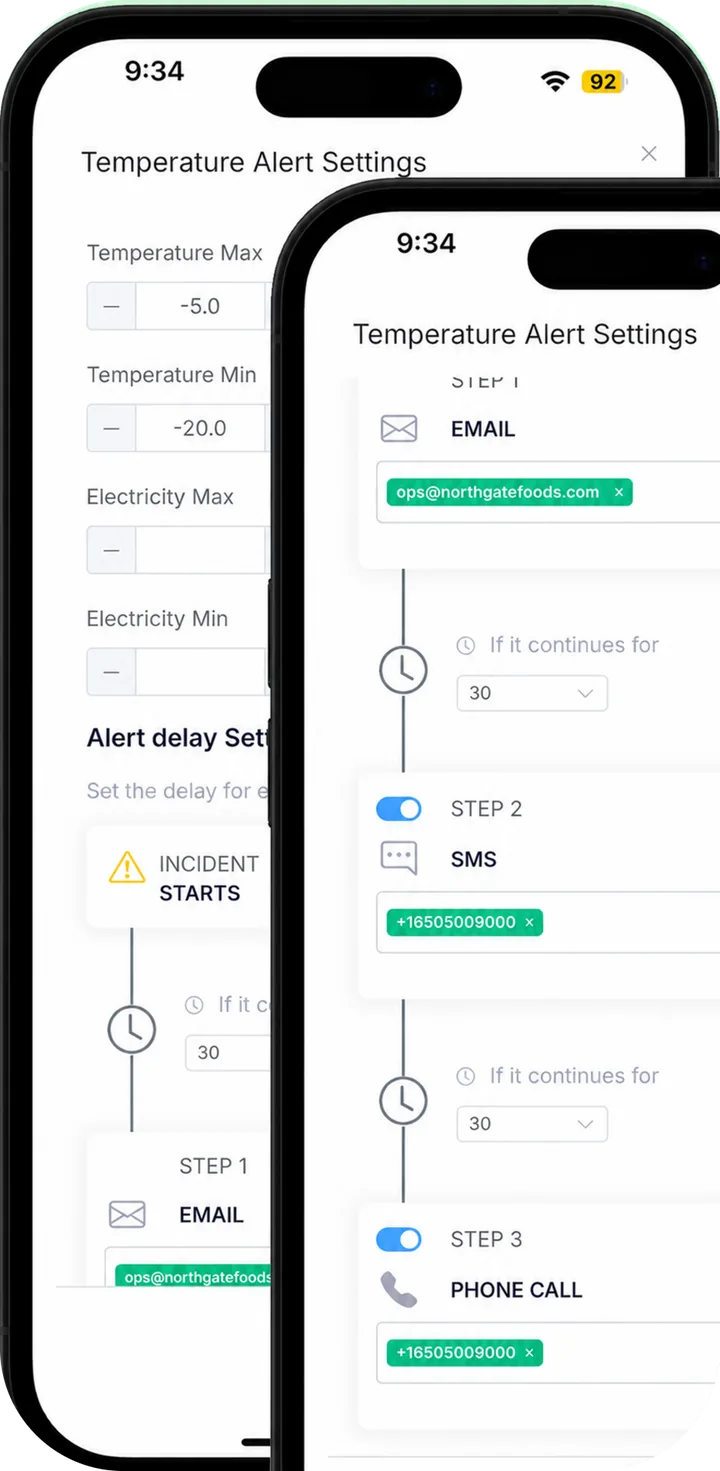
TemperatureWise alert settings with three steps: email, then a text message, then a phone call, each after a delay.Illustrative data

Alerts reach the store and the contractor

Email, then a text, then a call, to up to three people per sensor: say the store manager, the district manager and the refrigeration contractor.

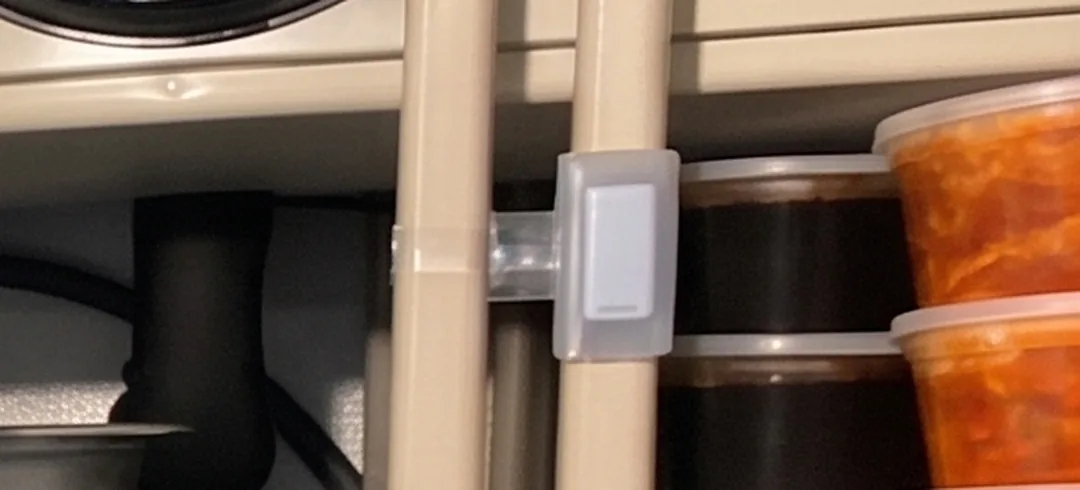
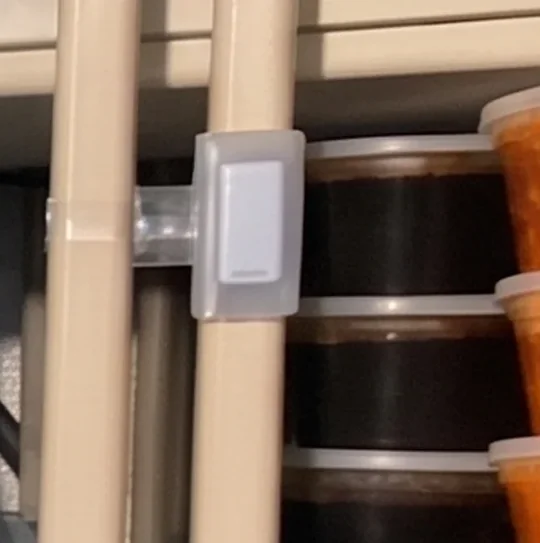
A close view of a TemperatureWise sensor in its bracket on a shelving upright inside a walk-in, with stacked food containers behind it.

It fits any cabinet, including the bottler's

The sensor sits inside the cabinet on a magnet or an adhesive pad. Nothing is wired into the cooler, and TemperatureWise never touches its controller or its energy settings.

Where it goes wrong

Three failures worth an alert, and the daily ups and downs that aren't

Every cooler in a convenience store is its own machine, so a failure stays in one cabinet. The job is to spot the one that is failing among the ones that are just busy.

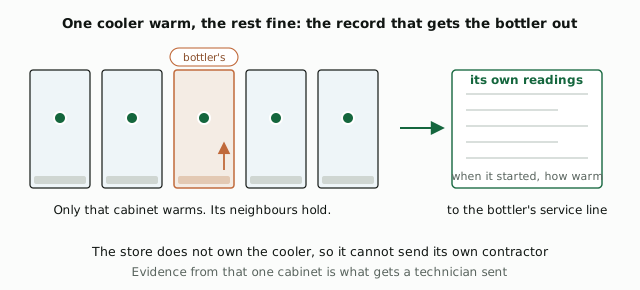
A row of five glass-door coolers, each with a TemperatureWise sensor. The middle one, owned by the drinks bottler, has warmed while the four beside it hold. Its own readings, showing when it started and how warm it got, go to the bottler's service line.
How it fails

A bottler's cooler fails, and the fix waits on the bottler

Many glass-door coolers belong to the drinks bottler, not the store. When one fails, the store cannot send its own contractor, and the bottler's service is slow. A record from that one cabinet, showing when it started and how warm it got, is what gets a technician sent.

How fast
Hours to weeks, by fault
What the log shows
One cabinet warm, the rest of the store fine
How to tell
Its neighbours hold
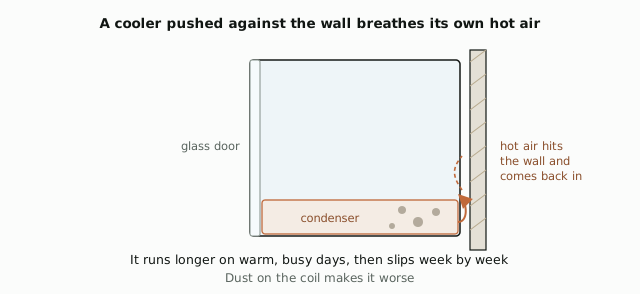
A glass-door cooler seen from the side, pushed against a wall. Its condenser at the base blows hot air into the gap, the air hits the wall and comes straight back into the condenser, so the cooler breathes its own heat. Dust on the coil makes it worse. It runs longer on warm, busy days, then slips week by week.
How it fails

A cooler pushed against the wall breathes its own hot air

A glass-door cooler sheds its heat into the store through a condenser at the base or the top. Pushed against a wall, or clogged with dust, it breathes its own hot air. It runs longer on warm, busy days, then slips week by week.

How fast
Weeks
What the log shows
Warmer with store hours, then warmer every week
How to tell
Worst on the warmest afternoons
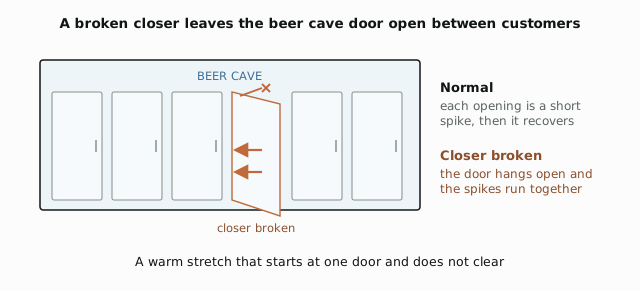
The glass-door front of a walk-in beer cave with six doors. One door's closer has broken, so the door hangs open between customers and warm store air keeps coming in. Normally each opening is a short spike that clears; with the door hanging open, the spikes run together into a warm stretch.
How it fails

A broken closer leaves the beer cave door open

The beer cave, a walk-in with glass doors, gets opened all day. Each opening is a short spike that clears. When a door closer breaks, the door hangs open between customers, and the spikes run together into a warm stretch.

How fast
Hours, from the moment it breaks
What the log shows
Spikes that stop recovering
How to tell
It starts at one door and stays

A threshold alarm goes off for these every day. TemperatureWise learns them in its first week.

Store rushes, energy-saving schedules, restocking and defrosts move the temperature every day. None of them is a failure.

A threshold alarm

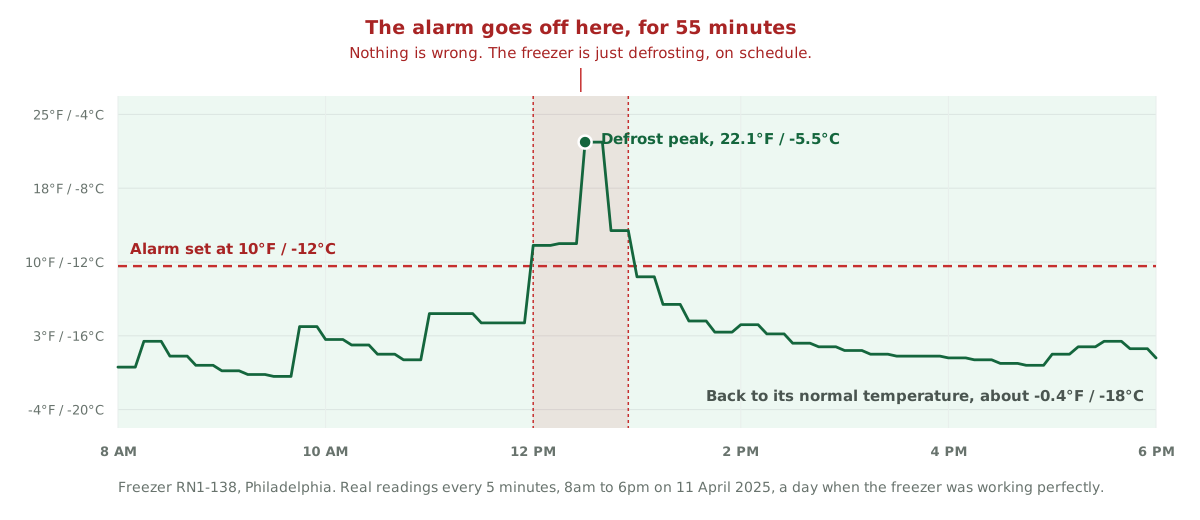
Sounds whenever a cabinet crosses one fixed line. A busy hour, a schedule or a defrost crosses it, so it goes off every day and staff learn to ignore it. In one real freezer log, a normal defrost set it off for 55 minutes. More in why temperature alarms cry wolf.

TemperatureWise

Learns each cabinet's normal pattern in its first week: its busy hours, its energy-saving schedule, its restocking and its defrosts. It stays quiet for the routine and alerts when a cabinet stops behaving like itself, like the three failures above. No false alarms from a normal day.

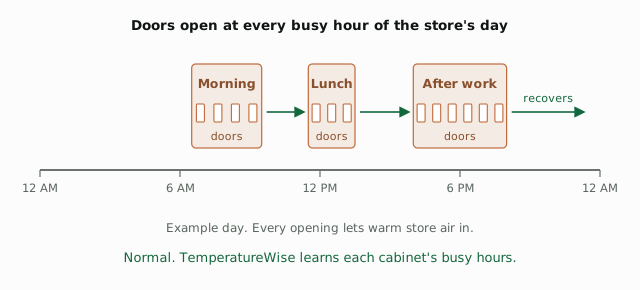
A convenience store day from midnight to midnight with three busy periods: morning, lunch and after work. Cooler and beer cave doors open again and again in each busy period, and the cabinets run warmer, then recover. That is normal, and TemperatureWise learns it. Example day.
The rush Doors open again and again at the store's busy hours. The cabinets run warmer, then recover.
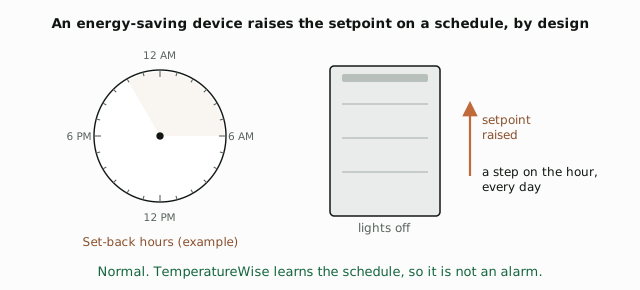
A 24-hour dial with the hours when a drinks cooler's energy-saving device switches the lights off and raises the setpoint, and a cooler with its lights off. The change lands on the hour, every day, by design. It looks like a control fault, but it is the schedule. Example hours.
Energy saving Many drinks coolers raise their setpoint and switch off their lights on a schedule. It looks like a fault. It is the design.
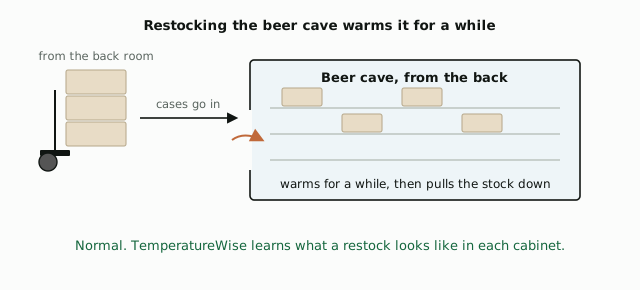
The back of a walk-in beer cave. Cases that have been sitting in the back room go in behind the glass doors on a hand truck, and the cave warms for a while as it pulls the new stock down. That is normal, and TemperatureWise learns it.
Restocking Cases from the back room go in behind the glass, and the cave warms for a while.
Line chart of a walk-in freezer on 11 April 2025. It runs near -0.4°F (-18°C) all morning. At midday a scheduled defrost lifts it to a peak of 22.1°F (-5.5°C), crossing a dashed alarm line at 10°F (-12°C) for 55 minutes, then it drops back to normal by early afternoon.
Defrosts A defrost warms the air for a short time, several times a day. The stock stays cold.

From the field

Small refrigeration breaks most often, and a convenience store loses the stock

A service manager at a publicly traded trades firm, a Renergy partner, looks after about 1,200 commercial sites. We asked him where the calls come from.

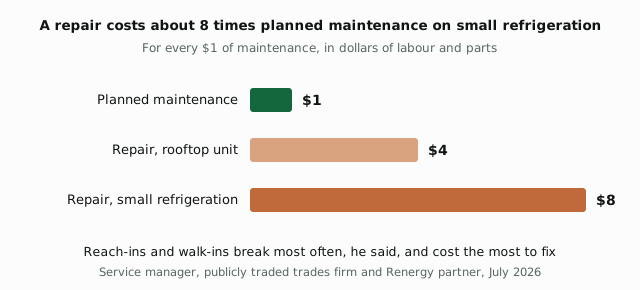
A bar chart of what a repair costs against planned maintenance, in dollars of labour and parts, as a service manager at a Renergy partner gave it. For every $1 of maintenance, a repair on small refrigeration costs about $8, and a repair on a commercial rooftop unit about $4.

What he told us

  1. Small refrigeration: reach-ins and walk-ins. "Small refrigeration break[s] more often."
  2. A convenience store, ahead of a hospital. "Hospitals have contingency. Convenience stores lose product."
  3. About 8 times the maintenance, in dollars of labour and parts, on small refrigeration. About 4 times on rooftop units.
  4. About 30 to 40% of his commercial clients have some monitoring. A fuel and convenience chain with about 2,000 sites in Canada was having temperature sensors fitted in its coolers and cold rooms when we spoke.

TemperatureWise is built for that small refrigeration: the coolers, the beer cave and the cases.

His point about price matters too: some owners will spend $50 a unit and some $2,000, "but they all want the same result at the end." TemperatureWise hardware starts at $25 a sensor, near the low end of that range, and the monitoring is $250 a sensor per year on top.

Pricing and payback

One store costs $250 up front and $2,000 a year

One store: a beer cave and six other cabinets

ItemOncePer year
8 entry sensors at $25$200
Hub$50
Monitoring, 8 sensors at $250$2,000
Total$250$2,000

Two sensors in the beer cave, and one in each of four glass-door coolers, the grab-and-go case and the ice freezer, on the store's own internet. A long store may need a second $50 hub. Cellular is $125 once and $50 a year where the store network is off limits. The price list notes further discounts depend on the deployment. Price list of 1 September 2026.

A repair costs about 8 times the maintenance

On small refrigeration, a repair costs about 8 times what planned maintenance does, in dollars, according to the service manager above. Catching a cooler while it fades turns the repair into planned work.

TemperatureWise monitoring is $250 per sensor per year, about $21 a sensor a month. The record from each cabinet is also what gets a bottler's cooler fixed, which the store cannot do by itself.

Want a detailed calculation for your own site? The full calculator on the TemperatureWise page takes your rooms, sensors and connection.

Open the full calculator

How it works

Three steps, no tools, the store stays open

  1. We plan it from your store layout

    TemperatureWise marks where each sensor and the hub go before anything ships.

  2. You place a sensor in each cabinet

    A magnet or an adhesive pad, no tools. The hub goes into an ordinary socket near the coolers.

  3. It learns each cabinet in the first week

    Its busy hours, its energy-saving schedule and its defrosts, so none of them is an alarm.

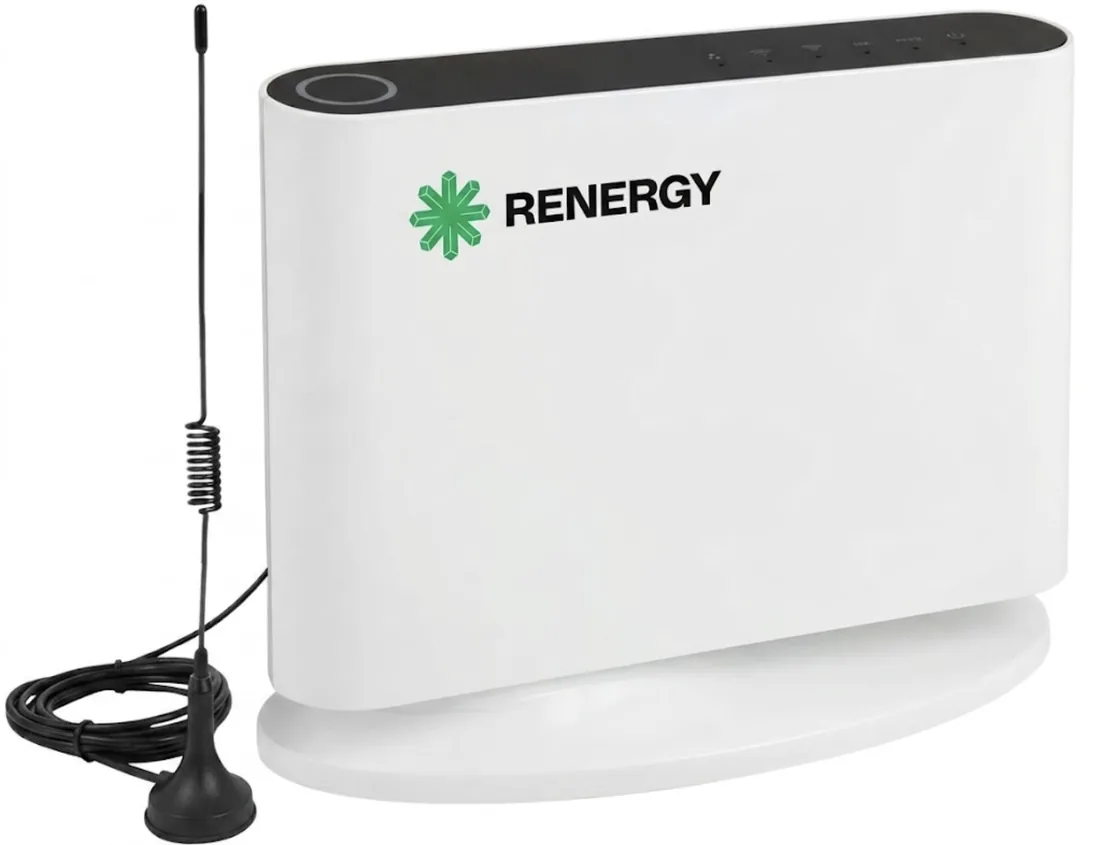
The Renergy gateway, a white desktop unit with a whip antenna.
Behind the counterOne hub near the coolers, on an ordinary socket and the store's internet. A LoRa gateway does the same job on the other sensor tier.
Bluetooth from each cabinet to a hub near the coolers. Nothing drilled.
A close view of a TemperatureWise sensor in its bracket on a shelving upright inside a walk-in, with stacked food containers behind it.
In each cabinetThe sensor sits on a shelf upright or the cabinet wall, where the drinks and food are. Shown here in a walk-in.
Every 5 minutesA reading into the record
About 2 yearsOn ordinary batteries
One hub per storeSometimes two in a long store

The rules

The temperatures a convenience store is held to

US · FDA Food Code

Cold food is held at 41°F (5°C) or colder, in a grab-and-go case as much as in the walk-in.

Read the FDA Food Code

Ontario · O. Reg. 493/17

Food is held at 4°C (39°F) or colder (s. 27), frozen food stays frozen (s. 28), and every unit has an accurate thermometer (s. 30).

Read O. Reg. 493/17

The rule follows the food, so milk and sandwiches in a bottler's cooler count too. TemperatureWise produces the record for every cabinet; the sign-off stays with you.

Common questions

How much does convenience store temperature monitoring cost?

$250 up front and $2,000 a year for a store with a beer cave and six other cabinets on TemperatureWise entry sensors. Each extra cabinet adds a $25 sensor and $250 a year, and the price list notes further discounts depend on the deployment.

Can TemperatureWise monitor a cooler the bottler owns?

Yes. The TemperatureWise sensor sits inside any cabinet on a magnet or an adhesive pad, without touching its controller. Its record is what you send the bottler when that cooler fails.

Will a drinks cooler's energy-saving setting set off alarms?

Not with TemperatureWise. It learns each cabinet's schedule in the first week, so a setpoint raised on the hour is not an alarm. A simple threshold alarm often does go off, which is why staff learn to ignore it.

Can TemperatureWise tell when the grab-and-go case is overfilled?

No. Food stacked above the load line sits in store air and warms while the case itself reads normal. No sensor in the case sees that; keeping stock below the line does.

Does TemperatureWise work for a convenience chain?

Yes. Each store gets its own hub, every store shows on one screen, and each alert names the store and the cabinet. TemperatureWise does not monitor the car wash or the store's own heating and cooling.
See what your coldest room has been doing

Send us 30 days of readings from one room, or let us put a sensor in it. We will show you what it was doing before anyone noticed. No purchase needed.

Sources for every figure on this page
  1. A service manager at a publicly traded trades firm that is a Renergy partner, on a call with Renergy on 8 July 2026: what breaks most, the 8 to 1 and 4 to 1 repair ratios, the 30 to 40% of commercial clients already monitoring, the fuel and convenience chain of about 2,000 Canadian sites, and the three quotes, lightly edited from the call transcript
  2. Onset times, log signatures and equipment ratings: Renergy's internal refrigeration failure-mode reference, September 2026. The self-contained cooler, bottler ownership, energy-saving devices, the load line and the door closer are from its display case section
  3. Prices, sensor specifications and alert steps: the TemperatureWise price list of 1 September 2026. Entry sensor recording interval, battery life and hub: how fast monitoring needs to check
  4. US: the FDA Food Code. Ontario: O. Reg. 493/17, s. 27, 28 and 30
  5. The three case studies at the foot of the page: the Philadelphia freezer, the dual-system freezer and the Mississauga stationary reefer

Last reviewed 1 October 2026