
CoolBot vs a real walk-in, and what an inspector actually checks
By Vimal Bhaya, Founder and Lead Systems Architect · Last reviewed 13 September 2026
This is a continuation of Which kind of monitoring to buy, a 5-part tutorial. You are on part 5 of 5.
The short answer: a CoolBot room is a real cold room, and plenty of inspected kitchens run one. What it is not is certified equipment, and Store It Cold say so themselves.
Certification is a shortcut. Equipment certified to a recognised American National Standard is deemed to comply with the sanitation parts of the Food Code, so nobody has to judge it. Without that shortcut, your room gets judged on evidence, by the person standing in your kitchen.
TemperatureWise is that evidence. One continuous record across every cold box on the site, kept independently of whatever is cooling each one, exportable years later, and available with NIST-traceable calibration. CoolBot Pro's own monitoring covers the single room its controller runs.
A CoolBot is a controller, and the room around it is what gets inspected
The thread that starts this argument is titled, bluntly, "A CoolBot is not a walk-in!" and it was posted by a health inspector.
He has a point, and it is worth separating from the thing people think he said.
A CoolBot is a controller. It is a small box that reads the room and the air conditioner's own coil. Then it feeds a warmed signal to the air conditioner's thermostat. The unit keeps running below the floor its own controls would allow. That is all it is, and it costs $399.
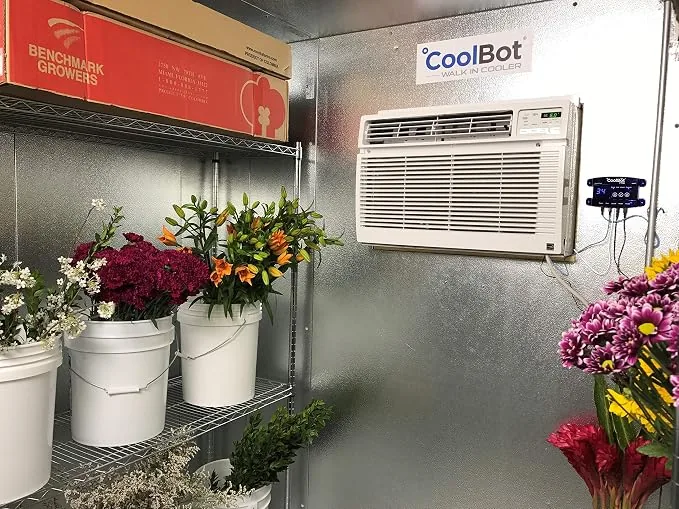
The walk-in is whatever you built around it. An insulated room, a floor, the joints between the panels, the shelving. That is what an inspector walks into and judges. That is what the objection is about.
So a CoolBot on a factory-built insulated box is one thing. A CoolBot on a plywood room at the back of a garage is another. Both get cold. Only one survives an inspection, and the controller is not what separates them.
Certification is a shortcut in the Food Code, not a law
This is the part almost nobody in this argument gets right, in either direction, so it is worth being precise.
The FDA maintains a list of American National Standards for food equipment. NSF/ANSI 7, Commercial refrigerators and freezers, is on it. The wording that matters is the FDA's own:
"Equipment certified for conformance to a recognized American National Standard by an American National Standards Institute (ANSI) accredited certification program is deemed to comply with the equipment sanitation provisions contained in Food Code Chapter 4, Parts 4-1 and 4-2."
FDA, List of American National Standards for Food Equipment
Deemed to comply is a safe harbour. Certified equipment is presumed acceptable and the conversation stops there.
It does not say uncertified equipment is illegal. It says uncertified equipment does not get the benefit of the doubt. Somebody has to judge it instead. That somebody is your local inspector, and they do not all judge the same way.
This is why the same product is waved through in one town and written up in the next. It is also why both sides of the argument sound so certain. They are each describing what they have seen, and they have seen different things.
CoolBot is not NSF certified, and Store It Cold say so themselves
We went and read their published FAQ rather than guessing. They state plainly that the CoolBot system is not NSF certified. They also make two points that are fair, and we are not going to pretend otherwise.
"The CoolBot system is running in many inspected commercial kitchens as well as in many inspected meat processing operations with no problem."
Store It Cold, published FAQ, read September 2026
"The best thing to do is ask your local inspector ahead of time about using the CoolBot in your business."
Store It Cold, published FAQ, read September 2026
That second one is the correct answer and we have nothing better to offer. Ask before you build, not after.
They also publish a UL listing. It classifies the CoolBot as safe to use with an air conditioner to cool a space. UL is an electrical safety listing. It is not a food equipment standard, and the two get confused constantly.
Four things get checked, and TemperatureWise answers the two about records
Here is the same question, laid out the way an inspector sees it. Use it to work out where you stand before anyone arrives.
| What gets checked | Factory walk-in | CoolBot room | TemperatureWise |
|---|---|---|---|
| Surfaces and construction. Floor, panel joints, coving, cleanability | Usually certified, so presumed acceptable | Depends entirely on what you built | Not our department, and we will say so |
| Holding temperature. At or below 41°F (5°C), or 4°C in Canada | Judged on the reading | Judged on the reading. A CoolBot room holding 36°F (2°C) passes this | TemperatureWise reads it every 5 minutes and alerts before it becomes a finding |
| The thermometer. Readable, accurate, in the unit | Required either way | Required either way | TemperatureWise is factory calibrated to ±0.2°C, with NIST-traceable calibration available |
| The records. That someone is checking, and can show it | Required either way | Required either way, and an uncertified room has more to prove | TemperatureWise keeps the record indefinitely and exports it, covering the nights and weekends nobody is there |
Notice what is not in that table. Nothing in it asks who made the compressor. The temperature row is judged on the number. A CoolBot room that holds temperature passes it.
Operators report holding between 33°F and 40°F (1°C and 4°C) in practice. One Canadian thread in our own research concluded the rooms met the local health code. That research is public discussion, not a legal opinion, and it should be read that way.
CoolBot cannot make a freezer, and their published range stops at 32°F
From the same published FAQ, the operating range is 32°F to 65°F (0°C to 18°C). They recommend 34°F (1°C) as the working floor, so the air conditioner's coil does not ice up. On freezing they are explicit that it is not possible with the air conditioners the CoolBot works with.
So if the argument in your kitchen is about a freezer, it is over. A CoolBot is not a candidate and nobody is claiming it is. TemperatureWise runs down to -40°F (-40°C), because the sensor does not care what is making the cold.
The failure operators report is slow, which is the kind TemperatureWise is built for
In the operator communities the recurring complaint is that the air conditioner's fins freeze up and it stops pushing cold air.
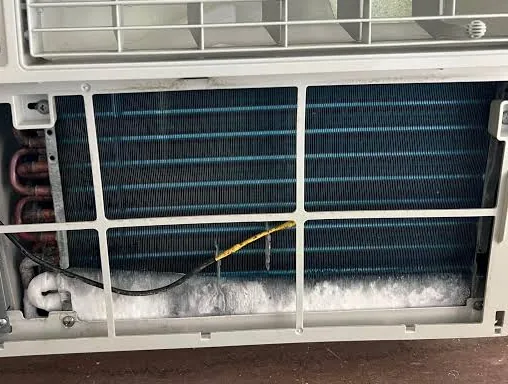
"The fins would freeze up and the ac wouldn't push cold air."
Operator, public discussion
That is a slow failure. The room does not fall over in an hour. It drifts up over a day or two.
A twice-daily paper check is worst at catching that. TemperatureWise is built for exactly it, because the detection is a proprietary mix of machine learning on the full temperature history, not just the current reading. A coil losing capacity changes the shape of the record days before it changes the number on the wall.
CoolBot Pro watches one room. TemperatureWise watches every cold box
This is the part we expected to be a gap and it is not, so here it is plainly.
The standard CoolBot is listed at $399. The CoolBot Pro is listed at $409, reduced from $449. For that $10 their own product page lists remote readings, alerts, data storage, reporting and app control, plus text or email alerts when the temperature leaves a range you set.
That is a real feature at a price that is hard to argue with. Anybody telling you CoolBot users have no monitoring has not looked.
Two things it does not do, though, and both are the reason operators end up with TemperatureWise alongside it.
It watches the room the CoolBot controls. Not your reach-ins, your prep tables, your second cooler, or the freezer that is not on a CoolBot at all. Most kitchens have four to eight cold things. One of them is the CoolBot room. TemperatureWise puts a sensor in each of them and keeps one record across all of them, whatever is doing the cooling.
The record comes out of the controller. The same device runs the room and writes the history of the room. If it loses power, loses its connection or its sensor drifts, the control and the record fail together. TemperatureWise records on its own battery-powered sensor, so the history survives the equipment it is watching. The same argument applies to any refrigeration controller keeping its own history, and we worked it through on refrigeration controller or standalone monitoring.
TemperatureWise gives an uncertified room the evidence it needs
This is the observation the whole page is built on.
A certified walk-in arrives with the benefit of the doubt. An uncertified room does not. So an inspector asks both rooms the same question. The certified box answers partly by being a certified box. Your room has to answer with evidence.
The evidence is the temperature history. A number on a display tells them about one moment. A TemperatureWise record tells them about every moment, including the nights and the weekends, when the room is at its most interesting and nobody is there.
It also has to be accurate enough to be worth showing. The Food Code asks for ±1.5°C on an ambient air thermometer. TemperatureWise is factory calibrated to ±0.2°C and NIST-traceable calibration is available, which is the thing an auditor asks for by name. The whole accuracy ladder is on sensor accuracy, drift and calibration.
Where TemperatureWise fits, and where it does not
| If you... | Do this |
|---|---|
| Have not built the room yet | Ask your inspector first, in writing if they will. Their answer costs nothing now and a rebuild costs thousands |
| Run one CoolBot room and nothing else cold | Buy the CoolBot Pro. At $10 over the standard unit it is the cheapest monitoring in this market |
| Run a CoolBot room plus reach-ins, prep tables or a freezer | TemperatureWise. One record across every box, because chasing four apps is how records get abandoned |
| Have been written up already, or expect to be | TemperatureWise, starting now. A history that begins before the conversation is worth more than one that begins after it |
| Are weighing up a cheap marketplace sensor for the other boxes | A fair question with a real answer. See consumer sensors against commercial monitoring |
| Need a freezer | Not a CoolBot. Their own published range rules it out. TemperatureWise reads to -40°F (-40°C) |
On that cheap sensor question, TemperatureWise publishes what each price point gets you on consumer sensors or commercial monitoring. Including the awkward part, which is that our own entry sensor is consumer hardware. The full price list is on the what you need to buy page.
Where TemperatureWise falls short
A record does not make an uncertified room certified. If your inspector says the build itself is not acceptable, temperature history will not change their mind, and TemperatureWise will not either.
For one room and nothing else, CoolBot Pro is cheaper. $409 once, against a TemperatureWise sensor plus hub plus $250 a year. If one room is the whole problem, the sums are not close.
TemperatureWise does not cool anything. It will not run your room, and it has no opinion about your air conditioner. It tells you what happened and it tells you early.