
Build your own or buy it, at 10, 50 and 160 coolers
By Vimal Bhaya, Founder and Lead Systems Architect · Last reviewed 13 September 2026
This is a continuation of Which kind of monitoring to buy, a 5-part tutorial. You are on part 2 of 5.
The short answer: your self-made project board is cheaper per cooler than TemperatureWise, at 10 boxes and at 160. The hardware genuinely costs $15 to $30 a point.
What changes with scale is not the price. It is who owns it. Work it in hours instead of dollars and the decision gets simple. TemperatureWise is $250 per cooler a year, and our own calculator assumes staff time at $25 an hour. So the break-even is ten hours of honest logging time per cooler per year.
At 10 coolers, ten hours each is 100 hours a year, which hides inside somebody's existing job. At 160 it is 1,600 hours, which is a person you have not hired. TemperatureWise needs none of those hours, and it comes with escalation to phone calls, NIST-traceable calibration and somebody to ring at 3am.
The thread this comes from is a fleet, not a hobbyist
The best build-your-own discussion in our research is not a weekend project. It is a maintenance director for a twelve-site restaurant group who built a Pi prototype, showed it to the owner, and was told to come back with a number for all 160 coolers.
His freezers had failed several times that year. He was not avoiding a purchase. He was proving a point and then being asked to scale it.
That is the actual shape of this decision in commercial kitchens: a self-made project board is usually the first stage of a serious project, not a lost sale. The prototype is what got the budget conversation started.
The sensor is not the problem, and TemperatureWise will say so first
The usual vendor move here is to imply that hobby parts are not accurate enough. Let us get that out of the way, because it is not true and a technician will catch it.
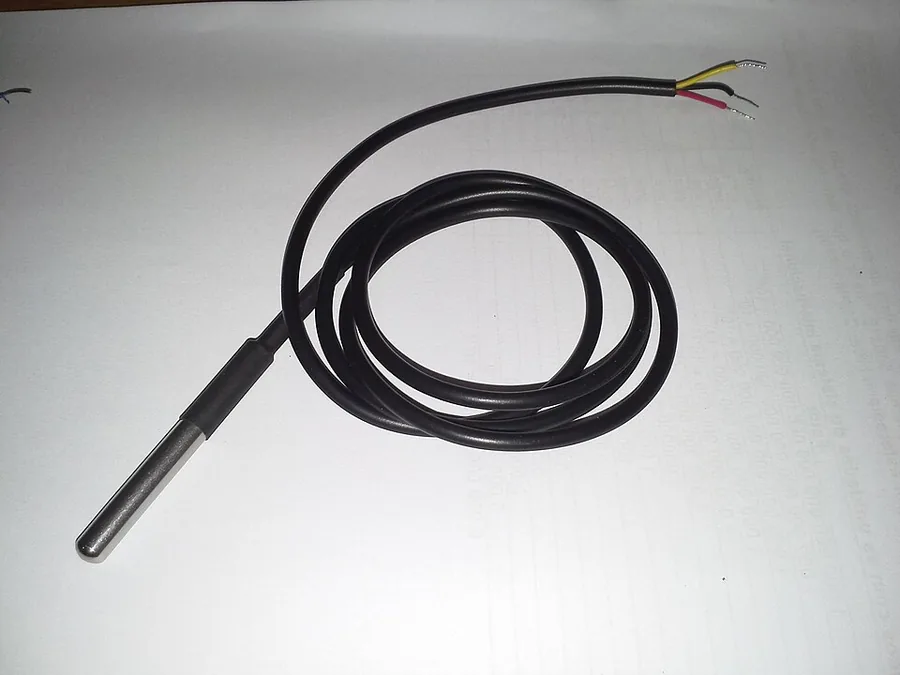
The DS18B20 is the sensor almost every self-made project board uses. Its own datasheet gives the accuracy in three bands:
| Temperature band | Stated error | What sits in it |
|---|---|---|
| -10°C to +85°C (14°F to 185°F) | ±0.5°C | A walk-in cooler at 36°F (2°C) |
| -30°C to +100°C (-22°F to 212°F) | ±1°C | A walk-in freezer at -4°F (-20°C) |
| -55°C to +125°C (-67°F to 257°F) | ±2°C | Below anything in a commercial kitchen |
| TemperatureWise, for comparison | ±0.2°C | Factory calibrated, with NIST-traceable calibration available |
A walk-in freezer sits in the middle band, so the part you solder to a five dollar board is accurate to about a degree Celsius there.
The Food Code asks for ambient air thermometers accurate to ±1.5°C. The hobby part passes, with room. TemperatureWise worked through that whole ladder on sensor accuracy and calibration.
So the sensor is fine. What a self-made project board cannot produce is the certificate. TemperatureWise offers NIST-traceable calibration, and a soldered DS18B20 has no paperwork behind it at all. For a kitchen that matters rarely. For a lab, a pharmacy or an audited site it ends the conversation.
A self-made Raspberry Pi project board fails at the storage and the power supply, not the sensor
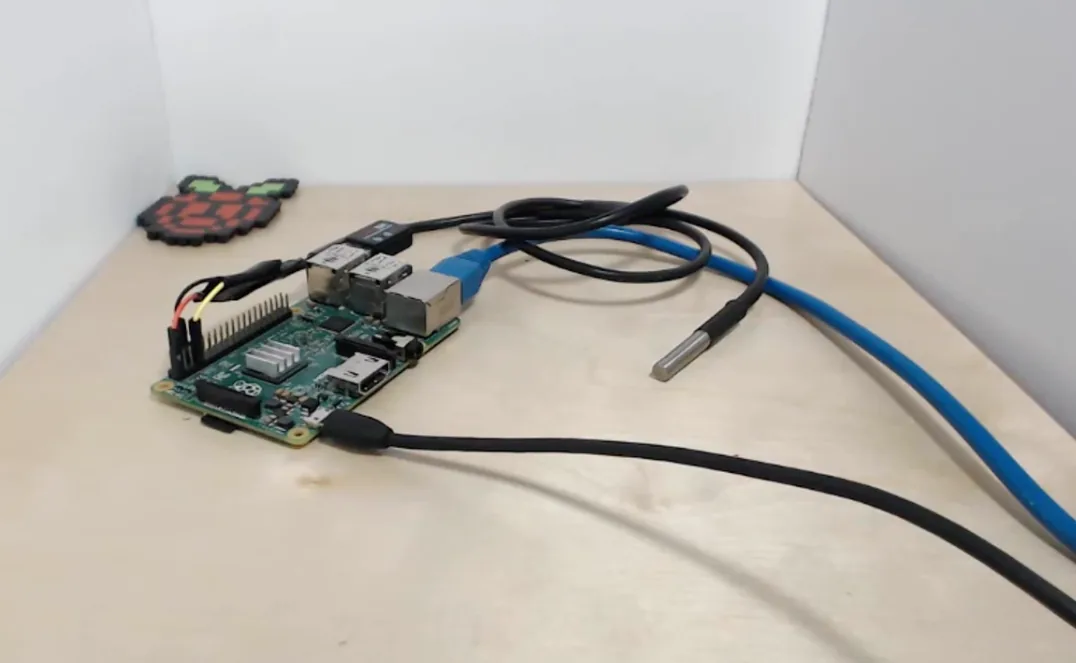
A temperature logger writes constantly, forever. That is the one workload flash memory in a card slot is worst at, and it is well documented outside this industry.
"[It] would chew through SD-cards (even reputable brands and on an official Raspberry Pi PSU) in a matter of months."
Hackaday, on running a write-heavy home automation database on a Pi
Two other things bite, and both are boring, which is why they get missed.
Power quality. A thin cable or an underspecified supply causes brownouts, and the card takes the damage. In a commercial kitchen the nearest outlet is shared with something that starts under load.
Unclean shutdowns. The card's controller queues writes. Pull the power and the queued writes never land, which is how a filesystem comes back garbled after a power cut. In a building where the power cut is the event you were monitoring for, that is not a corner case.
None of these are unsolvable. Read-only root, log to a proper database off the card, a supply that shuts down cleanly. They are all normal engineering, and they are all hours. Hours are the currency this page is about, and TemperatureWise arrives with all of them already spent.
Hobby boards are often not rated for the cold
Hobbyist boards and modules are frequently not rated for sub-zero operation over the long term, and the same is true of cheap commercial sensors. The probe survives the freezer. The board on the shelf outside it is the part to check.
The wire is its own problem before the board is. The DS18B20's lead is thicker than a door gasket expects, and pushing it through a door seam or a wall seam does not close up cleanly. The gap it leaves lets warm, humid air in, right where you are trying to keep cold in. A proper sealed pass-through fixes it, and it is one more part and one more hour that nobody budgets for.
The board is what actually fails, enclosure or not. Put a Raspberry Pi in a case and it is still consumer electronics, and consumer electronics is not built to sit reliably at freezer temperature, or even fridge temperature, for three years straight. A box around it does not change the chips inside it. The usual fix is keeping the board itself outside the cold and running only the probe lead through the wall, which solves the board's problem and brings back the wire's.
Parts availability makes this worse right now, too. A memory shortage driven by demand for AI hardware has pushed Raspberry Pi 4 prices up across the board, to $75 for the 4GB model and $115 for the 8GB, both well past the $15 to $30 a point operators reported when boards were easy to buy. The Pi Zero 2 W, the small board most of these projects actually use, is out of stock at most major retailers as this is written. Arduino boards are cheap and still available, but wiring one together with a probe, a network module and a case is exactly the kind of assembly that turns into one more unreliable part rather than a cheaper one.
TemperatureWise costs ten hours per cooler per year, and that is the whole decision
Here is the arithmetic, using only numbers TemperatureWise publishes.
TemperatureWise monitoring is $250 per sensor per year. The cost calculator on our own product page assumes staff time at $25 an hour by default. Divide one by the other and you get ten hours.
If keeping one cooler monitored yourself takes less than ten hours a year, building it is cheaper. If it takes more, TemperatureWise is. You can redo it on your own numbers by changing the wage.
That ten hours is logging time, counted honestly: walking the site, reading each probe, writing it down. It goes faster than people expect. Reading three or four coolers, including the walk between them, takes about three minutes. Do that four times a day and it is already sixteen minutes a day, which is the whole year's ten-hour break-even spent in about forty days. Everything logged after that forty days is where a self-made project board stops being free.
Notice what the rule does not depend on. It does not depend on fleet size. What fleet size changes is whether those hours can hide.
| 10 coolers, one site | 50 coolers, four sites | 160 coolers, twelve sites | |
|---|---|---|---|
| Self-made project board: parts | $150 to $300 | $750 to $1,500 | $2,400 to $4,800 |
| TemperatureWise hardware | about $350 | about $1,650 | about $5,200 |
| TemperatureWise per year | $2,500 | $12,500 | $40,000 |
| Hours that buys, at $25 | 100 a year | 500 a year | 1,600 a year |
| What that is, in practice | Two hours a week. Absorbed by somebody who already works there | Ten hours a week. A named part of one job, and it has to be in their objectives | Most of a full-time year. A role, a backup for that role, and a handover document |
| Who answers at 3am | You, probably | One named person, and nobody when they are away | Nobody, unless you staff a rota, a rotating on-call schedule with a different named person covering each week |
| Honest verdict | Build it, if you have the person and three or four days to give it | Genuinely close. Depends on whether the person is dedicated or borrowed | TemperatureWise, unless you are prepared to run monitoring as an internal product |
The $40,000 in the 160-cooler column is list price at $250 a sensor. At that size you are an enterprise account, and the number we would actually quote is lower. Ask, rather than budget off the list price.
A fleet of self-made project boards gets more expensive per box as it grows. TemperatureWise gets cheaper
This is the part that surprises people, because every other cost in a business goes the other way.
TemperatureWise gets cheaper to run per box as you add boxes. One dashboard, one alert configuration, one number to call, and the twentieth sensor takes the same ten minutes as the second.
A fleet of self-made project boards does the opposite, for reasons that are structural rather than anybody's fault:
- Sites are not identical. Twelve restaurants have twelve network setups, twelve landlords and twelve ideas about where the router lives.
- Nobody is on site. A sensor that stops reporting at site nine is a drive, not a walk.
- Versions drift. The self-made project board you built in March and the one you built in September are different, and in two years nobody remembers which is which.
- The batteries and cards age together. Everything you deployed in one month fails in one month, three years later.
There is a reliability cost too, and it compounds with fleet size in a way that is easy to miss. Start with a number that is too kind. Say each self-made board, card and power supply included, is 99% reliable across a year, a 1% chance any one of them fails. That is close to an impossible number for hobby-grade hardware running continuously in a kitchen; nobody should plan around it. Even so, across 160 of them, independent and unmanaged, the chance every single one is still fine at year's end is 0.99 to the power of 160, which works out to about 20%. Put the other way round, there is roughly an 80% chance something in the fleet has already failed by the time the year is out, on the generous number.
Now use a number that is honest. Common boards, cards and power supplies running continuously are closer to 90% reliable a year, a 10% failure rate each. At 160 of them, the chance every single one survives the year rounds to zero: not unlikely, effectively impossible. Worked as expected failures instead, that fleet loses about 17 boards a year, one roughly every three and a half weeks, against one every seven to eight months on the too-kind 99% figure.
Either number is a drive to a site that was not the one you were already planning to visit that week, and the sites in a fleet like this are not next door to each other. Twelve restaurants across a city, or a chain across a region, means the person who understands the board is never the one already standing in that kitchen. The person who is standing there, a cook or a warehouse worker, did not sign up to diagnose a corrupted SD card or a browned-out Pi over the phone, and talking them through it rarely goes well. A remote fix on this hardware usually is not remote. It is a drive, by the one person who understands it. TemperatureWise's failure rate does not compound with fleet size the same way, because a failed sensor or hub is a warranty replacement shipped to the site, not a callout for someone who has to understand the wiring.
That is why the same ten-hour rule produces a self-made project board at 10 and TemperatureWise at 160 without the rule itself changing.
A self-made project board alerts one person. TemperatureWise escalates until somebody answers
Three questions decide this, and none of them are about cost.
- Who gets woken at 3am? Not who fixes it in the morning. Who is holding the phone at 3am, and who holds it when that person is on holiday. A self-made project board with one person behind it has one point of failure, and it is not the Pi. TemperatureWise sends email, then text, then a phone call that keeps ringing, to as many people as you list, until somebody picks up.
- What happens when they leave? The maintenance director who built the prototype is the single most likely person in the business to be promoted or poached. Undocumented internal systems outlive their authors by about six months. A TemperatureWise account outlives anybody's notice period.
- Who has to believe the record? If the answer is only you, build it. If it includes a health inspector, an auditor or an insurer, the question becomes whether the record is independent, exportable and calibrated. TemperatureWise keeps it indefinitely, exports it, and offers NIST-traceable calibration.
The gap is not that a self-made project board cannot alert anybody. Sending an email from a script is genuinely easy, and a tool like Claude will happily help you vibe-code that part in an afternoon. Text messages and phone calls are a different project. Both sit behind telecom regulation that email does not, and a provider account for them carries a recurring minimum, commonly $20 to $30 a month, on top of a per-message and per-call rate. For a line you might need once a year, that minimum makes the phone call the most expensive part of the whole project, which is the real reason almost nobody's self-made project board ever actually rings a phone.
The third one is not a legal claim. Inspectors accept records from all sorts of systems. It is a practical point about who has to be convinced, and how much explaining you want to do while they are standing in your kitchen. The same independence question comes up when a refrigeration controller keeps the record, and we took it apart on refrigeration controller or standalone monitoring.
A self-made project board watches a threshold. TemperatureWise reads the whole history
This is the capability gap that does not close with more weekends, and it is worth being specific about.
A self-made project board compares the current reading to a line you set. That is threshold alerting, and it works. You get told when the box is already warm.
TemperatureWise detection is a proprietary mix of machine learning on the full temperature history, not just the current reading. A compressor losing refrigerant does not make the box warm on day one. It makes the runtime slightly longer, the recovery slightly slower and the defrost slightly different. Those patterns show up days to weeks before the temperature crosses any line, which is the difference between a scheduled call at a normal rate and a 2am call-out.
Writing that yourself is not a weekend. It needs years of labelled failures across many sites, which is the one input a single operator cannot buy or build.
What to do at each size
Even after all of that, at 10 coolers on one site: build it, if you are willing to give it three or four days. That is a realistic accounting of the wiring, the storage and power fixes above, and the software, not a weekend. Use a proper database rather than a file on the card, do the radio work before the software work, and buy lithium cells rather than alkaline if anything runs on batteries in the cold. That tip is free and it is on our what you need to buy page with the datasheet behind it.
At 50, decide the ownership question before the technical one. If there is a named person whose job description includes this system, a self-made project board is defensible. If it is somebody's side project, it will be somebody's abandoned side project in eighteen months.
If the sites have no internet of their own, price the connection before anything else. TemperatureWise sets that out on cellular or Wi-Fi.
At 160, cost the person honestly and then choose. What is not honest is comparing $40,000 of TemperatureWise to $4,800 of parts and calling that the comparison, because the parts figure does not include the person and ours does.
TemperatureWise entry hardware is $25 a sensor and $50 a hub, which is consumer-price hardware, and we say so plainly on the consumer versus commercial page. The $250 a year is the part actually being compared here.
Where TemperatureWise falls short
TemperatureWise is more expensive per cooler than parts, at every scale. There is no volume at which that reverses. If cost per point is your only axis, build it.
A self-made project board gives you things TemperatureWise does not. Your own data on your own hardware, any integration you feel like writing, and no vendor who can change the price. Those are real advantages and an engineer is right to want them.
The ten-hour rule is arithmetic, not a study. It divides our published annual price by our published default wage. Put your own wage in and it moves. We have not measured how long anybody's self-made project board takes to maintain and we are not going to invent a figure.